
Reevaluating Campaigns in Customer Engagement: Embracing Agentic Systems
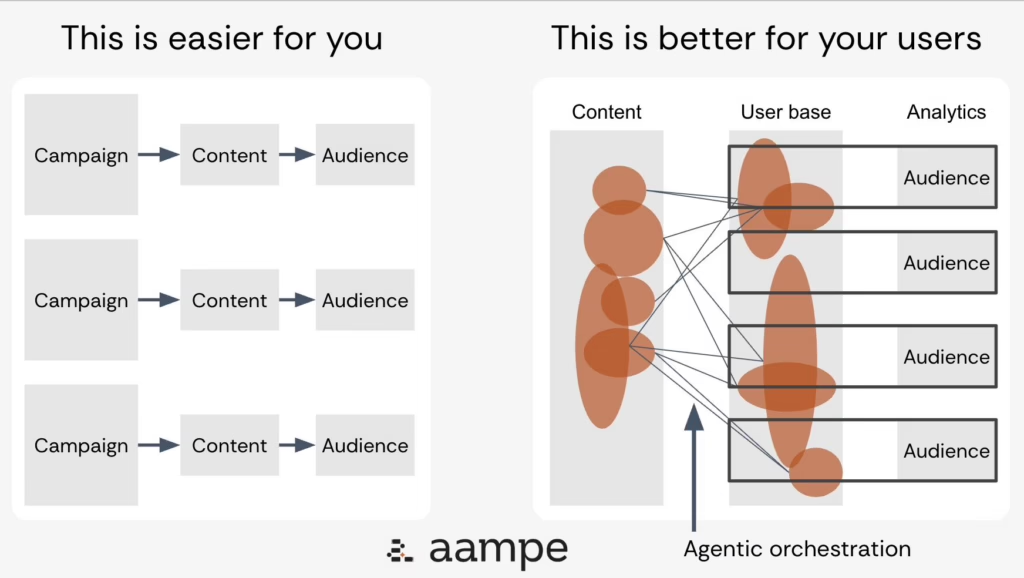
Technology is enabling, but it’s also constraining — your choice of technology requires tradeoffs. You limit yourself in some ways to multiply your efforts in others. Customer engagement tools are no different. Consider how “campaigns” are used: As orchestration — specifying which users get which messages under what conditions. This helps scale communication by breaking […]
How Aampe Handles Model Drift with Agentic Systems
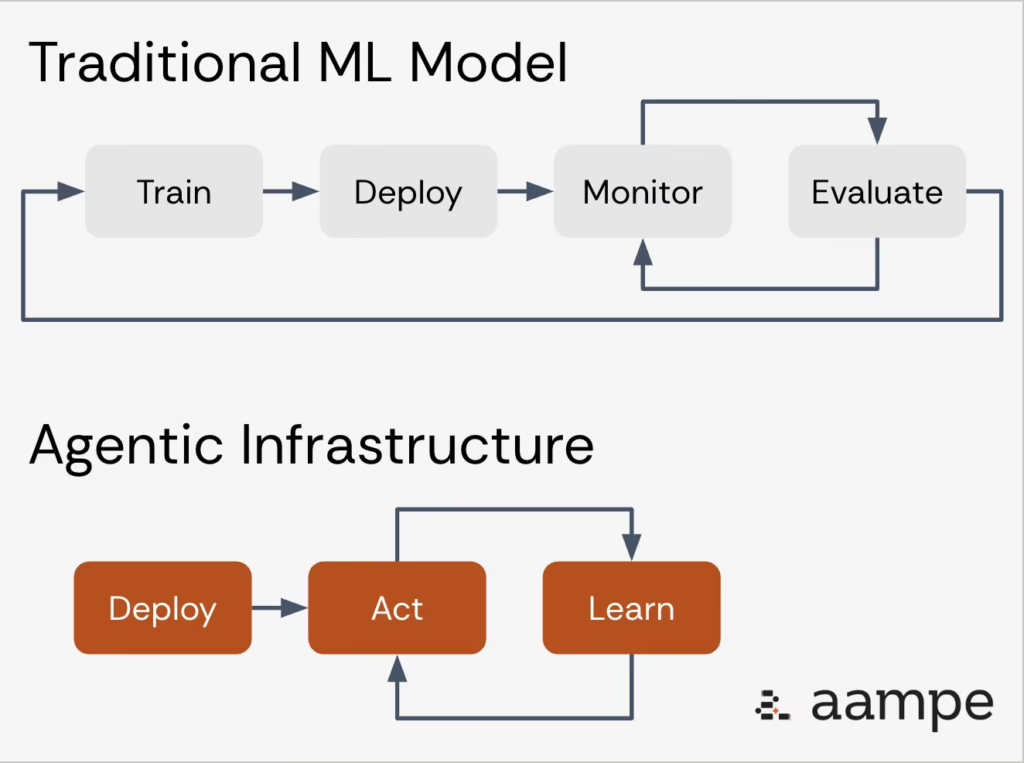
People sometimes ask how we deal with model drift at Aampe. We don’t, for the most part. We don’t have to. Agentic systems that operate on the basis of semantic-associative learning don’t have to worry about drift in the traditional sense, because the system learns continuously. Model drift is a problem you get when you […]
Unlocking the Power of Semantic-Associative Memory in AI Systems
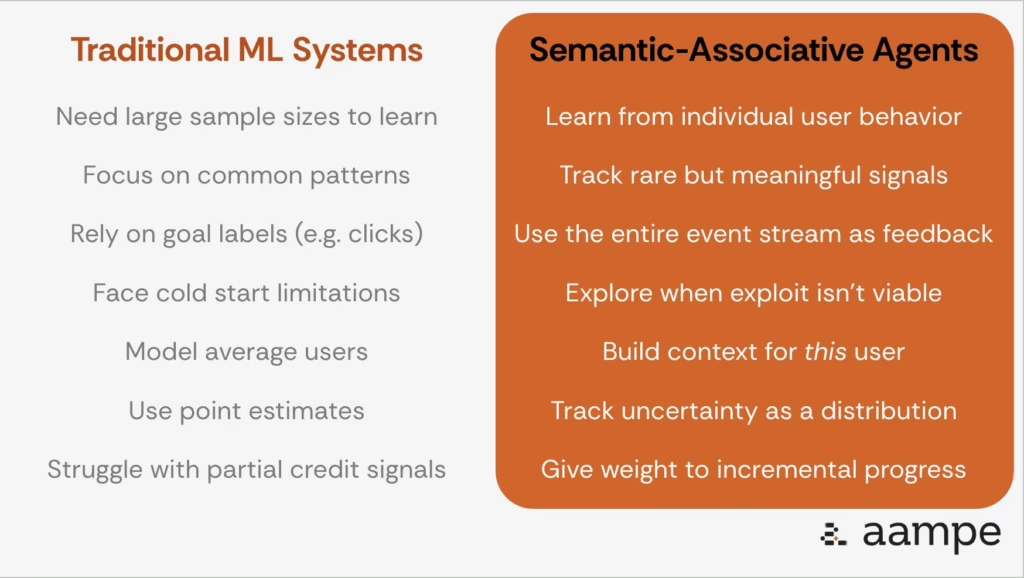
One of the quiet advantages of semantic-associative agents is how many classic ML concerns just sort of disappear. Take rare events, cold starts, and data sparsity. These are tough problems for most machine learning systems because they depend on statistical regularities across many users. But our agents aren’t trying to model “users like this one.” […]
Agentic AI in Enterprises
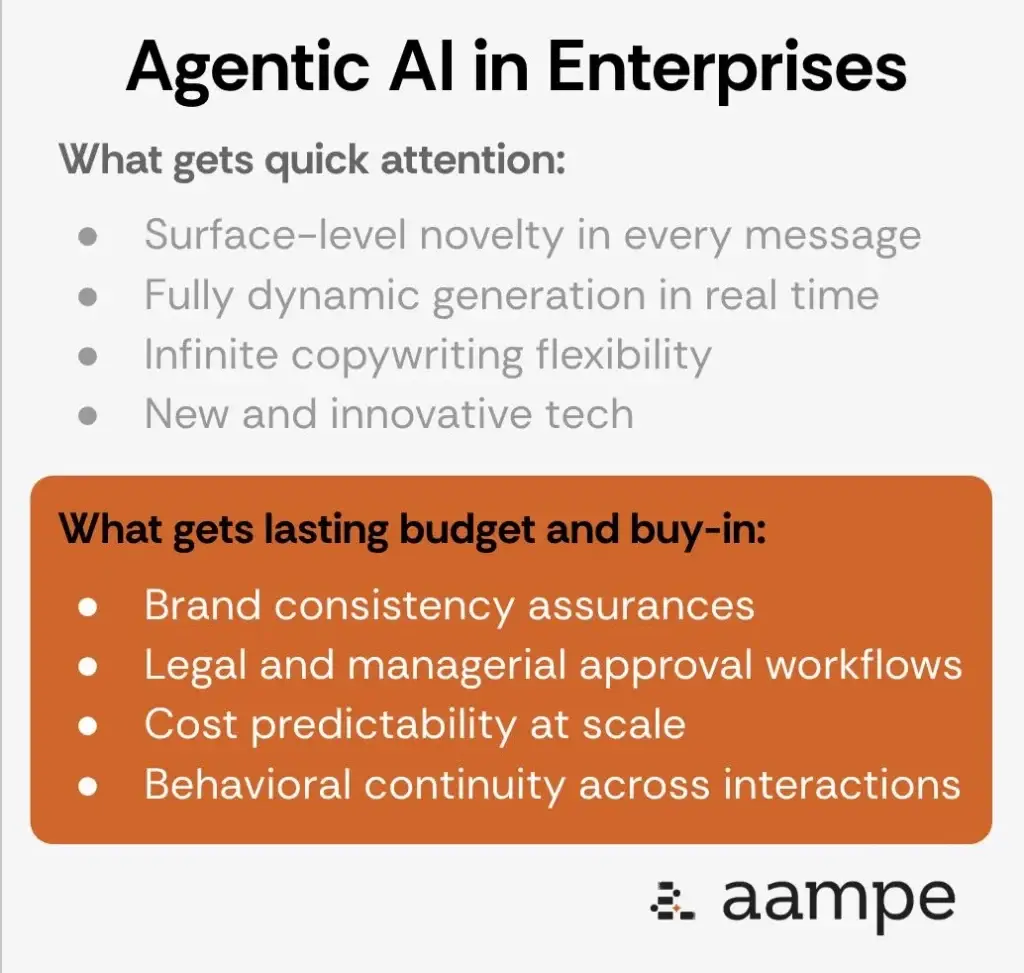
As LLM costs drop and capabilities grow, it’s tempting to use them as the engine behind every customer interaction. But real-time generation is rarely essential. Most businesses face semantic-associative problems, not generative ones. The issue isn’t a lack of words — it’s knowing which words work, when, and for whom. Semantic-associative learning connects abstract message […]
Having Agency vs Acting Agentically
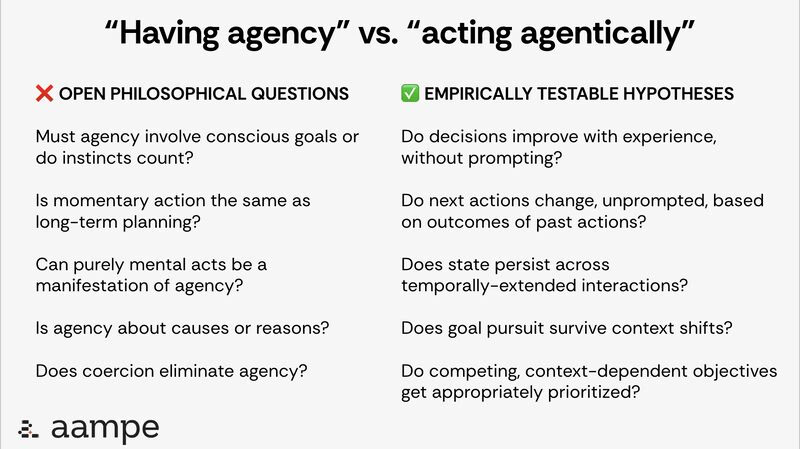
We throw around terms like “agency” when discussing AI, but the term itself lacks definition. That’s a problem that predates AI. The idea of “agency” raises a lot of questions that generations of philosophers haven’t been able to answer: ❌ Must agency involve conscious goals or do instincts count?❌ Can purely mental acts be a […]
JEPA and Semantic Memory: Why Current AI Models Fall Short
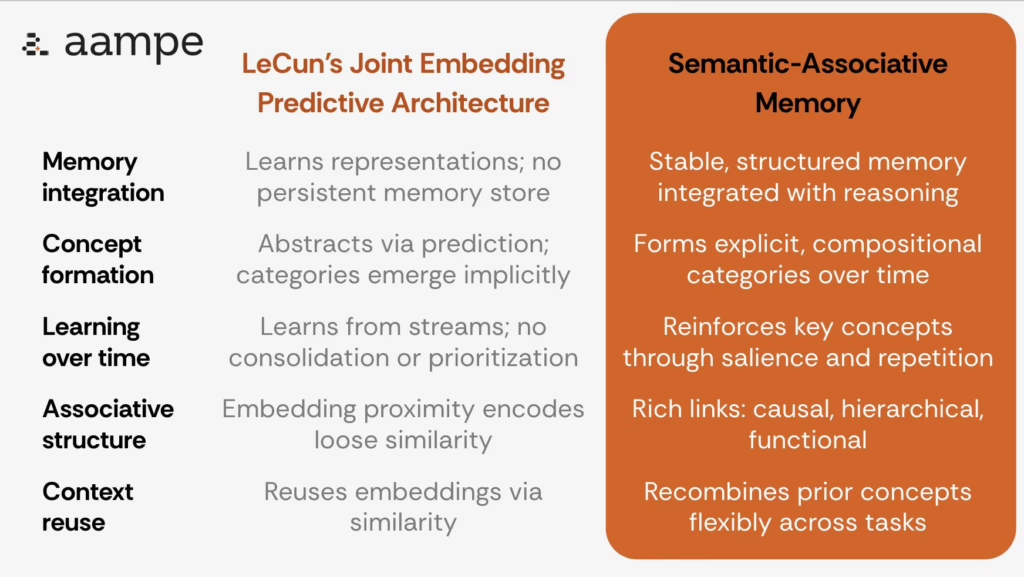
I wrote a posts recently on the need for agentic systems to have semantic-associative memory capabilities. Someone asked whether something like LeCun’s Joint Embedding Predictive Architecture (JEPA) gives us semantic memory. The answer: not really, but it does potentially do many other good things. JEPA, as I understand it, trains a model to predict latent […]
Why LLMs and RAG Aren’t Enough for Building Agentic AI Systems
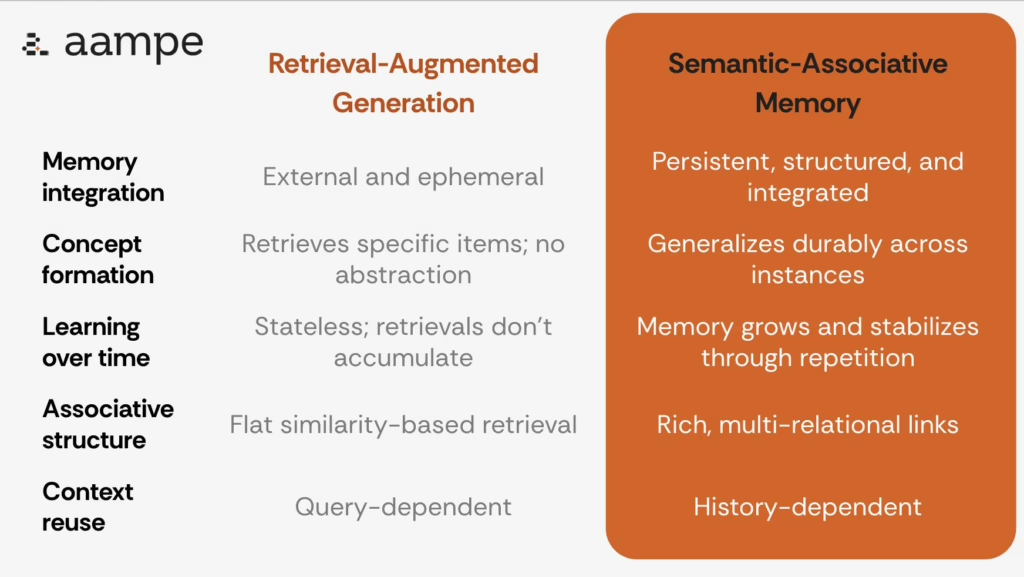
I wrote a post recently (linked in comments below) on why agentic systems require structures for semantic-associative memory, and why LLMs lack the architecture to do anything but procedural memory. Therefore: LLMs aren’t sufficient to build agentic systems. Someone replied with a very thoughtful question about Retrieval-Augmented Generation (RAG), a method that enhances language models […]
How Agentic Systems Balance Exploration and Exploitation
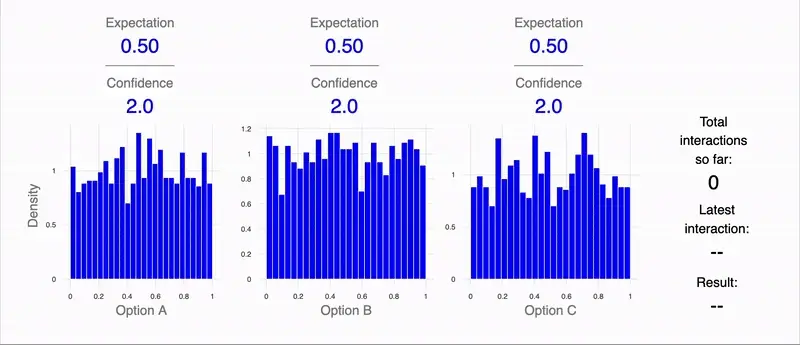
In an agentic architecture, that balance between exploration and exploitation emerges naturally from the system’s structure — no need for hand-tuned ratios. Thompson Sampling is a convenient tool for navigating that tradeoff. Early on, when every option is uncertain, the system explores widely: flat distributions mean random draws lead to random choices. As the system […]
LLMs aren’t sufficient to build agentic systems
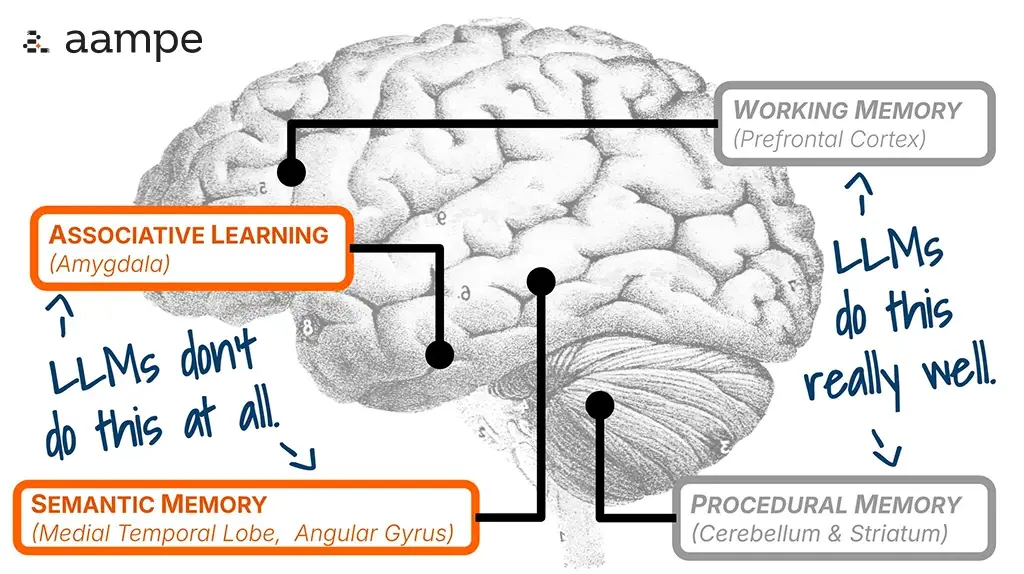
An LLM, by itself, cannot be truly agentic. This is also true of swarms, teams, workflows, and other kinds of “multi-agent” systems. If an LLM is doing all of the driving, then you’re dealing with something other than an agentic system. That’s why, at Aampe, LLMs are an appendage, not a foundation. LLMs excel at […]
The Explore/Exploit Tradeoff: Understanding Its True Implications in AI Systems
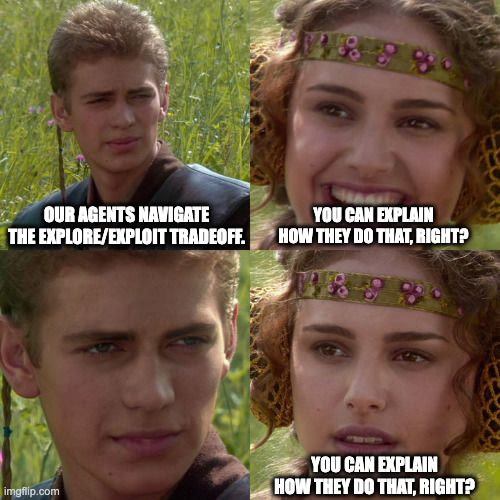
When someone claims their system “navigates the explore/exploit tradeoff,” they’re not saying anything meaningful — that phrase has become table stakes in conversations about agentic systems. But that doesn’t make the underlying challenge any less important. Think of it this way: if you only explore, you’re like a mountaineer who says “I don’t care which […]