
Five Pillars of Agentic Decision Making
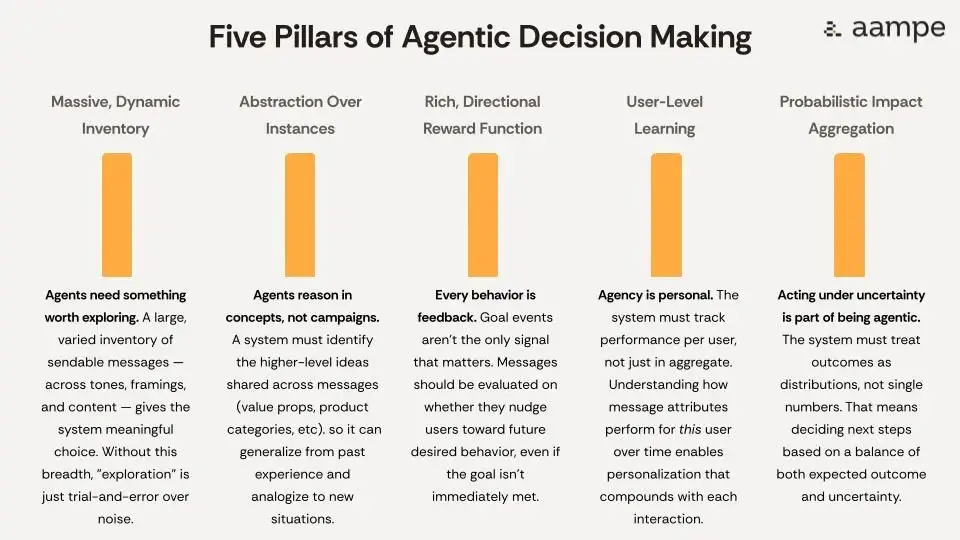
As we’ve built Aampe, I’ve come to the view that if you’re trying to build or evaluate an agentic system, here are the questions you need to answer: Do you have a massive, dynamic inventory of messages? An agentic system requires thousands — often tens or hundreds of thousands — of unique, sendable messages. This […]
A/B Testing vs. Bandits vs. Predictive Models vs. Agentic Learners: A Stock Market Analogy
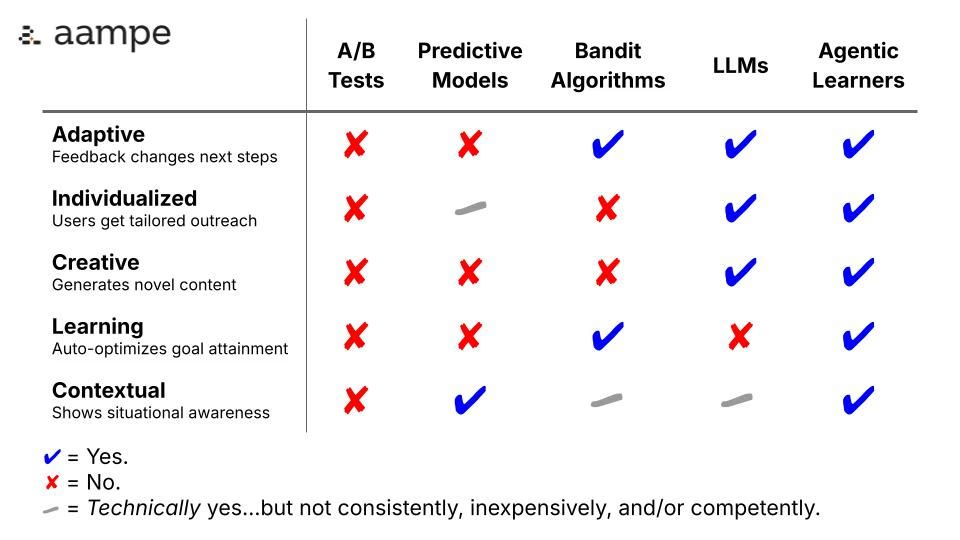
I’ve had people ask me what the difference is between A/B testing, multi-armed bandits, predictive/ML models, and agentic learners. Let’s use an analogy. Imagine you’re investing in the stock market: A/B Testing is like back-testing a single stock strategy (e.g., “Tech stocks beat energy in 2020, so we’ll only buy tech”). It’s rigid—once you lock […]
The Importance of Abstraction Layers in Agentic Systems
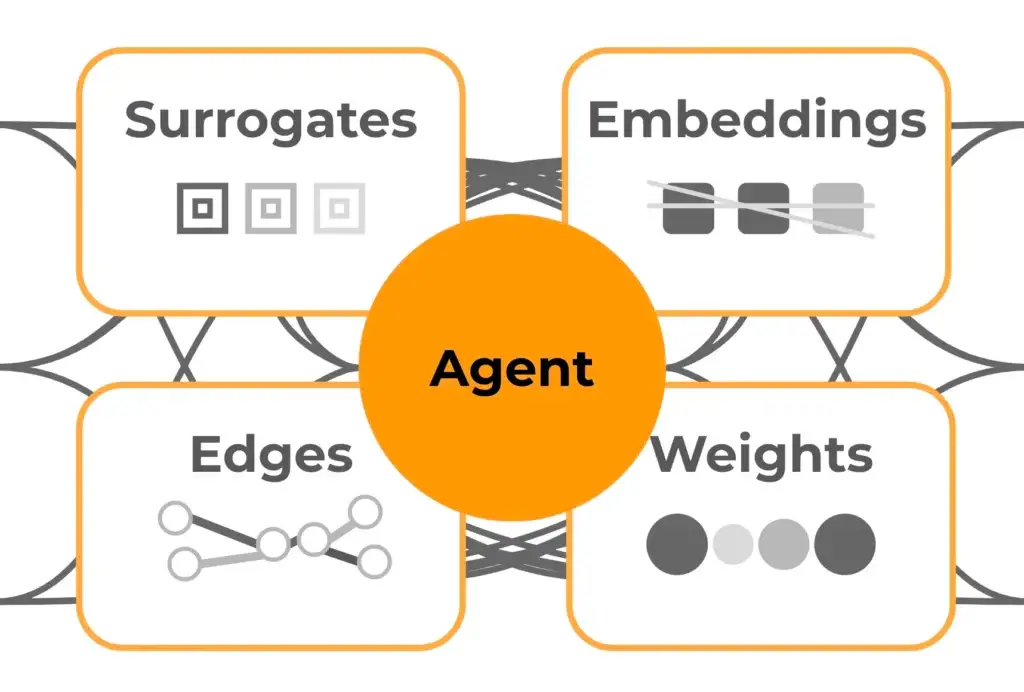
One of the most important components of an agentic system is its abstraction layer — a framework that organizes surface-level details into higher-level, strategic categories. Abstraction enables transfer learning. It allows your system to take insights from one context and apply them to another. That’s essential to agentic learning (and, therefore, is core to how […]
Why Agents Can’t Learn from Historical Data: The Importance of Counterfactuals

Agents can’t learn from historical data. They can make assumptions from it, but they can’t learn. Say a user often shows up on Friday between 6–7pm. Does that mean it’s a good time to engage them? No one knows. Because the real question isn’t “When does the user show up?” It’s: “Would they show up more […]
Optimized Messaging with Learned Weights and Beta Distribution
AI agents and tagged weights Agentic learners encode their learnings as tagged weights. At Aampe, for example, we start a new customer’s agents with 35 timing tags: five three-hour increments (covering waking hours) over seven days of the week. Each agent updates the weights for each tag based on the way its assigned user responds […]
The LLM Alignment problem
LLM “alignment” refers to reducing the gap between LLM output and user expectations. I came across a nice technical overview (LLMs from scratch) comparing the two main methods for LLM alignment: Reinforcement Learning from Human Feedback (RLHF) and Direct Preference Optimization (DPO). My conclusion: both methods show how talk about AI alignment is really missing […]
How AI Agents Work: A Practical Guide for Marketing and Product Leaders
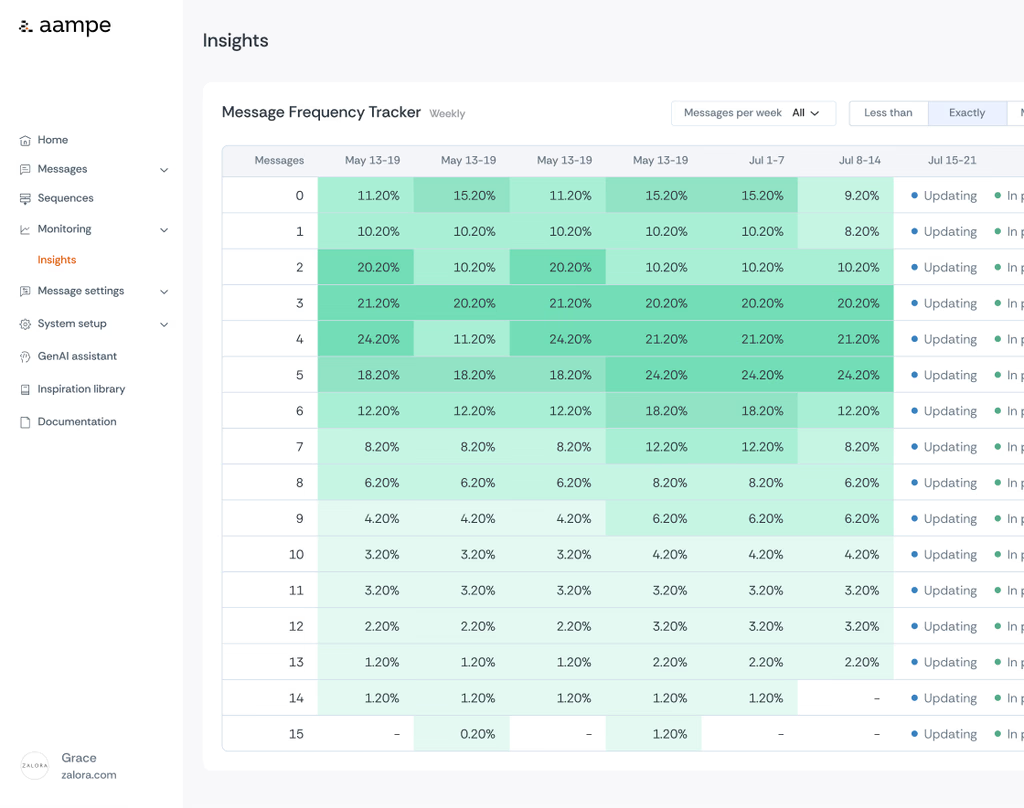
Despite the prevalence and demonstrated superiority of ML and AI tools, many companies are still making decisions — even relatively trivial decisions, like determining messaging frequency — manually. What’s worse, each manual decision affects more than a single individual; even simple decisions typically require time and attention from multiple teams, which leads to significant bottlenecks […]
Scalable Event-Based Clustering for User Segmentation
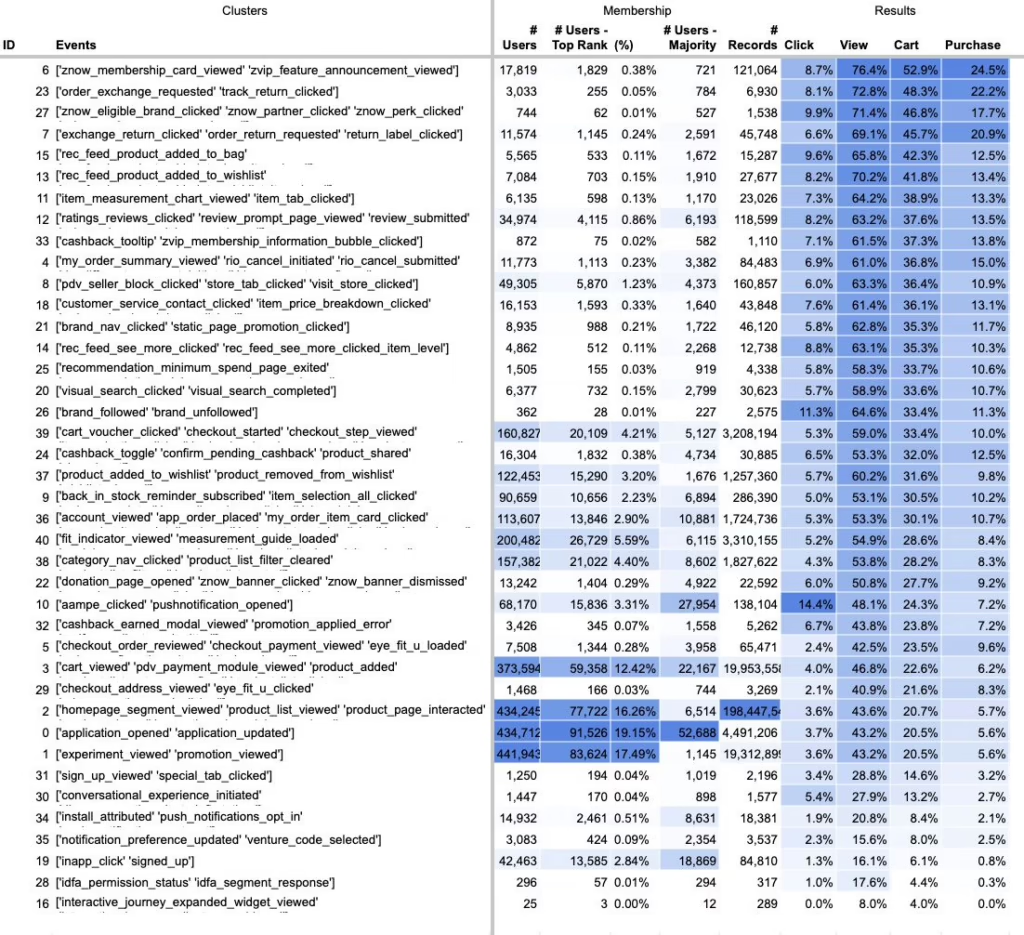
There are generally limited options for clustering large numbers of records. A typical Aampe customer has up to 400 app events (“product viewed”, “purchase completed”, etc.) instrumented, for sometimes as many as 100 million end users. Clustering 300 features is simple, even with 100 million records – something like mini-batch k-means can do the trick. […]
Introducing Counterfactual Models: A Deeper Look at Message Timing
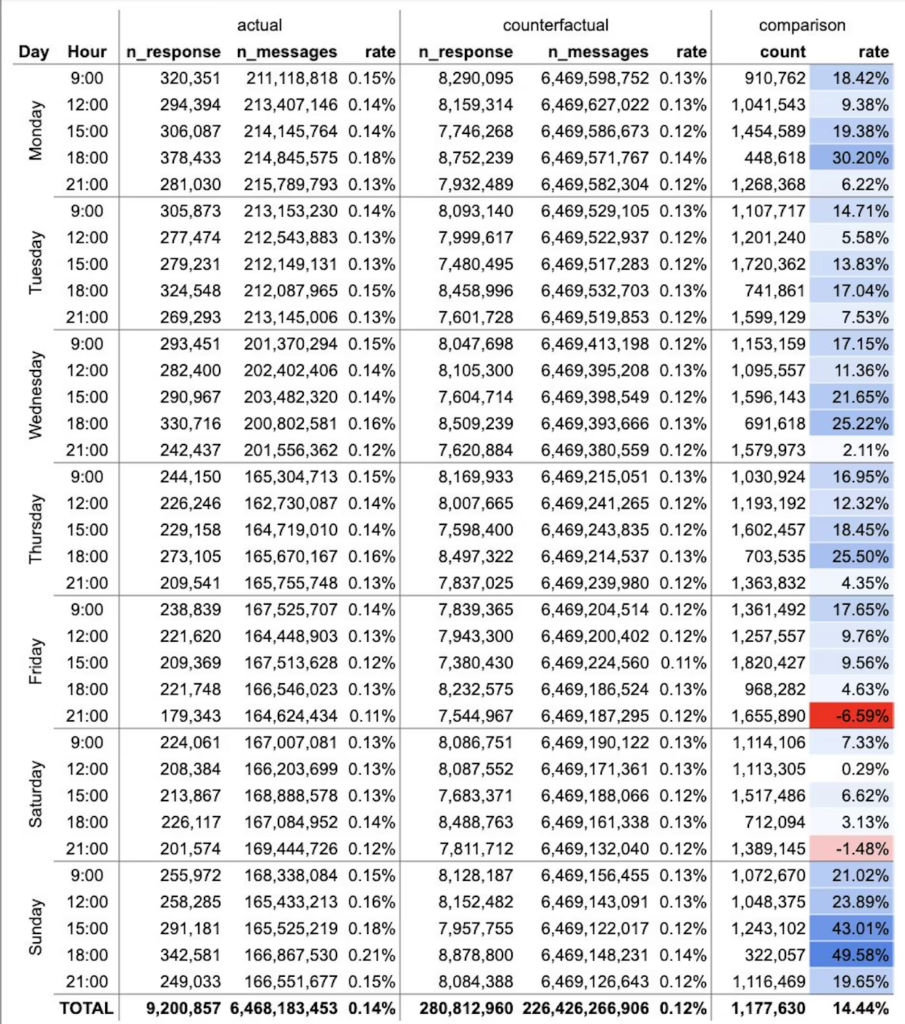
Each user gets an AI Agent Our agents fully personalize message timing – each user gets his or her own programmatic agent, and that agent decides what day of week, what time of day, and how frequently to message (plus lots of other stuff). Why not send at a general best time? It’s not uncommon […]
A User Story – Children’s Book to explain our Algorithms
We often get questions about how Aampe does what it does. This presents us with a quandary. On one hand, what we do is complicated – we use a lot of different algorithms that can be hard to explain to someone who doesn’t deal with those things on a regular basis. On the other hand, […]