Most personalization still runs on the same basic move: figure out who someone is, then decide what to send them. Better segments, better timing, a model that guesses who's most likely to click. The tooling has gotten more sophisticated. The underlying question hasn't changed in twenty years, and it's the wrong question.
The right one isn't who is this person. It's what's actually in the message, and which parts of it land.

The package was never the point
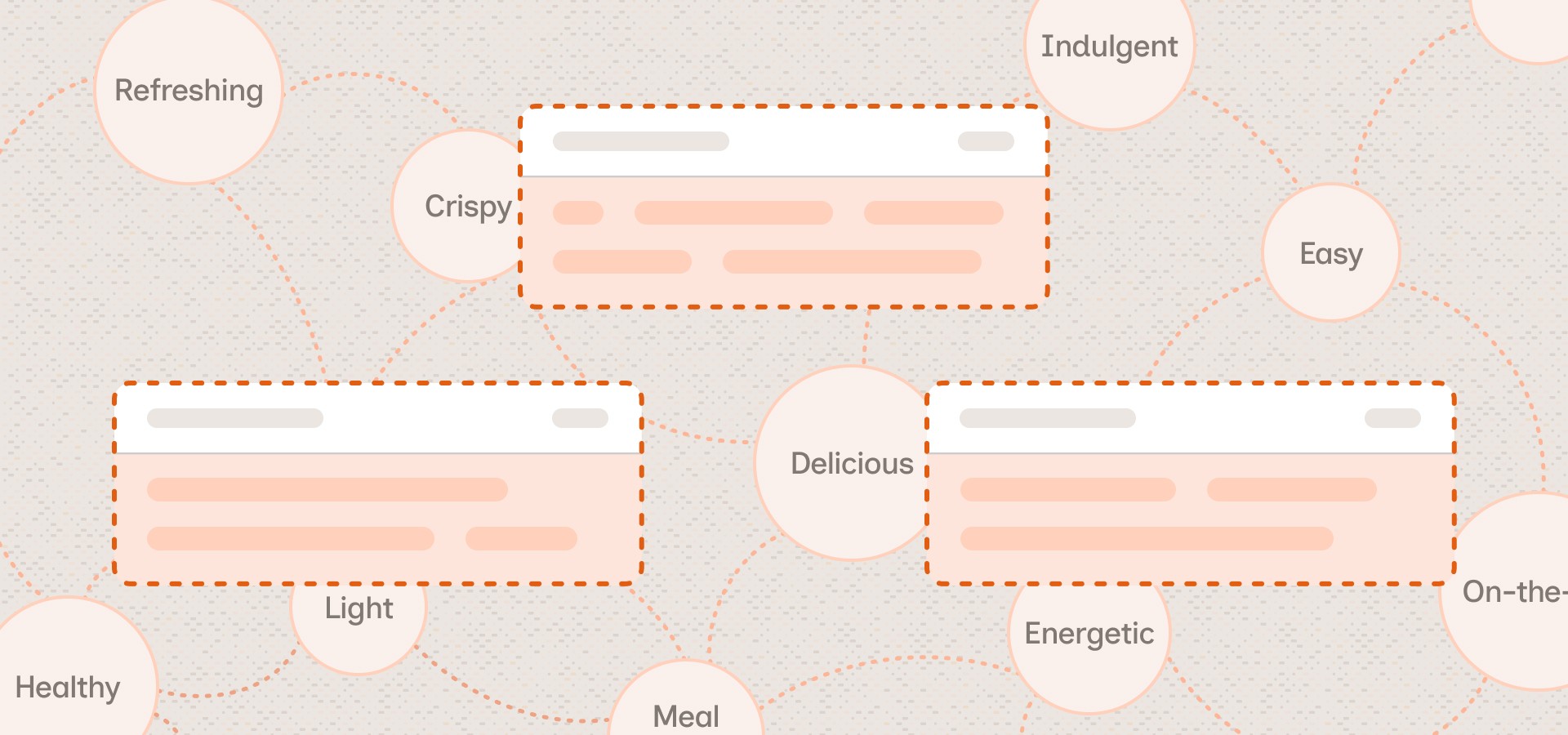
Think of every message as a package. Somewhere inside it is a product category, a value proposition, an incentive, a tone. The subject line, the image, the layout: none of that is the content. It's the box the content ships in. Most engagement tooling spends all its effort perfecting the box: which words in the subject line, how many paragraphs, what image goes where. Almost none of it asks what's actually inside, or which piece of what's inside is the reason someone responded.
That distinction sounds small. It isn't. If a message performs well, the standard system tells you the message worked. It can't tell you why. Was it the discount? The product category? The time it arrived? A system that only ever tests whole messages against each other is structurally incapable of answering that question, no matter how much data it has. It's still guessing at the level of the box.
Break the box open instead, and something changes. Every send becomes a chance to learn which specific ingredient moved someone, and that learning transfers. What you find out from one interaction with a person informs the next one, automatically, without a marketer going back in to redraw the segment or relaunch the test.
Attribution has been lying for years
Most of the industry still treats a click as proof of success. It's an easy number to defend in a meeting, and it's frequently disconnected from the outcome anyone actually cares about. The people who click are often not the people who buy, or retain, or come back next month. They're two different populations wearing the same metric. Optimizing for clicks optimizes for the wrong audience and calls it a win.
Real attribution has to ask a harder question: what changed because of this interaction, compared to what would have happened anyway. That's a much less comfortable number, because it can't be inflated by counting organic behavior as a system's achievement. It's also the only number that's honest.
Winners shouldn't freeze
A/B testing gets called the gold standard, and it earns that reputation for one thing: it grounds a decision in evidence instead of a guess. Where it fails is what happens after the test ends. Once a variant wins, everyone gets it, indefinitely, including the people who clearly preferred the variant that lost. Nothing changes until someone remembers to run another test.
That's optimisation: find a winner, freeze it, move on. Alignment works differently. It never assumes there's a single best answer waiting to be found, because the right answer depends on the person and the moment, and both keep changing. A system that keeps learning at the individual level doesn't need to pick a permanent winner. It can let different people keep responding to different things, indefinitely, without that being treated as noise to be resolved.
The same logic applies to how much a system is allowed to know before it acts. Start with almost nothing about someone, and the smart move is to lean on population-level patterns. That's just good use of what's available. But the moment someone shows you something specific about themselves, that signal should start overriding the population average, not get smoothed into it. Most systems never make that handoff. They pick a level, population or individual, and stay there
Tactics get automated. Strategy gets promoted.
Hand the moment-to-moment decisions to a system built to learn continuously, and something gets freed up, not eliminated. Marketing teams currently spend an enormous share of their attention on tactics: what goes in the subject line, which image, how many paragraphs, which of ten pre-built messages a given cohort should get. That's not strategy. It's the operational cost of not having anything better to do the tactical work.
Take that layer off a team's plate and the interesting questions are still there, waiting: what should this relationship with the customer actually become, what's worth testing next, where is the business leaving value on the table that no amount of better subject lines will recover. Automating tactics doesn't remove the human from the loop. It removes the excuse to spend their time on tactics instead of on the decisions only they can make.
We unpacked this at more length in a conversation between Aampe co-founder Schaun Wheeler and Patricia Lazatin: Aampe's AI Decisioning Explained: Why Content Should Drive Personalization.