
Layering A/B Testing and Agentic Learning for Better Results
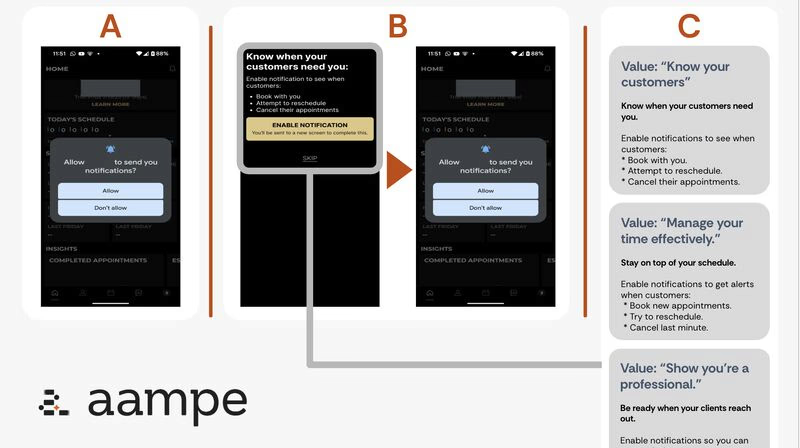
Yesterday I wrote about situations where A/B tests can still be essential, even if you’re committed to an agentic-learner approach. Let’s expand on that a little. Take a look at the screenshots below. I’ve added a third notification opt-in workflow (“C”) to the two variants I discussed in my previous post: A: Standard OS popup. […]
Why Auditing a Single Agent Decision Misses the Point
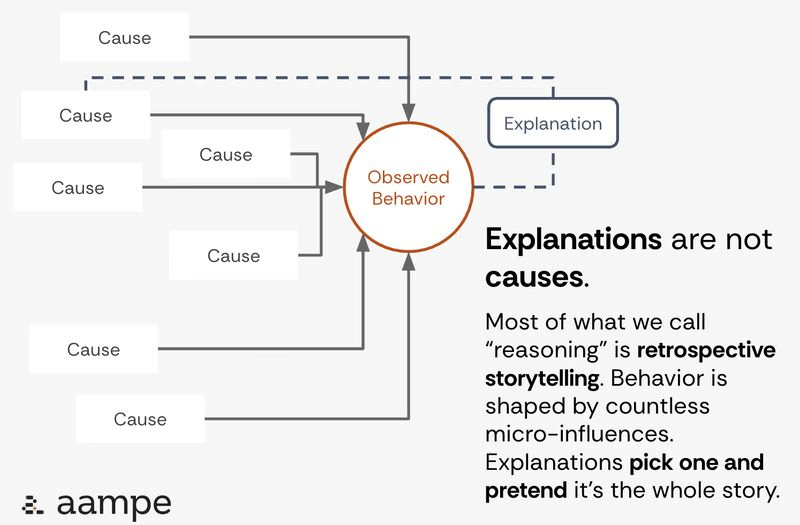
It’s not uncommon for Aampe customers to ask how to audit a single agent’s decision. It’s a fair question, but I’m inclined to counter it with another question: How do you audit a single *human’s* decision? You can ask someone why they did something, and they’ll almost always give you an answer. It’ll sound reasonable. […]
Learning, Not Guessing: How Aampe Aligns With Every User
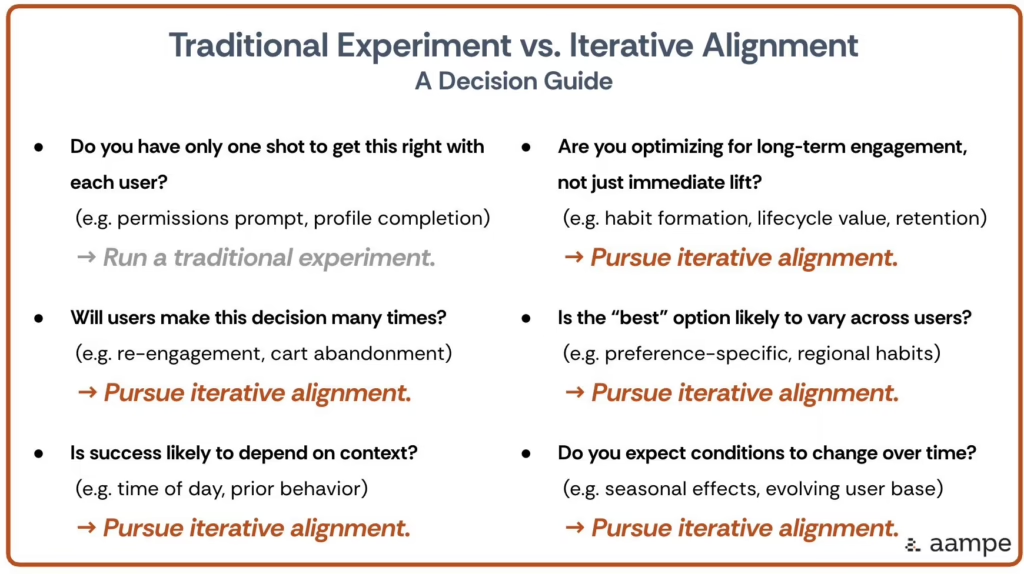
Aampe agents run literally millions of experiments every day, but you rarely hear us talk about experiments. Instead, we talk about learning and alignment. There’s a reason for that. When a system feels stuck – growth slows, re-engagement drops, users aren’t doing the things you built for them – the natural instinct is to search […]
Understanding Decision-Making in Agentic Systems
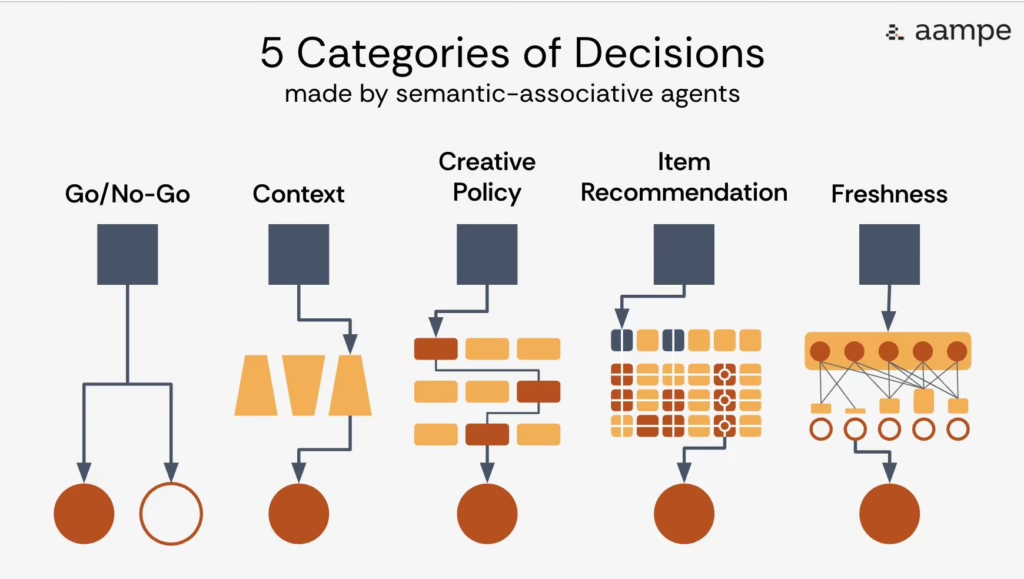
In agentic systems, what counts as a “decision”? That can be a hard question to answer in regards to humans, let alone agents. By some estimates, adult humans make around 35,000 decisions a day. Other estimates put our food-related decisions alone at over two-hundred per day. https://share.upmc.com/2015/07/how-your-brain-makes-food-decisions/ It comes down to what kind of cognition […]
Agentic Architecture in Action: Aampe’s Dual-Path Personalization Strategy
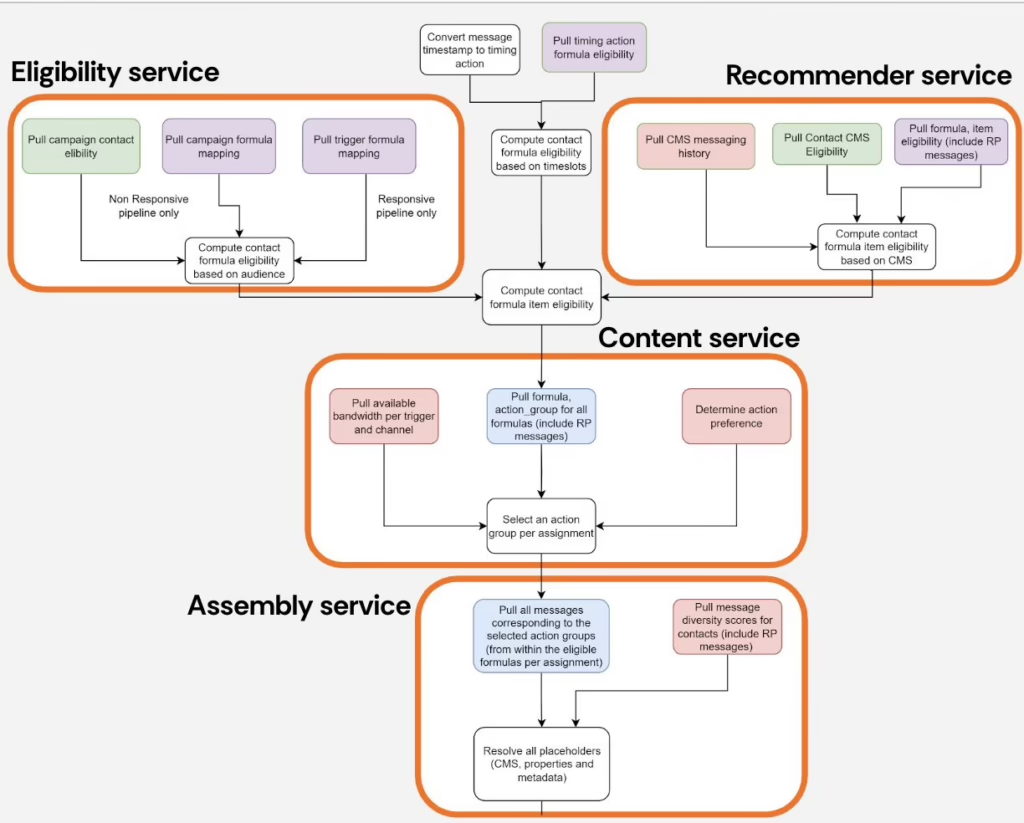
Here is a diagram of our agentic architecture (well, part of it). See the top-right box: “recommender service”? Let’s talk about that. At Aampe, we split copy personalization into two distinct decisions: Which item to recommend How to compose the message that delivers it Each calls for a different approach. For item recommendations, we use […]
Evaluating Adaptive Systems: Beyond Short-Term Metrics
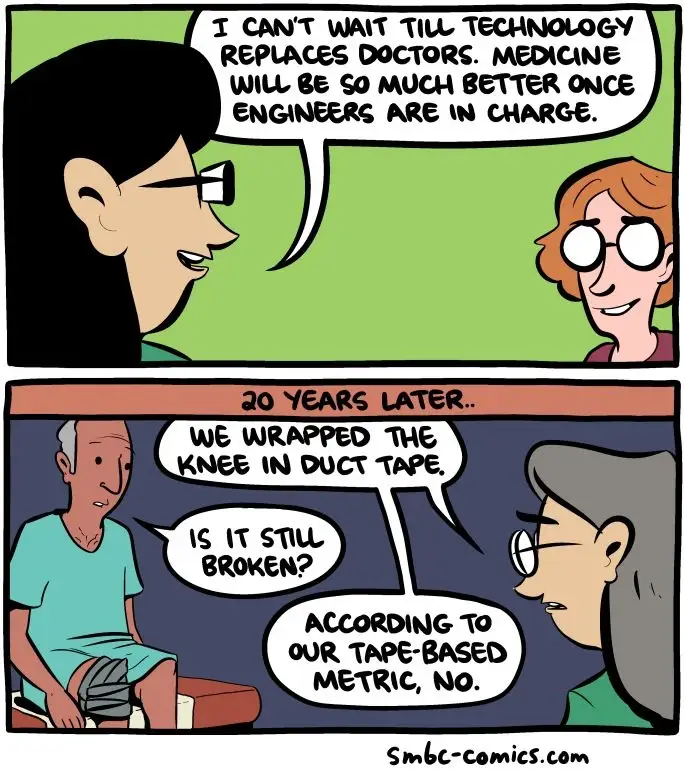
When evaluating an adaptive system like Aampe, the most common question is: “what’s the lift?” It’s an understandable reflex. Lift is easily measurable. With lift numbers, you can compare system A to system B and say, “This one wins.” This is the problem with metrics – we tend to confuse what we can measure with […]
Reimagining Customer Engagement: Beyond Hierarchical Reinforcement Learning
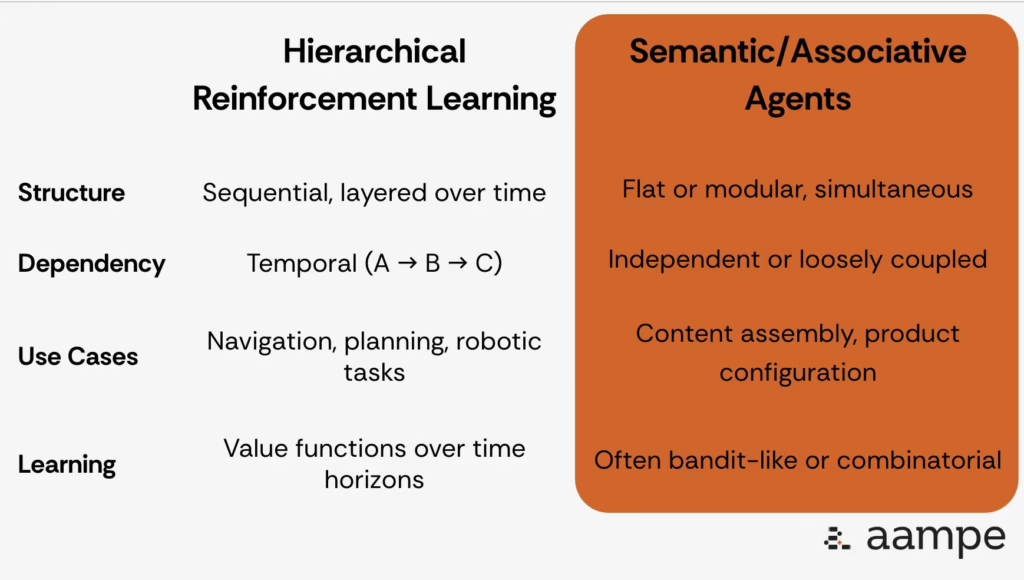
Following up on one of my recent posts about using bandits as the anchor point for how we think about agentic learning: Yes, we’ve stretched the bandit framing well beyond its usual territory — multi-dimensional action spaces, non-ergodic structure, per-user learning – but it’s still a better conceptual fit than alternatives like hierarchical RL. Customer […]
Navigating User Contexts: Aampe’s Approach to Personalized AI Agents
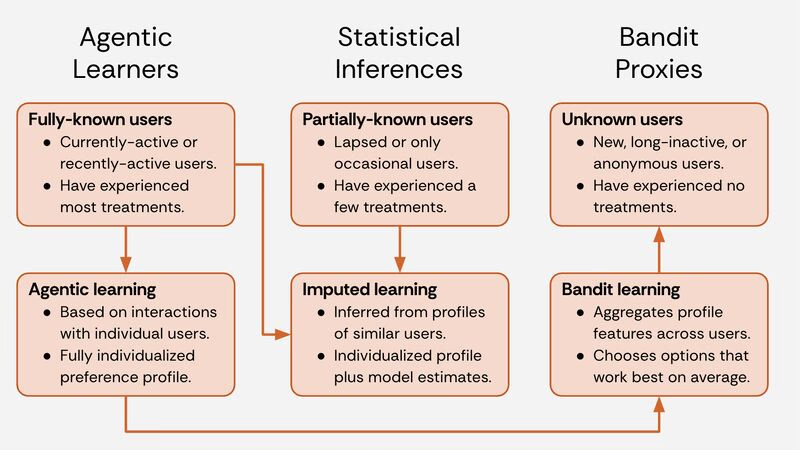
In a recent post, I wrote that our agents treat each user as their own unique context – they don’t generalize across users. One reader pointed out that zero transfer between users would be impractical for most business contexts, which is entirely correct. My one-context-per-user statement was an accurate portrayal of how semantic-associative agents learn user […]
Beyond Multi-Armed Bandits: Understanding Aampe’s Semantic-Associative Agents
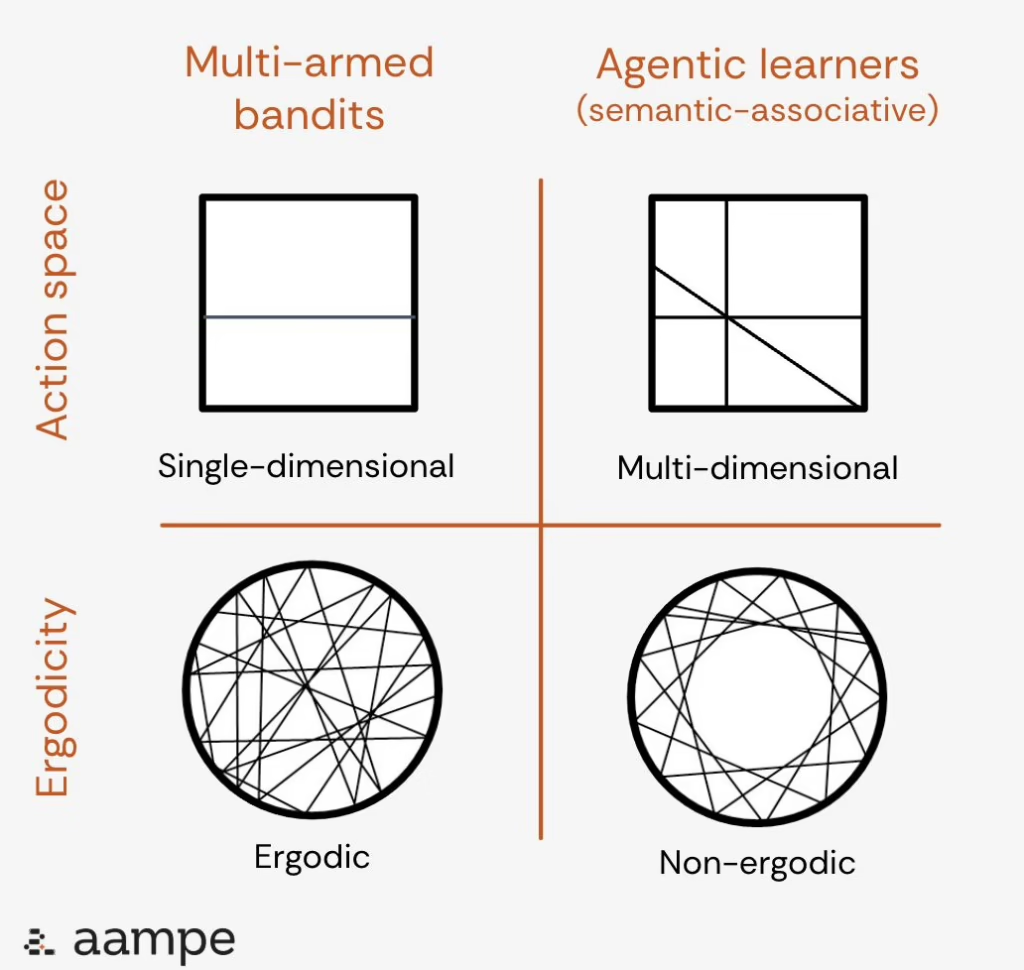
People sometimes ask whether our system is a kind of multi-armed bandit. It’s not. But that’s not a bad place to start if you want a familiar reference point. Our semantic-associative agents use the same basic intuition: take actions, observe outcomes, and update preferences. But two key differences make this something else entirely: Multi-dimensional action […]
Reevaluating Campaigns in Customer Engagement: Embracing Agentic Systems
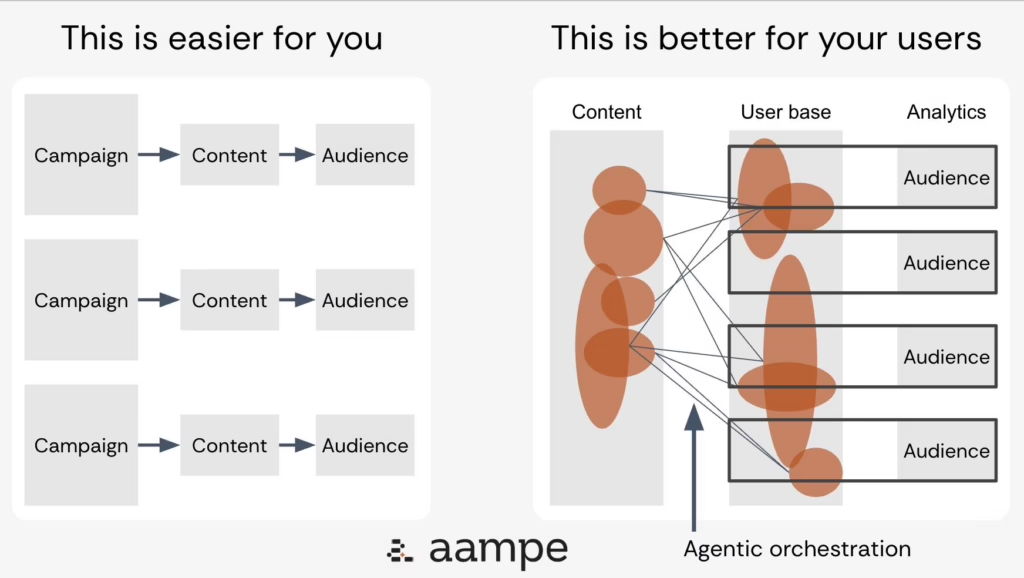
Technology is enabling, but it’s also constraining — your choice of technology requires tradeoffs. You limit yourself in some ways to multiply your efforts in others. Customer engagement tools are no different. Consider how “campaigns” are used: As orchestration — specifying which users get which messages under what conditions. This helps scale communication by breaking […]