
How much does good timing impact ROI?

A short time ago, we wrote about how message timing had a greater impact on conversions than the actual content of the message itself. So, if you can only optimize one thing—timing or copy—then you’re better off optimizing timing. (To be clear: you can and should optimize both. That’s why we built Aampe). However, that […]
How many different timing preferences could users really have?
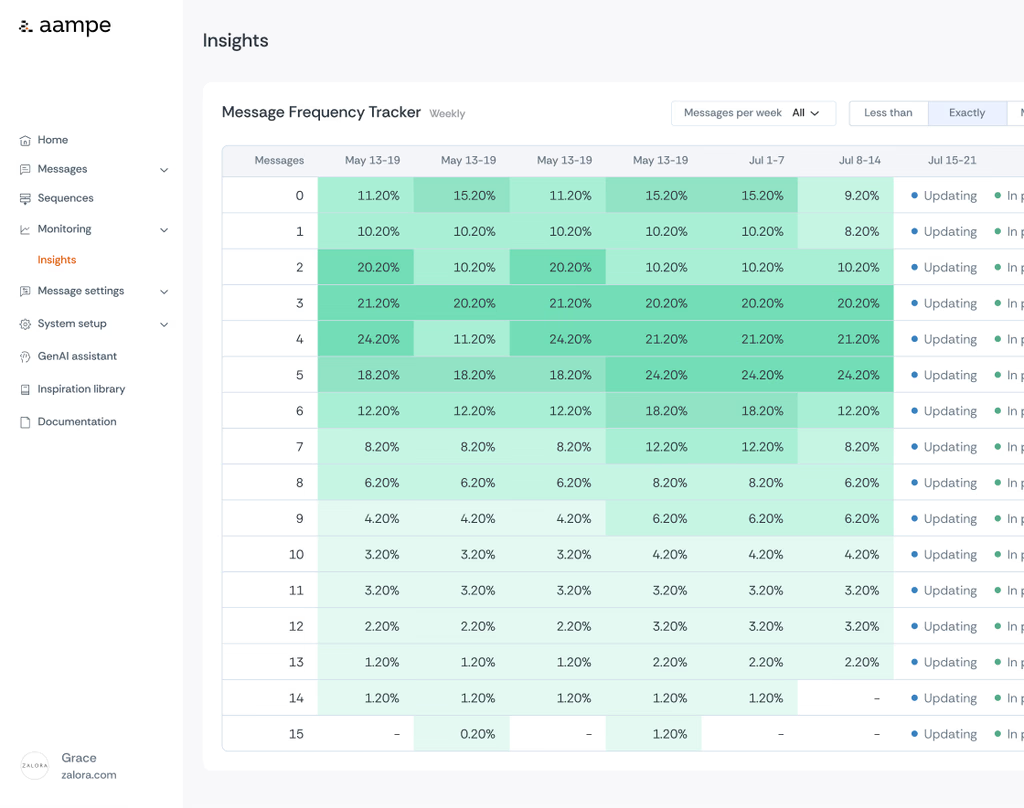
We wrote recently about the importance of getting the timing of a message right. This short post uses data from one of our customers’ actual messages to show what we mean by that. They say a picture is worth a thousand words. This one is worth hundreds of thousands of active users: To conduct this […]
Peek under the hood of our message-orchestration infrastructure

Early on, when we introduce people to what Aampe does (see here for details), we often run into this sort of question: “So…you’re basically just sending messages, right?” Hoo boy. Take a seat. Let’s talk about this. Anyone who has ever used a mobile device has an intuitive sense of what it means to send […]
User journeys and priorities
Aampe gives apps the power to learn what users want by making choices about when and how to talk with users. The learning happens by precisely monitoring those users’ responses in terms of their actions in the app. In other words, to message effectively we have to first know what our precise goals are. One […]
Users are people too

If you own an app, you can send users push notifications. That’s a standard feature. At Aampe, we believe that if you treat this feature as only a feature, you’re leaving an immense amount of value on the table. App notifications are a core strategic asset, not only for engaging users, but also for learning […]
The challenge of tracking user activity

User activity is one of the key ways mobile applications assess their health as a system, a product, and a company. The number of users who actually use the app, and their degree of usage, tells an important story about what works, what doesn’t, and what you can do about it. The problem, however, is […]
Using transaction data to set priors for message timing experiments
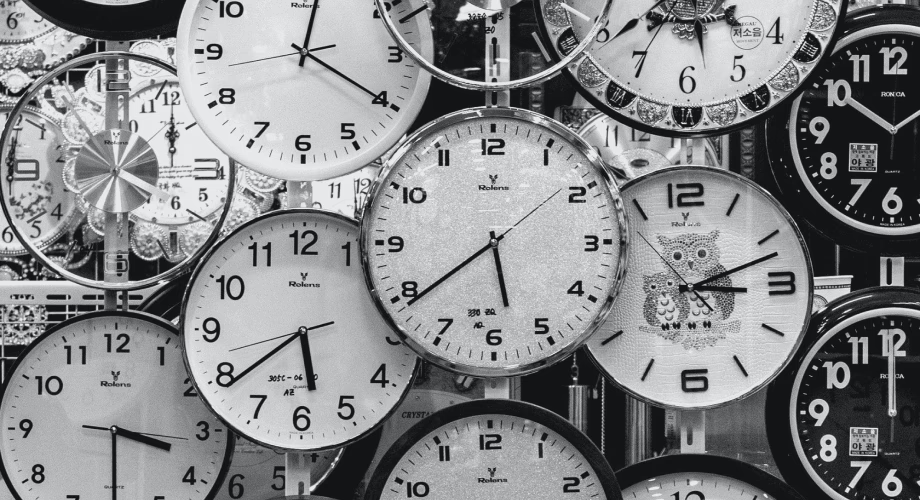
When experimenting with messaging, a lot of the focus is on the message content itself: what you want to say to your customers (at Aampe we call them contacts) and how you want to say it. In most marketing automation systems, the question of when you message is often taken as something you already know. […]
Aampe’s modular experimentation stack

Here at Aampe, we’re working to change the way companies communicate with their customers. We do that through always-on experimentation. You create a bunch of messages: different attention-getters, different value propositions, different creatives, different products. Aampe will automatically put those variants into competition with one another, in varying contexts and schedules over time, to truly […]
Why you need continuous experiments

In a previous post, I talked about conditioned experiments: unless you’re dealing with really huge sample sizes, you need to assign treatments based on all known variation in the backgrounds of the experiment participants. When we’re dealing with humans, traditional approaches to conditioning fall far short of what we need. That’s why Aampe provides automated […]
Why you need connected experiments

In the previous post, I wrote about the need to structure experiments in a very specific way to keep your results trustworthy. In this post, I’m going to talk about how to structure the experiment results themselves to maximize the value you get from each test. Say you run an experiment comparing message A with […]