Why agentic marketing requires a shift from writing messages to operating content systems
For years, marketing content has been treated like finished assets.
You write a message.
You review it.
You approve it.
You ship it.
That model worked when marketing moved slowly — when there were fewer channels, fewer moments, and limited personalization. But generative AI — and the rise of agentic systems — has made it clear that marketing doesn’t work that way anymore.
Today, every channel and every user moment requires specific, contextual content that systems can reason about. Lifecycle programs span hundreds of possible touchpoints. Product launches happen across surfaces simultaneously. Growth teams need enough variation to actually learn what works.
And yet, most teams are still trying to operate in an agentic environment using workflows designed for a very different era.
The result is familiar: slow launches, shallow experimentation, creative fatigue, and personalization that never goes beyond the basics.
The problem isn’t creativity.
And it isn’t effort.
It’s that the asset-based model of content breaks at modern scale.
Content doesn’t just need to scale. It needs to behave differently.
As marketing becomes more autonomously intelligent, contextual, and personalized, content can no longer be handcrafted and reviewed one message at a time.
It has to function as a system.
A system that can:
Produce variation without chaos
Be evaluated at scale (not line-edited endlessly)
Learn from outcomes and improve over time
Simply adding AI to old workflows doesn’t solve this. It creates more text — but not better systems. Teams still start over for every request. Every prompt is a reset. Every campaign is rebuilt from scratch.
That’s not a future-proof model.
From assets to infrastructure
This is the shift Relay is built around.
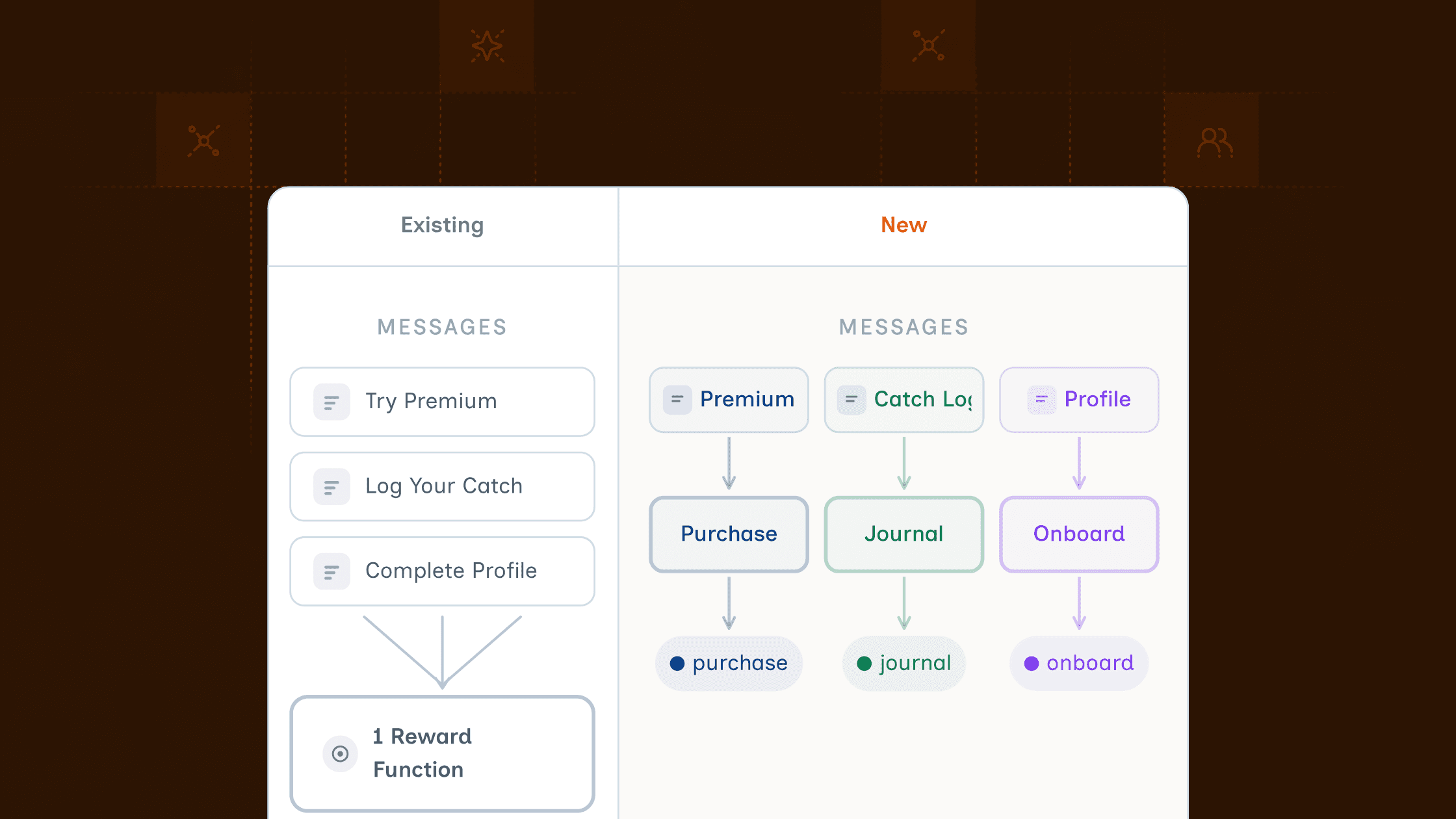
Relay turns content from something you write and approve into something you design and evaluate.
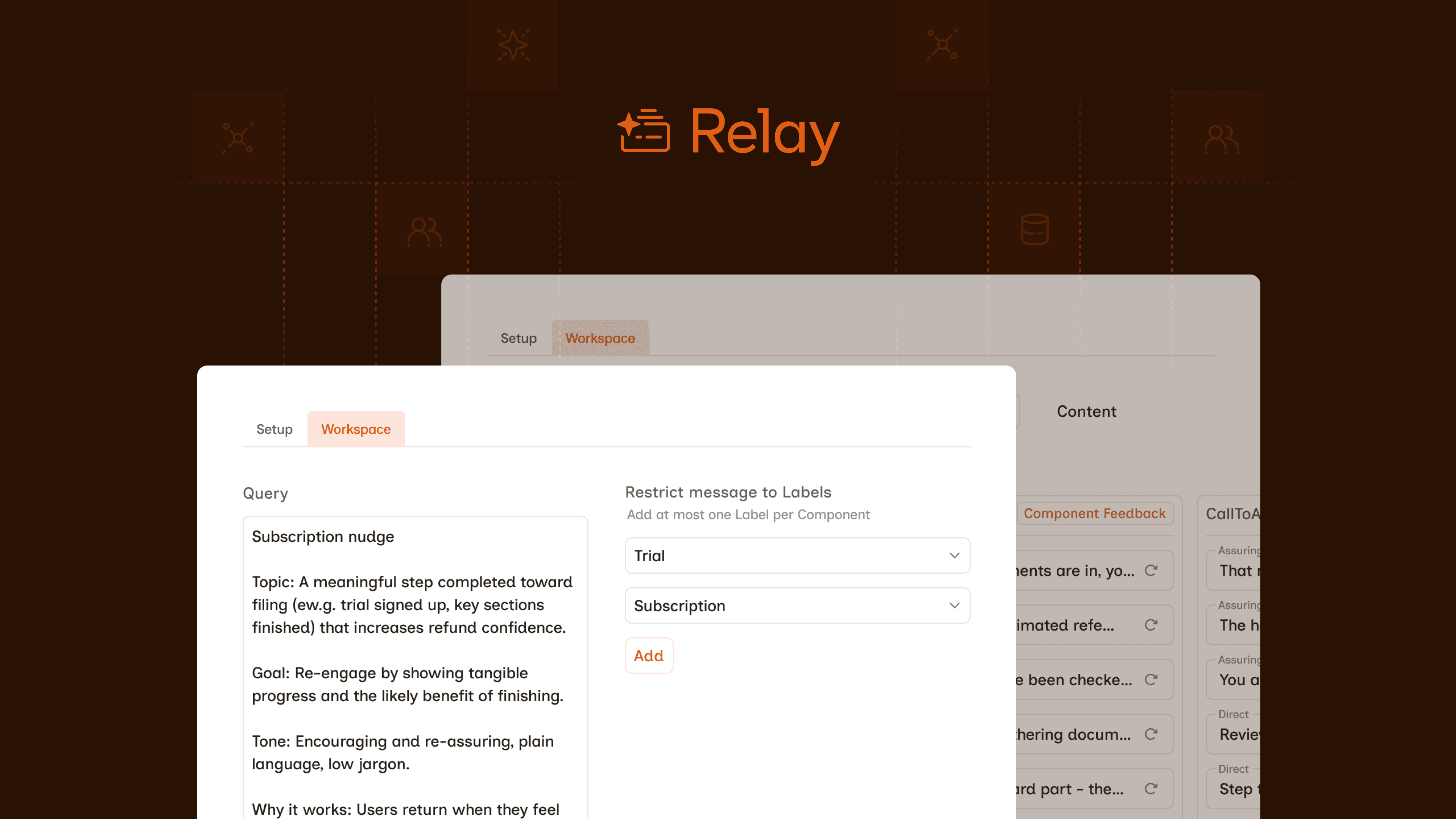
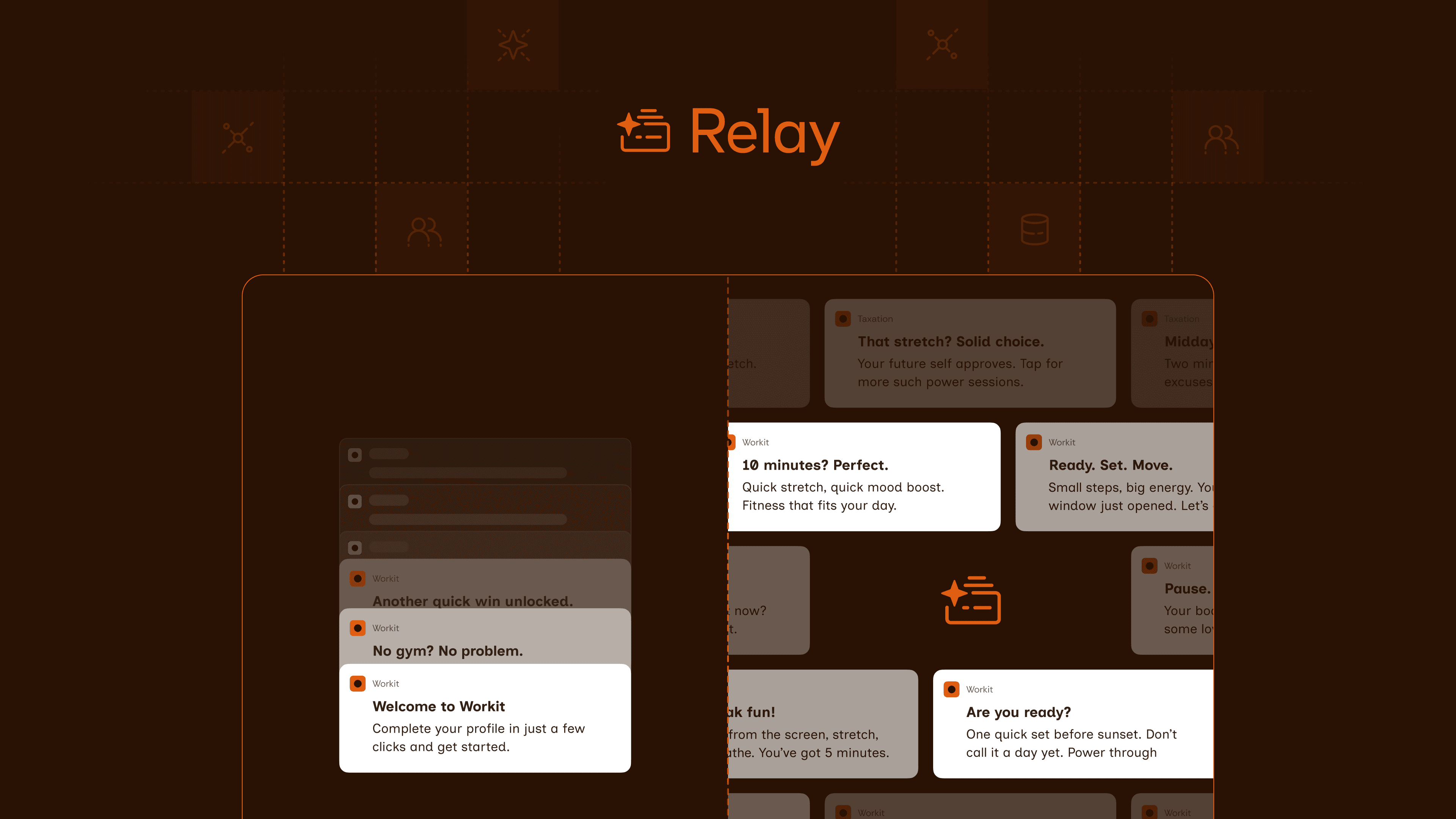
Instead of generating isolated blocks of copy, Relay produces structured, reusable content components inside clear context — brand voice, product details, legal constraints, and audience intent. Teams define direction and guardrails once. Relay handles the work of producing variation at scale.
Crucially, this content is built to be evaluated, not manually reviewed line by line.
At modern scale, reviewing thousands of variants individually isn’t realistic — or necessary. The right model is sampling and evaluation: confirming that the system is producing the right kinds of content, aligned to intent and guardrails, and improving when it’s not.
With Relay, approval shifts from:
“Did I edit every message?”
to
“Do I trust the system, the guardrails, and the direction?”
That’s how teams move faster without losing control.
When writing stops being the bottleneck
Once content behaves like infrastructure, something interesting happens.
At scale, the bottleneck stops being writing — and becomes ideas and creativity.
Teams can:
Run real experiments on tone, structure, and narrative
Explore different voices and characters without rewriting everything
Generate enough variation to actually learn what works
Marketing stops sounding the same because it no longer relies on one or two safe messages. Creativity becomes more important, not less — because direction and ideas are what matter most.
Introducing Relay
Relay helps marketers design, produce, and evaluate creative content systems at scale — so they can experiment, learn, and improve how they connect with users across every moment.
It’s not just a place to generate copy.
It’s marketing content infrastructure for a world where content behaves like software: iterative, testable, and always improving.
Relay supports:
Lifecycle, product, and growth use cases from a single workflow
Human-in-the-loop control through guardrails and evaluation
Structured content libraries that compound in value over time
Teams see immediate gains in speed and coverage — and long-term gains as learnings accumulate and content stops being rebuilt from scratch.
Why this matters now
The next era of marketing won’t be won by teams that write the best individual messages.
It will be won by teams that can:
Experiment faster
Learn continuously
And operate content as a system — not a pile of assets
Relay is Aampe’s answer to that shift.
And it’s just the beginning.
Learn more about Relay: “Content Infrastructure for Modern Marketing Teams.”