
A couple of years ago, a customer told us the agents did not feel very agentic. When the team looked, the answer was sitting in the content library. Only two messages were available to every user, and everything else was tied to a specific trigger. The agents had almost nothing to choose between, so a person on the receiving end kept seeing the same thing. It was a message variety problem, and it looked exactly like a weak agent.
Schaun Wheeler made the case for message variety back in 2022. His post explained why a larger, more diverse message inventory works better. The Aampe agent treats each message as a small bet on a user’s attention. A message that lands earns a little credibility with that person, and one that misses spends some. When the balance runs out, the person stops listening. Repetition spends credibility fastest, so variety keeps the account in credit. That argument still holds, and what has changed since is how the variety gets used.
Message variety is what an agent learns from
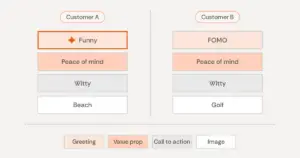
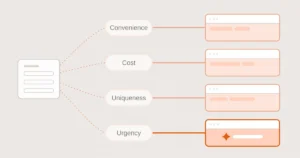
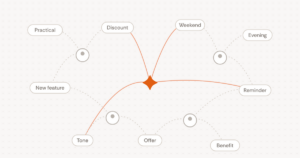
Today every user gets an agent of their own. The agent learns which parts of a message move that person by trying them and watching what changes afterwards. Those parts are labels, such as the value proposition, the tone, the offer or the call to action. With only two variants to choose from, the agent runs out of things to try almost at once. It also cannot tell the best option it tried from the best one available, because it never got to try much.
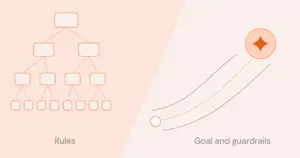
Good message variety gives the agent room to keep exploring uncertain options while it leans on what already works. Variety also comes cheaper than it used to. A message built from labeled parts is a combination. A modest set of greetings, value propositions and calls to action multiplies into many variants. Schaun’s advice was a few hundred messages at least, and ideally a thousand or so. With labeled components that number is reachable without writing each message by hand. Relay is also designed to help teams build and evaluate structured, labeled content. People still set the direction and the guardrails.
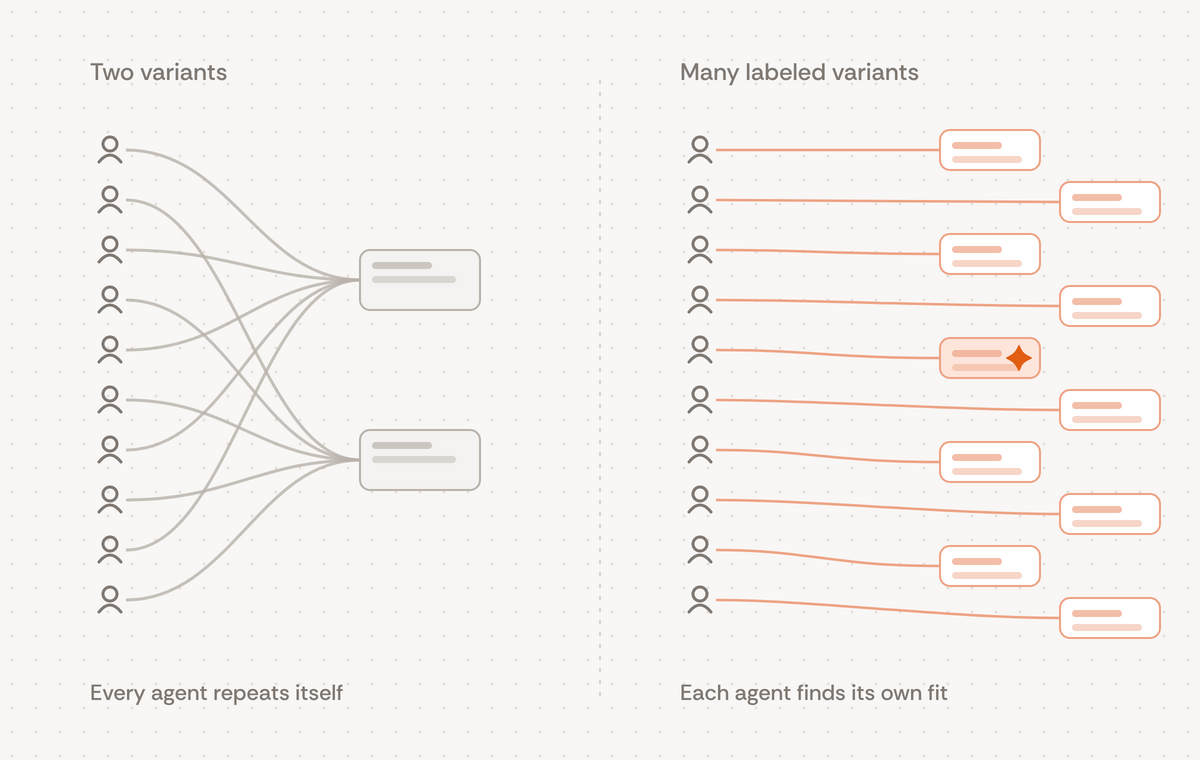
With two variants, every agent ends up repeating itself. With many labeled variants, each agent can find what works for its own user.
Give the agents more than the headline use cases
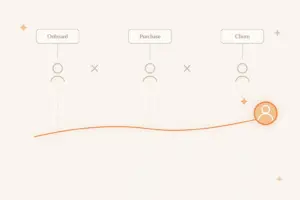
A pattern we saw across several new accounts last year was a request to point the agents only at a few headline use cases, such as onboarding or win-back, each with its own target. The instinct makes sense, but it starves the agents of message variety. Schaun’s answer at the time was that deciding and measuring are separate jobs in Aampe. Teams can set up every use case they have and let the agents decide which to use and when, within the eligibility rules. The results can be sliced by use case afterwards.
He compared it to running a sales team. You can dedicate some reps to new accounts and others to dormant ones. If you also cut them off from the reps working active accounts, they stop learning from each other. Agents only share what they know through learning, and learning needs content to work with.
Think twice before cutting the losing variant
The same year, a customer asked us to remove its worst-performing variants. That sounds like housekeeping, and it can quietly reduce message variety in the places it matters most. A variant can look weak on average and still be the best thing the agents have for a small group of people.
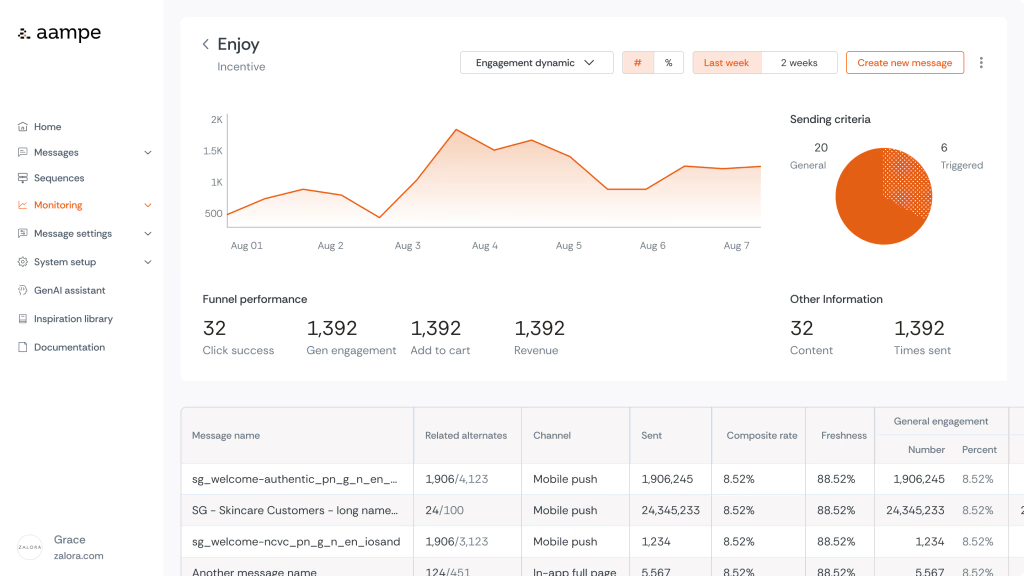
The way Schaun framed it, there are two reasons to keep a variant and protect message variety. It can work as a lure for exploration across the whole user base. Or it can serve a niche interest for the people who reliably respond to it. Before dropping a variant, a team should show that it does neither. In practice that means judging a variant in two modes, when it went out to explore and when an agent picked it with confidence. It also means care with small groups, where one lucky run can make a variant look great or terrible.
What thin message variety looks like from the outside
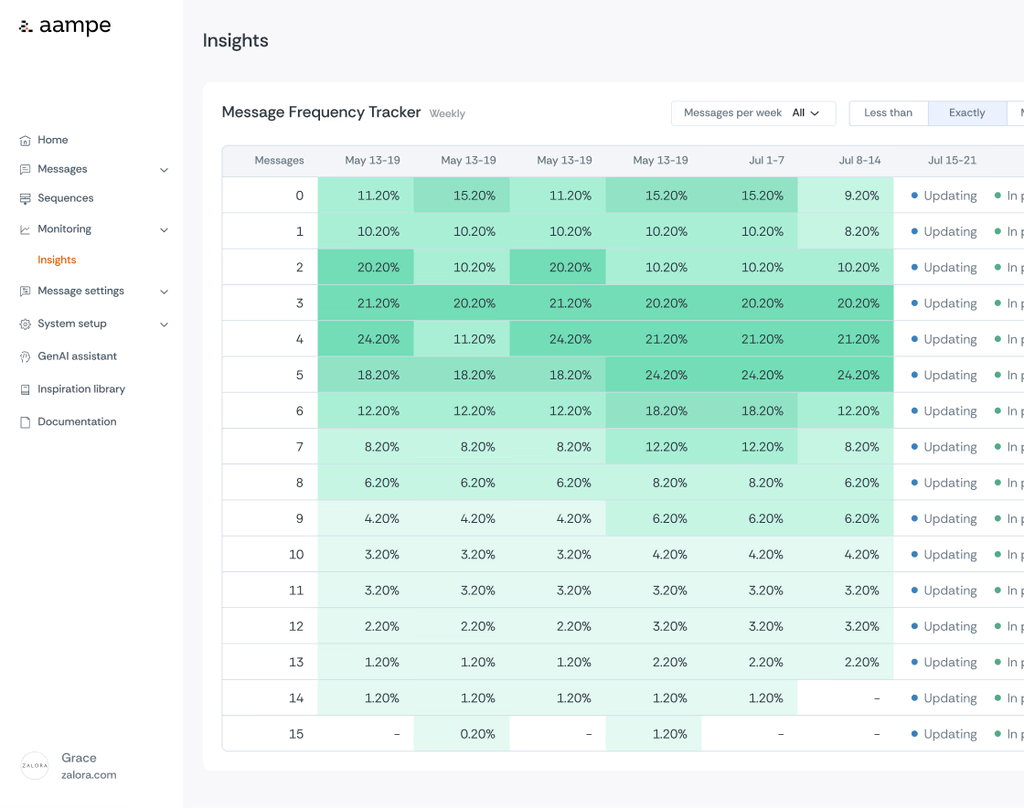
This year, about two months into another deployment, the broad behavioral numbers were moving the right way. Yet a small set of messages kept reaching the same people, because message variety for those audiences was thin. The agents did what they were built to do with the options they had, and there were too few options.
In response, the team added content for the audiences that needed it and narrowed a few messages to the people they suited. They also watched the individual signals without overreacting to them. The large-scale results were holding, which is a good reason to fix the content before second-guessing the agents.
Where to start
Before judging how well the agents are learning, count how many real choices each audience actually has. If that number is small, the first fix is more message variety. Then show a little patience before culling the variants that look weak. Schaun’s 2022 point was that variety protects credibility. With an agent for every user, message variety also sets the limit on how much each agent can learn.
This updates Schaun Wheeler‘s “Why a larger, more diverse message inventory leads to more effective messaging” from 2022.