Peloton’s creative team plans its resources a year out. That timing forces a question before an agentic pilot has proven anything: how much content will the agents need? Peloton’s lifecycle marketing team worked on the answer in weekly sessions with Aampe’s content specialist. The answer keeps growing as a second program joins or another dimension of labels is added. That one question shows how Peloton is running the pilot, function by function and program by program.
Steven Balagula is Director of Global Lifecycle Marketing at Peloton. He described the pilot, which runs with Aampe by MoEngage, at MoEngage’s Agentic Marketing Tour in New York in October. Each member of its prospect audience gets an agent that decides when to email and what to say. At the time of the talk, launch was a week away. Reaching it took support from teams with no obvious stake in the pilot.
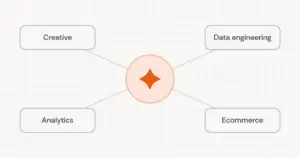
Each function needs its own reason to believe
Steven’s approach was to pull everyone in from the start and tell the story as it stood, unknowns included. This is where the industry is headed, and this is the value Peloton could gain. People got excited, including teams that were not working on the launch.
Each function still needed something different to believe. Leadership needed a case that ladders up to company strategy, since a big bet takes budget and resources. Members for life drive lifetime value, and that gave the pilot its place in the strategy conversation.
Creative needed to believe the agents would stay inside the guardrails. It also needed an answer to why the pilot requires so much content. Some brands accept generative AI producing millions of pieces of content. Peloton does not, so copy and legal review each piece.
Data engineering needed a reason to clean up its data. Data integrity, identity stitching and signal density decide whether an agent gets responses back. A minimum weekly average of leading-indicator signals can decide whether an audience enters the pilot at all.
Data science and marketing analytics built the opportunity sizing with the lifecycle marketing team. They looked at how specific cohorts perform, benchmarked against past tests and ran scenarios. Even a conservative lift made the case. Ecommerce partners heard a different story, which is that Peloton wants one-to-one decisions on the site too if the pilot works.
Across the companies Aampe works with, the most successful teams design the work to be cross-functional from the beginning. That holds even when shrinking a project to avoid the politics looks easier. Earlier software often made that collaboration harder, and agentic software can help it emerge. Peloton is building a structure that keeps that habit alive after launch.
How the lifecycle marketing team onboards one program at a time
The structure is a team dedicated to moving lifecycle programs onto agents one by one. Steven describes it as a lifecycle marketing team that partners with program owners. Examples are the owner of a retention program or an onboarding program. Opportunity sizing, signals, rewards, business metrics and content all differ by program. The team is writing a playbook it hopes will let it copy and paste at least the steps.
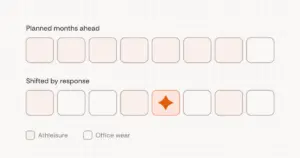
Content planning moves with each program too, since every program and every added dimension of labels multiplies what creative has to produce. The team revisits the projection each time. Program owners keep running their regular work during the move, and Steven reports that they are excited about it. Moving programs onto agents also changes what the marketers in them spend their time on.
What the marketer’s brief now has to do
Steven describes the marketer’s role as becoming a marketer again. Marketers stop building and QAing and decide which stories to tell, which gaps to fill and which signals to collect. A quiz, for example, can give a member room to respond. They also set the guardrails the agents work within, which is the control marketers keep when agents handle execution.
The brief also has to leave room for true one-to-one. That comes from placeholder blocks in the content modules that pull in member and behavioral data. Even ten thousand pieces of content across a database of ten million is still not one-to-one.
The year-out content plan gets a new answer with each program the lifecycle marketing team onboards, and creative is already in the conversation.
This builds on a talk by Steven Balagula, Director of Global Lifecycle Marketing at Peloton, and a conversation with Paul Meinshausen, CEO and Co-Founder of Aampe by MoEngage, at the Agentic Marketing Tour hosted by MoEngage in New York on October 15, 2026. Watch the full session. More conversations like this are on our YouTube channel.