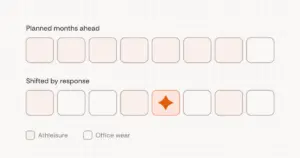
During the pandemic, an ecommerce business saw athleisure sales climb and bought stock to match. Then people started going back to offices and social plans. They stopped responding to yoga wear messages, and office wear drew the response instead, so the CRM team followed it. The VP who owned athleisure had all that stock. He walked into the CRM leader’s office and asked for more messages about it. That moment shows what AI agent governance has to cover once agents move faster than the org chart.
Who the CRM leader answers to
An ecommerce CRM leader in Australia told the story to Paul Meinshausen, Aampe’s co-founder. He had been describing what better technology could do for the end user. Everything he said made sense, she told him, but it assumed the customer was her only stakeholder. Her end customer never comes into her office on Friday to complain, she said. Her VPs do.
The athleisure VP’s logic is linear, since more messages about a product should sell more of it. Sales would rise a little, though they would rise more if the same slot went to what people were looking for. The slot is also finite, because a user can only receive so many messages in a day. Every message about athleisure is a message that does not go out about office wear.
Why the trade-off used to stay hidden
A CRM team that plans in weekly and monthly cycles never has to settle that argument. It sends what the business asked for three months earlier. The split of attention across business lines gets decided in a planning meeting, long before any response data exists. Nobody in CRM could measure fast enough to be held accountable for the split.
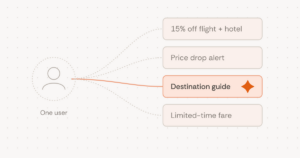
Agents remove that cover. An agent for each user finds sooner what that person is interested in and shifts toward it, so attention moves between business lines within days. The VP whose line lost some of it can see the effect in the next sales report. That VP will want to know why the move happened, what it gave up and who owns the trade. The CRM leader becomes a traffic controller, deciding which stakeholder gets time with the customer. The status of the role rises with that authority, and so does the pressure.
What AI agent governance has to settle before launch
Conversations about AI agent governance tend to start with guidelines for the agents and for the marketing they produce. The athleisure story adds a second layer, which is the allocation of the audience’s attention. The CRM leader can settle its shape with the VPs before launch. That means agreeing how much attention one business line can claim and who explains a dip to the VP who owns it.
Good AI agent governance also makes those decisions explainable afterward. When a user’s attention moves from one line to another, the reason has to reach the person who asks, in terms a VP can follow. Agents then work inside the boundaries the humans set, and that is where control moves to a level with leverage. It is the same idea as the control marketers keep when agents handle execution, applied to the people who sit above the CRM team.
Back to that Friday, with the VP at the door asking why attention moved off his line. With the allocation rules agreed in advance and the response data behind each shift, the CRM leader has an answer to give.
This builds on an episode of Conversations with MarTech featuring Paul Meinshausen, co-founder and CEO of Aampe by MoEngage. Watch or read the full episode speaking with Mike Pastore, Head of Content and Media. More conversations like this are on our YouTube channel.