How many messages do we need? Teams building a message library for AI agents ask it early, and they usually ask it in terms of their audience. We have a few hundred thousand users, so do we need a few hundred messages or a few thousand? The instinct is right that a bigger audience usually needs a bigger library. The count that actually sets the size comes from two other places, though. One is how many different reasons your users have for acting. The other is how often one person hears from you in a week.
Headcount matters mostly because it carries those two numbers along with it. A larger audience tends to hold more kinds of people, more lifecycle stages and more reasons to open an app. Each of those needs something written for it. The library grows with the variety in the audience, which may or may not double when the user count does. Audience size is a rough stand-in for that variety. It’s a useful one, as long as nobody mistakes it for the thing itself.
Each agent only ever sees one person
An agent in Aampe by MoEngage is responsible for one user. It decides whether to reach that person, when, through which channel and with what content. Then it compares what the person did afterwards with what they would likely have done anyway. Its whole job is one person, served again and again for as long as that person uses the product.
That changes the sizing question in a useful way. An agent needs enough to work with for its own user, and that is the whole of its demand on the library. Across all those agents, the message library needs enough range that each one has something its user might respond to. Picture an audience where many people respond best to convenience, plenty to quality and a few to urgency. The mix is made up, but the logic holds for any mix. If the audience grows and brings in people who mostly care about price, the library has to grow to cover price. If it grows with more of the same kinds of people, the labels you already have keep covering them.
What one user’s week asks of a message library
Once you size the message library around one user, two separate jobs come into view.
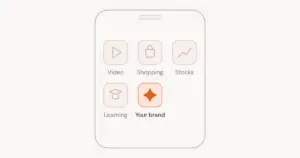
The first job is coverage, which comes from labels. Labels are what agents learn on, so they mark out the range of reasons a person might act. Nobody knows in advance which label a given user will prefer. In a varied audience, it’s likely that every label has at least one person who prefers it. A label that isn’t in the library is a preference no agent can discover. Working out which messages to write next usually starts with the labels that are missing.
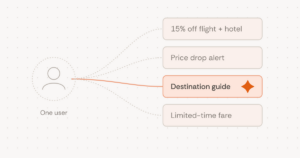
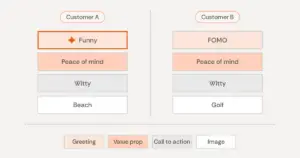
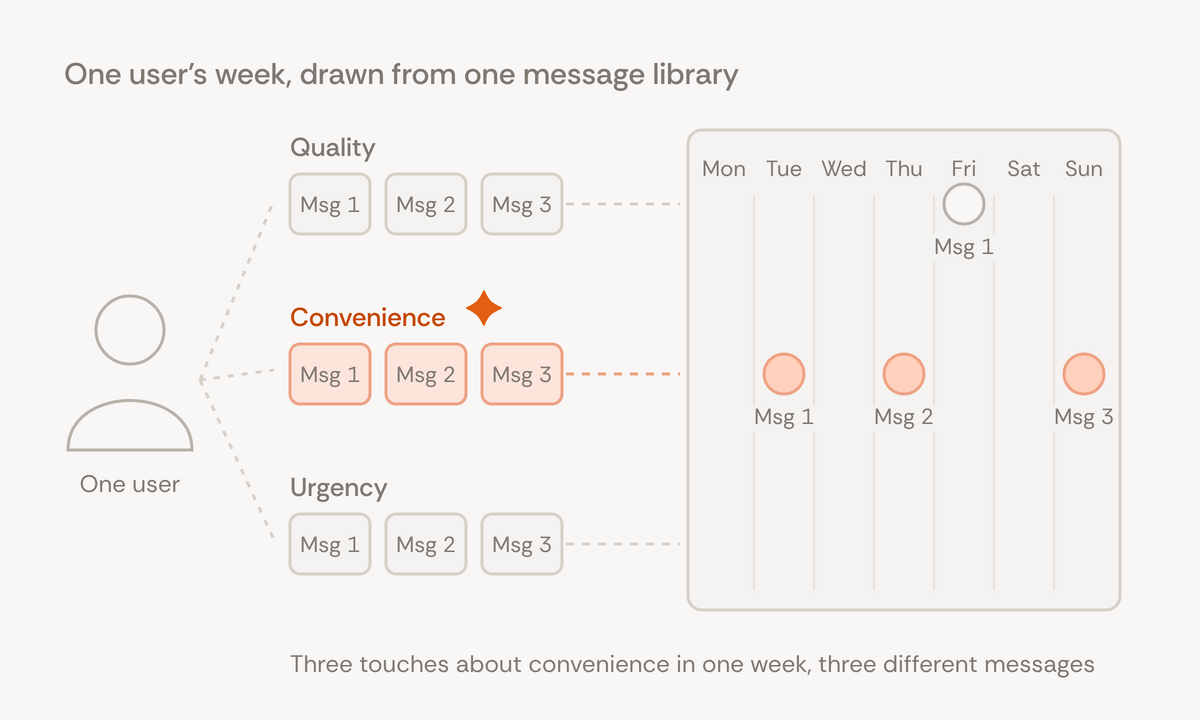
The second job is freshness. Say an agent has learned that someone responds to convenience and reaches them about it three times in a week. Those three messages should read as three different messages. Several messages carrying the same label keep the experience from going stale, and because they share a meaning, they don’t change what the agent is testing. Schaun Wheeler argued years ago that messaging the same thing over and over costs a message its credibility. Per-user learning makes that cost easier to see, since the same agent keeps coming back to the same person.
Write whole messages and let the labels follow
How the content gets made changes the arithmetic. In Aampe by MoEngage, marketers write complete messages in their own words. The system then labels each message automatically for the meanings it carries, such as the value it promises or the tone it takes. Every distinct message a user might see is one somebody wrote, since nothing stitches fragments of copy together into thousands of variations.
That puts the weight of the message library on the writing. A message about convenience has to read as convenience, or the label it gets will tell the agent very little. A single message usually carries several labels at once. One well-made message can reach a person who cares about convenience and a person who likes a particular tone. The useful habit is to write each new message for a reason, or a tone, that the library doesn’t cover well yet.
Count the week’s touches first
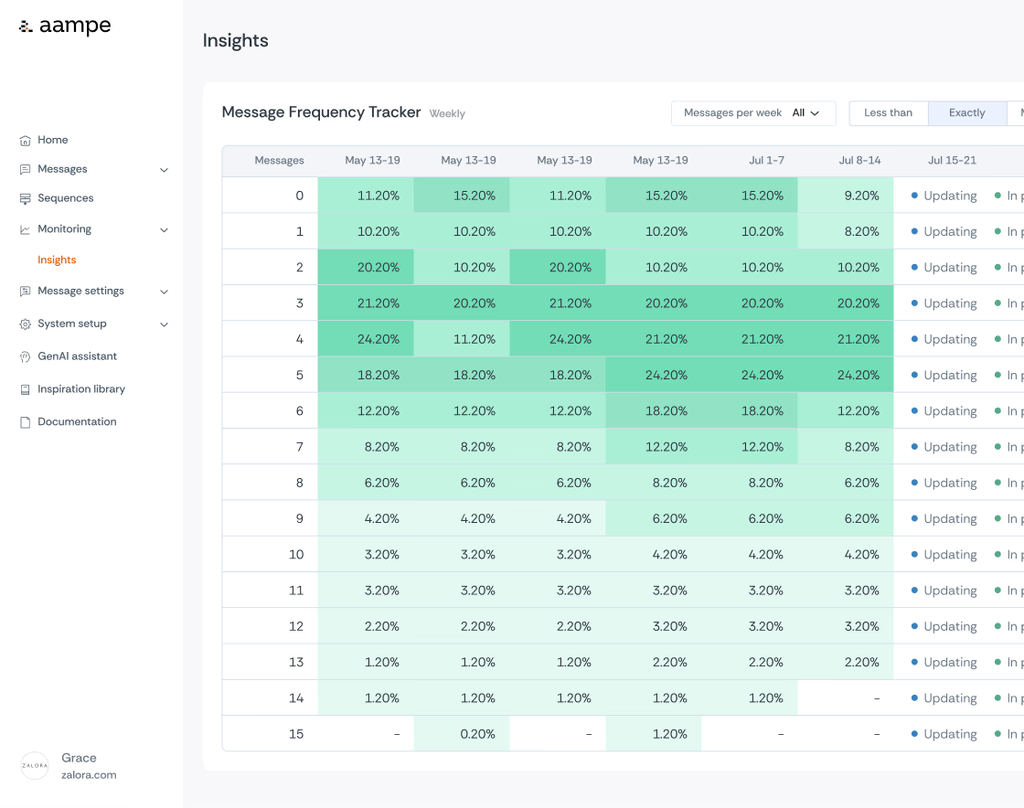
Sizing a message library then becomes a short exercise. Start with how often an agent might reasonably reach one user in a week, across push, email and in-product surfaces. Then check that enough different messages carry each label to fill that week without repeating. Three messages per label is a reasonable floor for a new message library, and it should rise as the touches per week rise. Finally, look at how varied the audience is, and add labels as new kinds of users arrive. That last step is where audience size comes back in.
Why a single-message launch teaches agents so little
The same logic explains the hardest way to start. Picture a launch with one message and an audience made up entirely of brand-new users. Every agent in that audience is meeting someone it knows nothing about, so it is in full exploration, and exploration needs options. With one message there is nothing to compare, so agents learn little about what moves each person.
Two details make the picture more subtle than it first looks. Agents decide timing separately from content, so they can still reach people from a thin library, but they learn very little from each touch. New users are also where agents lean hardest on what they have learned from everyone else. When the library is live for established users too, agents build up evidence about which labels tend to work. That evidence becomes the starting point for someone who just arrived, until their own behavior takes over. A launch aimed only at new users removes that borrowed strength.
That is why we push for several distinct messages at launch, ideally three to five different topics. We also push for audiences broad enough to include people agents already know.
A message library keeps working after you stop writing
There’s a quieter benefit to building this way, and it tends to show up months later. A campaign message has a send date and then it’s done. A message in a library stays available to every agent, including the agents of users who sign up next month or next year. Nobody has to track who already received what, because each agent keeps that history for its own user.
We saw this at one consumer app whose team added no new content for around two months. Their own dashboard kept showing orders and sessions climbing over that stretch. That was their read of their own numbers, we didn’t measure the lift, and other things could have played a part. It does show a library still doing its job while the team’s attention was elsewhere.
So when someone asks how many messages they need, start with one user’s week. Ask whether the labels cover the reasons people in your audience might act, and whether each label has enough messages behind it to fill a week of touches. As the audience grows and changes, keep adding to your message library. Every message in it keeps working for users you haven’t met yet. There’s a longer conversation about content strategy for AI agents on our YouTube channel if you want to go further.