One Learning Agent per Traveler: The Next Era of Travel Personalization
Travel marketing has a bad habit of mistaking activity for learning.
When performance stalls, the usual response is almost always the same: build another journey, add another audience, launch another campaign, increase promotional pressure, hope the next round moves the number. It feels like progress because the machine is busy.
But busy is not the same as adaptive.
That is the real structural problem in travel marketing today. Traveler intent changes quickly, yet most personalization systems still update in intervals. They learn in batches, react after the fact, and call it responsiveness. In a category where discovery is fragmented, booking decisions are increasingly shaped by social and AI-assisted planning, and travelers move fluidly between destinations, priorities, and price sensitivity, that lag is expensive.
The issue is not a lack of data. It is not a lack of creativity. It is not even a lack of AI.
It is the learning model itself.
Segments were built to manage groups. Travel now demands systems that learn people.
Most marketing automation platforms were designed around a simple operating assumption: group customers, assign journeys, optimize the flow. That architecture made sense when behavior was more predictable and when “personalization” mostly meant choosing the right campaign for the right bucket.
Travel does not behave that way anymore.
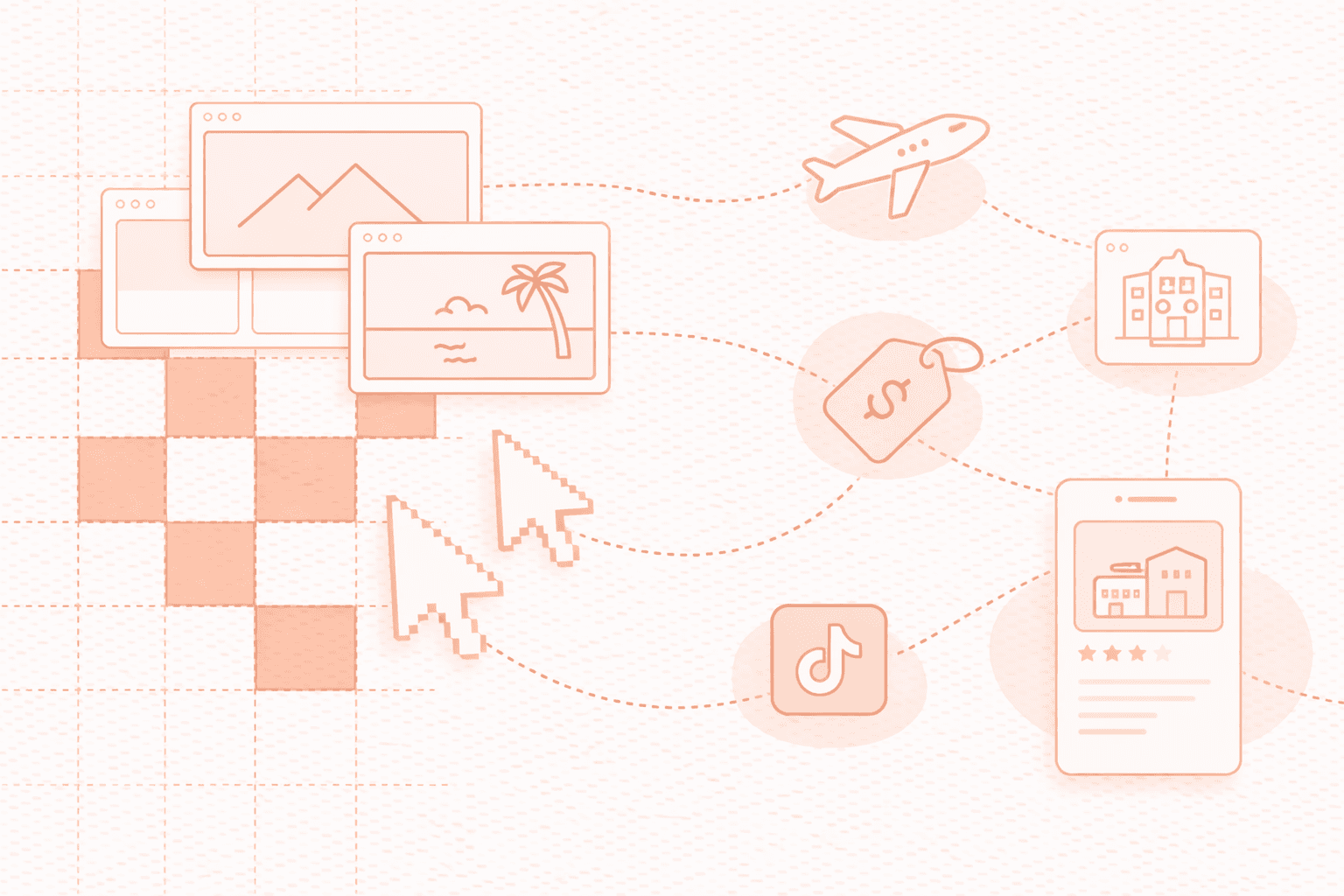
A traveler can look like a beach prospect on Monday, a budget-conscious city-break planner on Wednesday, and an urgency-driven booker by Friday because a fare dropped and a calendar opened up. Another traveler may appear to be shopping for a destination when what they are actually optimizing for is flexibility, cancellation confidence, loyalty value, or convenience. Static journeys can only approximate those shifts. They cannot continuously interpret them. Aampe’s public writing makes exactly this point: rules-based systems work when behavior is stable, but human decision-making rarely is.
That is why the next phase of travel personalization is not “better segments.”
It is continuous traveler-level learning.
One traveler, one learning system
A continuous traveler-level model starts from a more useful premise: stop assuming the path, and start learning from the response.
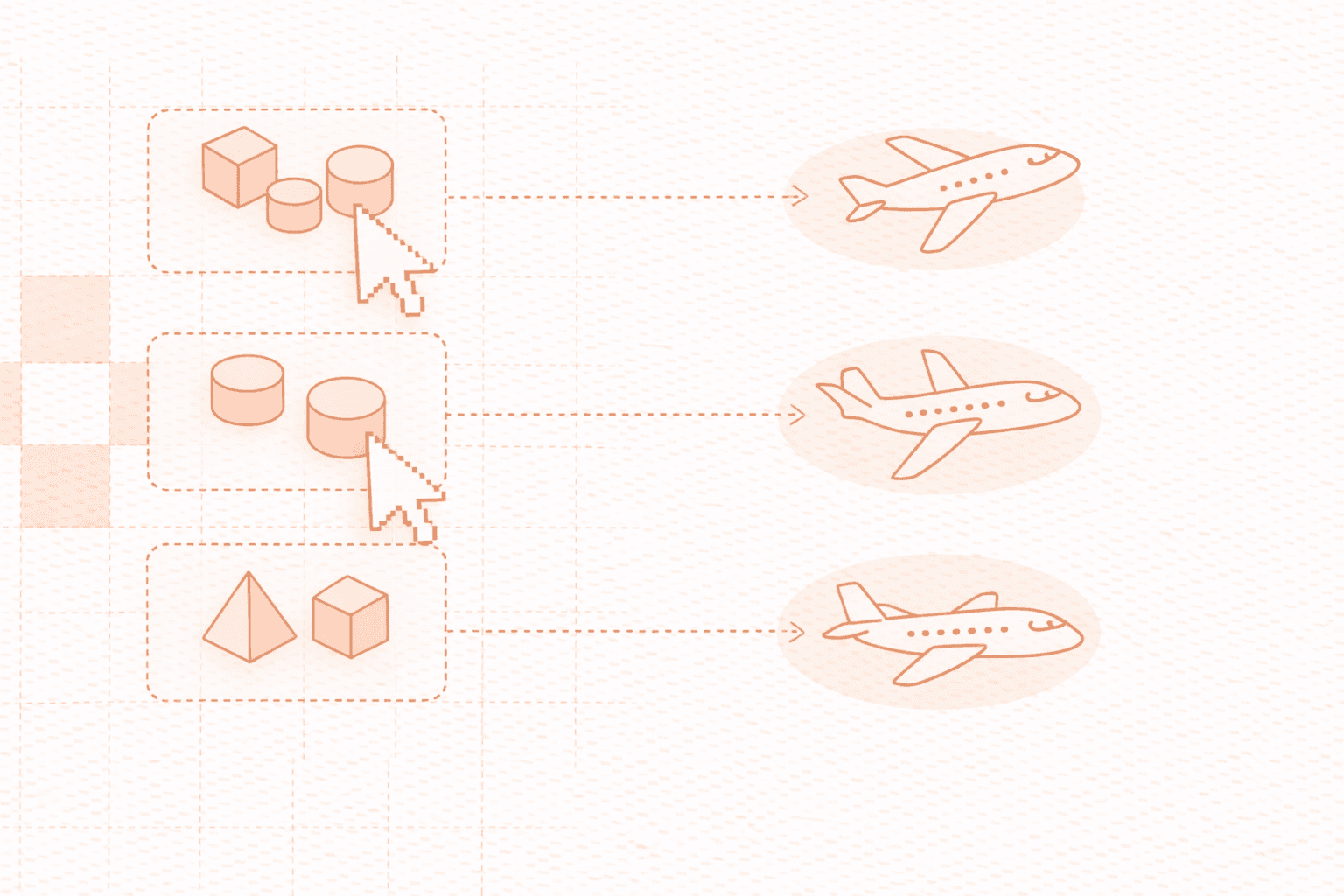
Instead of routing a traveler through a mostly fixed sequence based on shared traits, the system continually updates its decisions based on how that individual actually engages. Channel, timing, cadence, framing, and content are not set once and revisited later. They are adjusted as the system learns. Aampe describes this broader model as agentic personalization: systems that learn through interaction rather than simply executing prewritten logic.
Put more bluntly: the future is not one journey for many travelers.
It is one learning agent per traveler.
Not because that sounds futuristic. Because it matches the economics of the problem.
The objective is not to send more messages. It is to make better decisions.
This is not a workflow tweak. It is a different performance model.
Traditional lifecycle marketing tends to reset itself over and over.
A campaign launches. Performance comes in. Someone reviews results. Logic gets adjusted. The next campaign starts from a revised but still largely manual baseline. Even when teams are very good at this, the system’s intelligence compounds slowly because learning is trapped inside campaigns, tests, and reporting cycles.
Continuous individual learning works differently.
Each interaction sharpens the next decision. The system does not just optimize a campaign; it builds a more precise understanding of what drives that traveler to engage, book, and return. Over time, the result is not just better execution. It is a different growth curve. Deloitte Digital’s personalization research points in the same direction: stronger personalization maturity is associated with better revenue outcomes and improved loyalty, but many brands still struggle to translate “we do personalization” into experiences customers actually feel as relevant. Consumers recognized only 43% of experiences as personalized, while brands reported personalizing 61% on average.
That gap is where static personalization starts to break.
And it is where continuous learning starts to matter.
Better decisioning changes the economics of direct growth
For travel brands, personalization is not a brand flourish. It is a revenue system.
It influences whether a traveler books directly, whether they come back, whether they need a discount to convert, and whether owned channels actually become a growth asset instead of a maintenance expense. Expedia Group’s 2025 Traveler Value Index underscores how shaped-by-context modern travel decisions are: more than 60% of travelers now turn to social media for inspiration, 73% say influencer recommendations have influenced booking decisions, and loyalty remains highly important in how travelers evaluate value.
That is why continuous learning matters financially, not just philosophically.
When a system gets better at recognizing what matters to each traveler in the moment, growth becomes less dependent on brute-force campaign volume. The upside is not mysterious. It shows up in the places leadership already cares about: conversion, repeat booking, direct channel mix, discount dependence, and acquisition efficiency. Deloitte’s 2026 travel outlook also points to a market where path-to-purchase behavior is shifting, AI may reduce traditional brand touchpoints, and growth strategies need to adjust accordingly.
In other words: if decision-making gets more fluid, your personalization system cannot stay rigid without paying for it.
The good news: this does not require ripping out your stack
This is where a lot of teams assume the answer must be a painful replatforming project.
It is not.
The more practical model is a continuous decision layer that sits on top of the infrastructure brands already use. Email platforms, push providers, SMS tools, CDPs, and orchestration systems can keep doing what they already do well: execute. What changes is the logic that determines what gets sent, where, when, and why.
That distinction matters. Orchestration platforms are good at delivery. They are not always built to learn continuously at the level of the individual. Aampe’s public materials describe its role in exactly those terms: not replacing the existing stack, but improving decision quality across message, timing, cadence, and channel as behavior changes.
So the shift is not from infrastructure to no infrastructure.
It is from static orchestration to adaptive decisioning.
The next era of travel growth is compounding, not campaign-based
Travel personalization has already gone through two big eras.
First came batch messaging. Then came segmentation and lifecycle journeys.
The next era is continuous individual learning.
That does not mean marketers lose control. It means they stop spending so much of their control on rebuilding logic that a learning system should be handling for them. Strategy still matters. Creative still matters. Brand still matters. But the operating model changes from manually steering every branch to designing the system that learns what works for each traveler over time. Aampe’s public positioning describes this as agentic infrastructure: marketers define the strategy, while the system continuously adapts delivery and messaging around the individual.
That is why “one learning agent per traveler” is not just a product tagline.
It is a challenge to the old assumption that personalization should mainly be about assigning people to better buckets.
Because the real opportunity is not to get better at categorizing travelers.
It is to build systems that no longer need categories to do the most important part of the job.
Travel brands do not need more campaigns. They need systems that learn faster than traveler intent changes.
If you’re rethinking how to grow direct bookings, repeat bookings, and loyalty without adding more orchestration overhead, book a demo with Aampe.