Picture a user profile built for a music-streaming app: a single parent, short on time, squeezing listening in between school drop-off and a full workday. She reaches for audiobooks because they're easy to follow without full attention, and she decides what's worth her time by checking what's already popular, since she doesn't have the bandwidth to gamble on something unproven. That's a tidy persona, and a lot of content calendars get built around personas that look exactly like it.
The problem is that persona is actually three separate guesses, stapled together as if they were one fact: that she's short on time, that she wants easy-to-follow content, and that popularity is what tells her something's worth her attention. None of those three have to travel together. Someone with just as little time might be chasing the opposite of easy, a niche, vetted source instead of whatever's trending, because what's actually scarce for her is trust in anything unproven, not patience. Bundle three separate guesses into a single profile and the job gets easier to manage, but it also assumes everyone who shares one trait shares all three, and most people don't.

Segments made sense before agents could read individuals
Segmenting users solved a real constraint, just not the one a content calendar is actually working against now. Writing and managing a different message for every person on a list of a million was never realistic for a human team, so the team narrowed the list into a handful of buckets and wrote one thing for each. That's a sensible way to run people. It stops being necessary the moment the thing managing outreach is an agent instead of a person, because an agent can hold a separate read on every individual without needing them sorted into a bucket first.
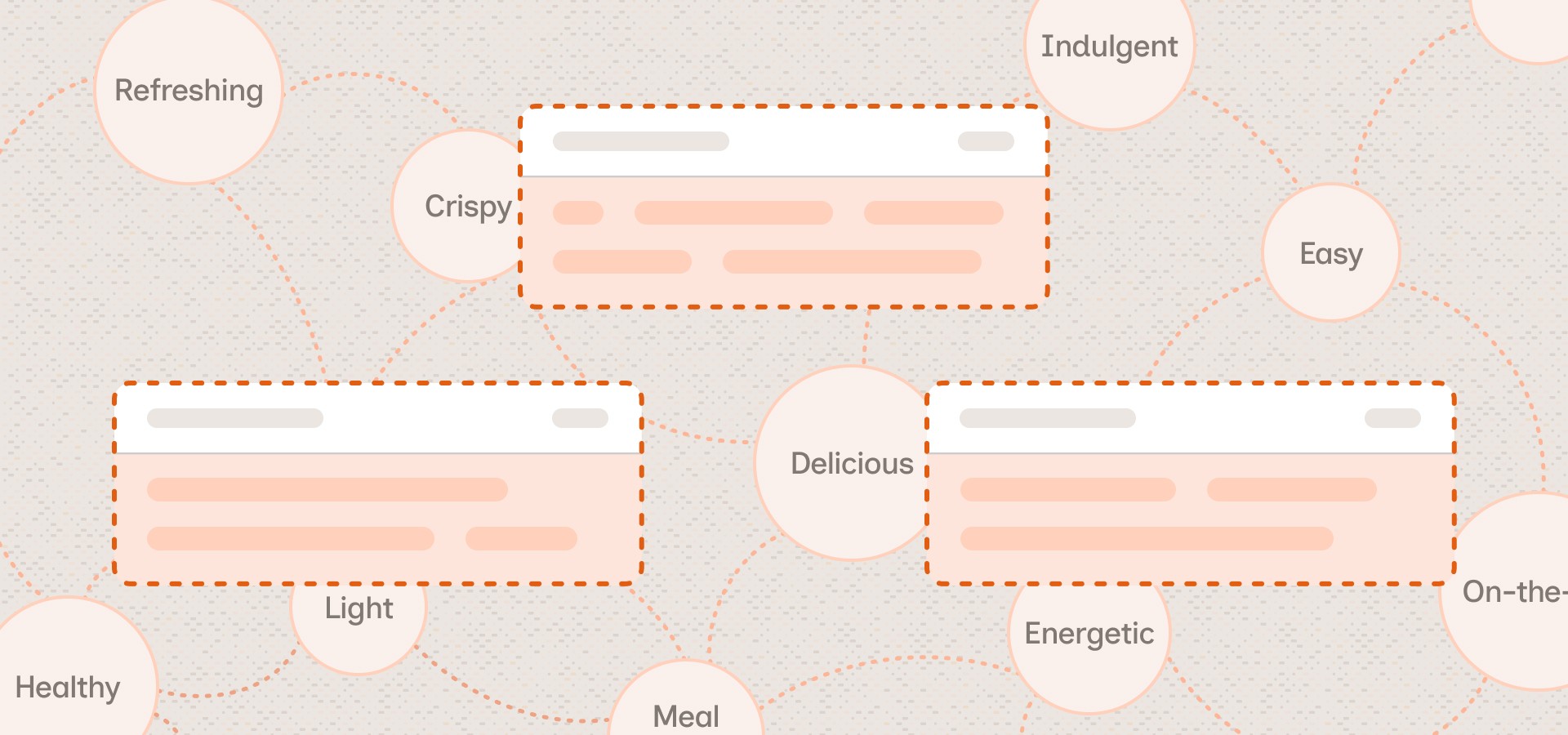
What an agent actually needs is content broken into the same dimensions a persona was quietly bundling together in the first place: the value being emphasized (convenience, cost, exclusivity, urgency), the tone, the incentive level, the specific category or feature being pointed to. Relay exists for a team that wants that help: a human still sets the direction, the intent, the guardrails, and then treats each of those dimensions as its own label instead of letting them get baked into one finished message, so an agent can learn that a specific person responds to urgency on its own, independent of whether that urgency showed up in an email about shoes or a push notification about a flight.
Even a scroll past teaches the agent something
None of this needs a conversion to be worth sending. A piece of content someone looks at and swipes past still carries information, which value framing landed, which tone didn't, which category the person is actually open to right now. That reading stays valid long after the campaign that produced it ends. Two months later, when the same person is finally ready to act, the agent already knows the tone that works and the value that resonates, and reaches for content that fits before the person remembers your product was ever there.
Coverage is the real question, not volume
The real test of a content strategy is what share of the users, agents are responsible for are actually in market for something that already exists to send them, not how much got made. In practice, with a travel brand that had produced an incredibly large, diverse content library, agents still came back with low confidence in any available content for 51 percent of the user base, not from a lack of effort, but because half the audience didn't fit anywhere the existing library covered. That kind of gap carries a real cost: a question the agent will never get a chance to ask, because nothing was ever built to ask it with.
Coverage shows up in places that look unlikely from the outside. Teams are routinely convinced nobody wants to read their own blog posts (so ironic that we're talking about this here, and if you're still reading this, thanks!), or that no one cares about a ride-share app's safety information, right up until the content exists and a real slice of the audience turns out to want exactly that. What decides it is whether anyone on the list is actually in market for the topic, not how naturally it fits a push notification, and there's rarely any way to find that out without giving an agent the chance to look.
The gains that add up beat the message built for everyone
There's an old story about Dave Brailsford who helped transform British Cycling, a team that went from one of the worst in Europe to one of the best within a few years, not by finding the single change that fixed everything, but by looking at every rider individually: a better-shaped seat for one, a changed sleep schedule for another, a different training plan for a third, and letting those small, separate fixes stack. The accumulation made the team great, not any one adjustment inside it.
Content built for agents works the same way: enough range across enough niches to find the handful of people each piece actually reaches, plus the patience to let those small wins keep stacking, person by person, until the coverage adds up to something no single message built for the average user could ever reach. The one message everyone responds to was never the goal, mostly because it doesn't exist.
This builds on a conversation between Schaun Wheeler, Aampe's Chief Scientist, and Patricia Lazatin on content strategy for agentic systems: Customer Segmentation Is the Wrong Starting Point: How to Build a Content Strategy for AI Agents