A (not so distant?) future day in the life of a CRM Manager
Meet Sarah.
She is a CRM Manager, and she is very good at her job.
She knows how to launch campaigns under pressure, untangle messy audience logic, coordinate with product and content teams, and somehow still catch the typo in a push notification five minutes before launch. She has spent years learning how to turn calendars, journeys, segments, and tests into growth.
For a long time, that was what great CRM looked like: a smart person holding together an increasingly complex machine.
But in 2026, the machine is changing.
Not because CRM matters less. Because relevance matters more.
The old model asked marketers to manually translate customer understanding into segments, rules, calendars, and campaign logic. The new model is starting to replace that human bottleneck with something more adaptive: a continuous intelligence layer that learns from every interaction and helps determine who to engage, what to say, when to say it, and where it should happen.
So what does that actually look like for someone like Sarah?
Surprisingly, it does not look like less responsibility.
It looks like a bigger job.
8:43 AM: Sarah opens her laptop and does not start with a campaign calendar
A few years ago, Sarah would have started her day inside a planning doc.
Which audiences need a push this week? Which lifecycle stage needs fresh copy? What is launching in product? Which team already claimed the prime in-app slot? Is this a winback message, a promo, a reminder, or all three pretending to be one another?
Now, she starts somewhere else.
She opens a system where each user has an adaptive agent continuously learning from behavior, timing, context, and response patterns. The intelligence is attached to the user, not trapped inside a single campaign. That means learning does not reset every time the business launches a new initiative or moves a customer from one lifecycle stage to another. It compounds.
Sarah is not staring at static segments.
She is looking at a living system.
And that changes the first question of the day.
Not: “What campaign do we need to send?”
But: “What opportunities should we give the system to learn from today?”
10:12 AM: The job shifts from managing sends to shaping intelligence
Sarah still works cross-functionally. In fact, more than before.
But the conversation is different now.
Instead of debating whether one message should go to one audience at one time, she is working with product, growth, and brand teams to expand the set of meaningful choices available to the system. More useful content. More distinct value propositions. Better framing. Better surfaces. Better context.
Because in an agentic system, content breadth is fuel.
If every message says the same thing in a slightly different way, there is not much to learn. But when teams create real variation in tone, incentive, value proposition, and use case, agents can begin to understand not just what performs, but why it performs for different people. That is where personalization starts feeling less like optimization and more like understanding.
Sarah has learned this the hard way.
The strongest teams are not the ones producing the most campaigns. They are the ones creating the richest opportunity space for learning.
11:37 AM: A/B testing starts to feel a little too small
Sarah still believes in experimentation. She always will.
But she no longer thinks the job is about finding a single winner.
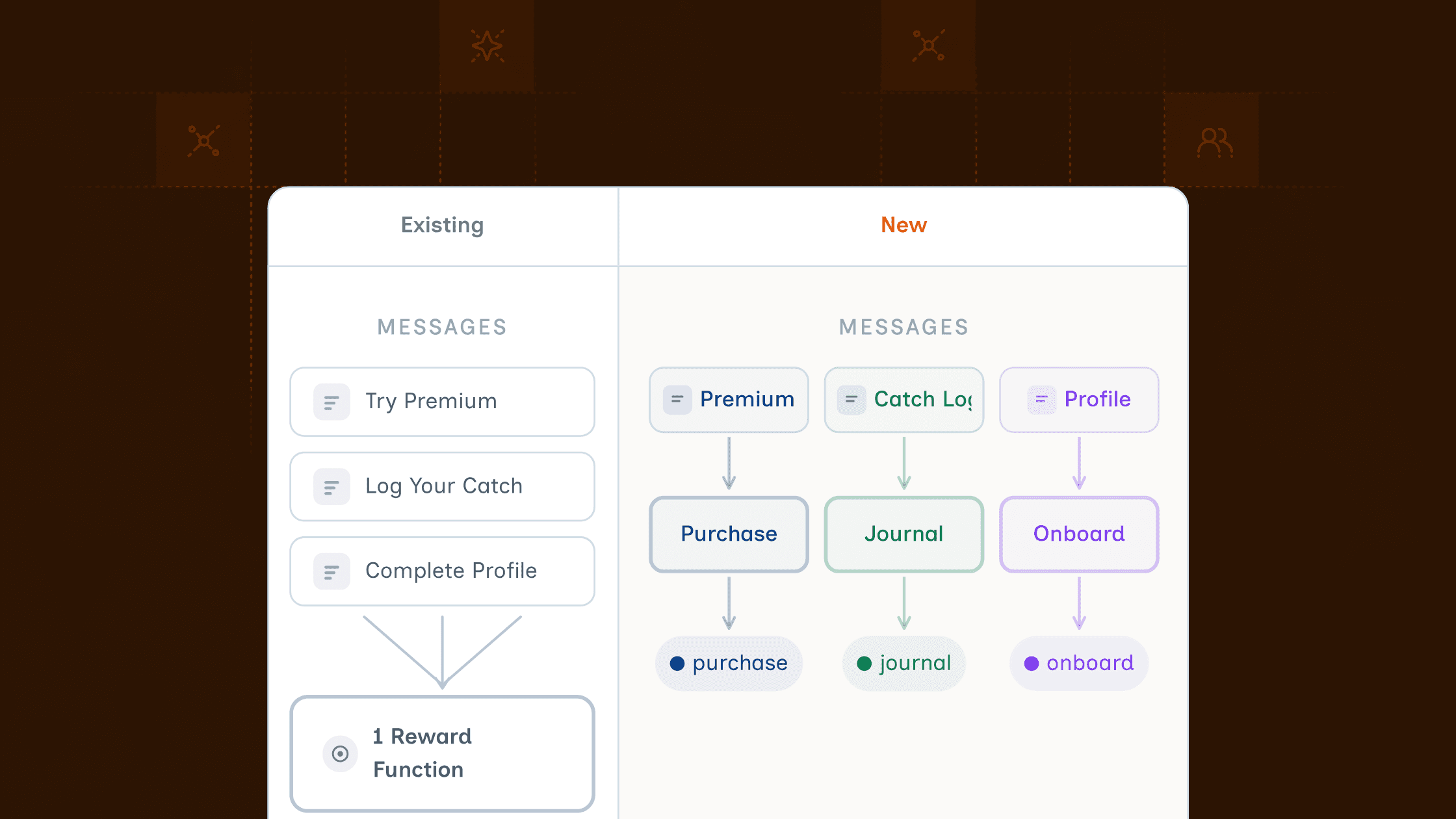
Traditional A/B testing helped marketing teams move beyond guesswork. Campaign-level AI decisioning helped them go further, optimizing choices within defined use cases. But the more advanced Sarah’s programs became, the more obvious the ceiling looked. Intelligence stayed local. Learning often lived inside the campaign. Complexity kept growing.
That is the old tension: every campaign gets smarter, but the overall system does not necessarily get simpler.
In Sarah’s world now, the question is no longer, “Which version wins?”
It is, “Which decision is right for this person, in this moment?”
That is a very different game.
One user responds to reassurance. Another to urgency. Another to utility. Another to timing more than message. The system is not trying to crown one global best practice. It is learning a pattern of fit at the individual level over time.
Sarah does not miss waiting two weeks for significance just to discover that the answer was, once again, “it depends.”
1:24 PM: Product and CRM stop acting like separate worlds
One of the most interesting changes in Sarah’s day is that messaging is no longer treated as a narrow channel problem.
The same intelligence can now learn across messaging and product touchpoints, not just outbound campaigns. So behavior in-app can shape future messaging, and messaging performance can inform how the product experience evolves. The system is no longer boxed into email, push, or SMS alone.
For Sarah, this means her job is no longer just about sends.
It is about customer experience orchestration.
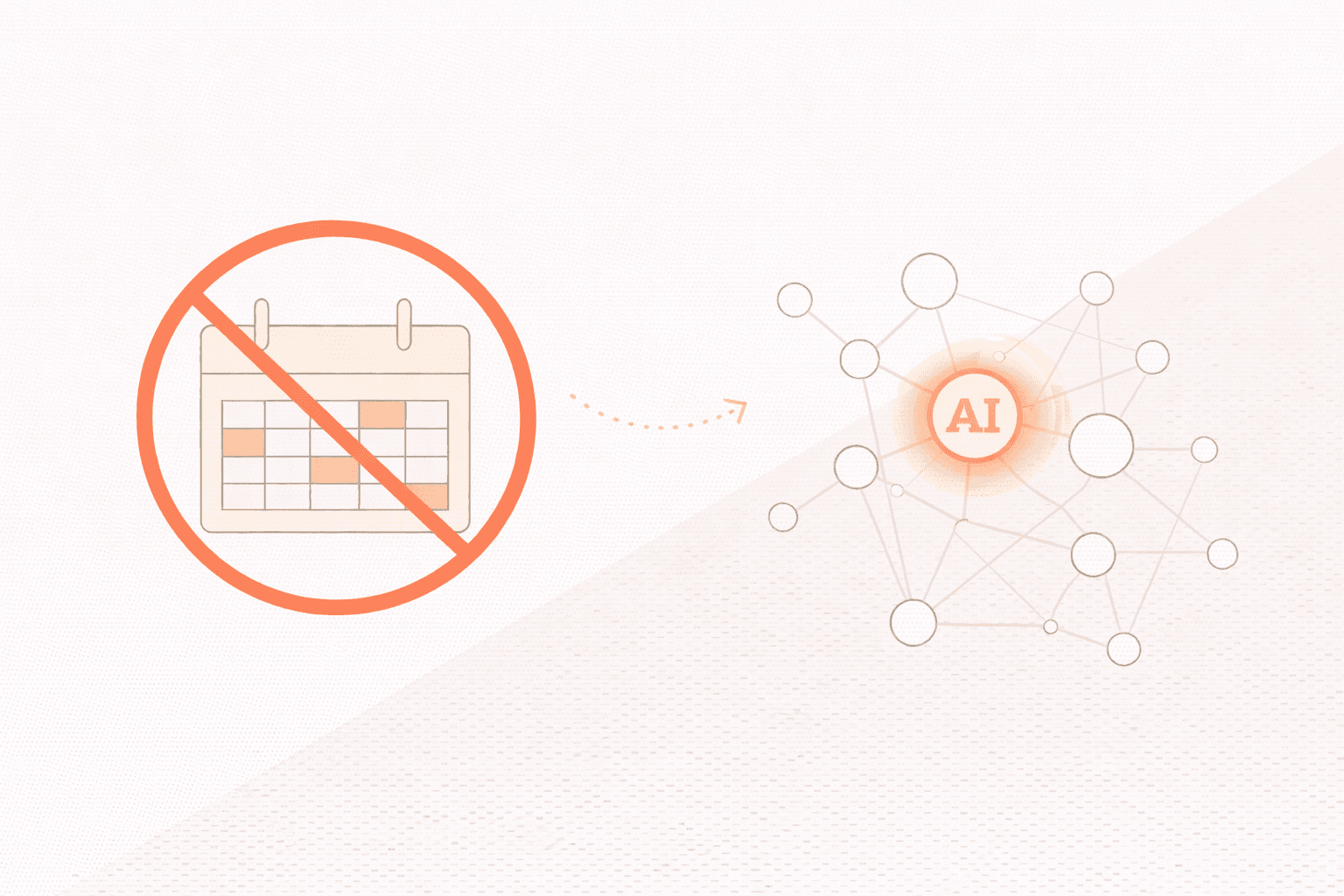
She is sitting with product marketers to think about feature adoption. She is reviewing how different value propositions are tagged so learning can travel across launches. She is working with content teams to make sure the system has semantic variety, not just copy volume. She is helping the business move away from fixed calendars and toward a shared intelligence layer that can coordinate across teams and surfaces.
That is a bigger remit than CRM used to have.
But it is also closer to what CRM leaders always wanted the role to be.
2:56 PM: Sarah sees something a rules-based system never would have found
This is the part of the day she enjoys most.
A pattern emerges that nobody explicitly designed for.
A certain cluster of users consistently responds to a framing the team thought was secondary. Another group ignores what used to be a top-performing message but engages when the value proposition shifts. Somewhere else, silence outperforms frequency.
And that last one matters more than most people think.
Because one of the clearest signs of a smarter system is not just knowing what to send. It is knowing when not to send anything at all. Teams do not need more noise disguised as personalization. They need better restraint. A system learning at the individual level can protect trust while still improving outcomes.
Sarah has spent enough years in CRM to know that “send more” is often just a less elegant way of saying “we are not sure.”
Now she has a system that can be surer.
4:18 PM: The CRM Manager is still here, just harder to define in one line
There is a lazy version of this story where AI arrives and the CRM Manager fades into irrelevance.
That is not what Sarah’s day suggests at all.
If anything, her role has become more strategic.
She spends less time manually building segments and predefined journeys, and more time setting goals, shaping guardrails, expanding creative breadth, and spotting where growth opportunities actually live. The latest internal framing captures that evolution clearly: the role moves beyond campaign strategist toward something closer to a growth architect, with fewer static structures and more focus on strategy, inputs, and outcomes.
That shift is bigger than a tooling change.
It is a mindset change.
The teams that struggle are usually the ones trying to force old campaign logic into a new system. The teams that win stop asking which segment gets which campaign and start asking what possibilities they want agents to solve for.
Sarah did not lose control.
She just stopped spending it on the wrong things.
5:31 PM: She logs off, and the system keeps learning
By the end of the day, Sarah has not manually assembled a dozen journeys.
She has done something more valuable.
She has helped shape the conditions for better decisions to happen continuously: richer content, clearer priorities, better constraints, stronger collaboration across teams, and a system that can keep learning after she closes her laptop.
That may be the most compelling part of this not-so-distant future.
Not that CRM becomes automated into invisibility.
But that the role finally gets to grow into what it was always reaching for: less campaign operator, more architect of relevance.
And if that sounds a little closer than “future” usually does, it probably is.
If your team is starting to feel the limits of static journeys, rigid segments, and calendar-first orchestration, this might be a good moment to imagine what a different day could look like.
So let's chat.