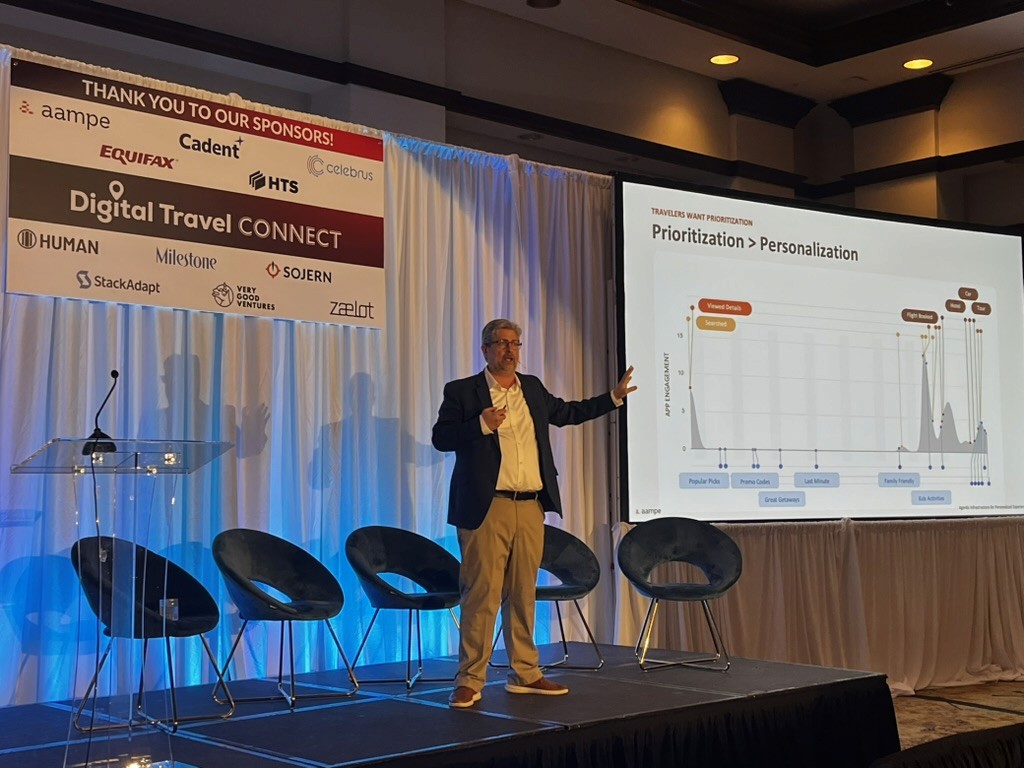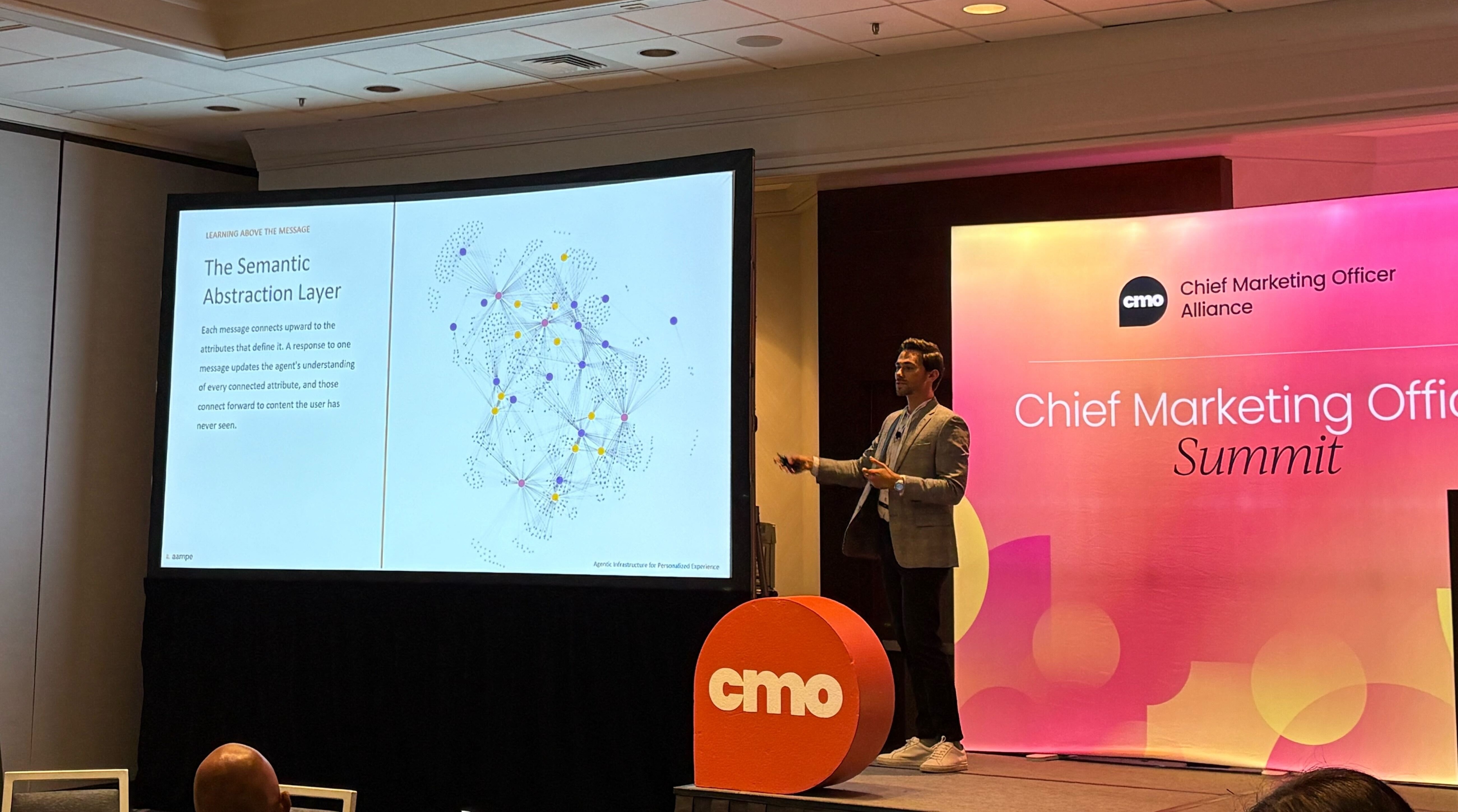
At the CMO Summit in Silicon Valley on April 14, Aampe’s Head of Solutions Strategy, Zach Dorner, took the stage to make a simple but important point: most teams are not struggling because they lack AI tools. They are struggling because they are trying to bolt those tools onto infrastructure built for a different era.
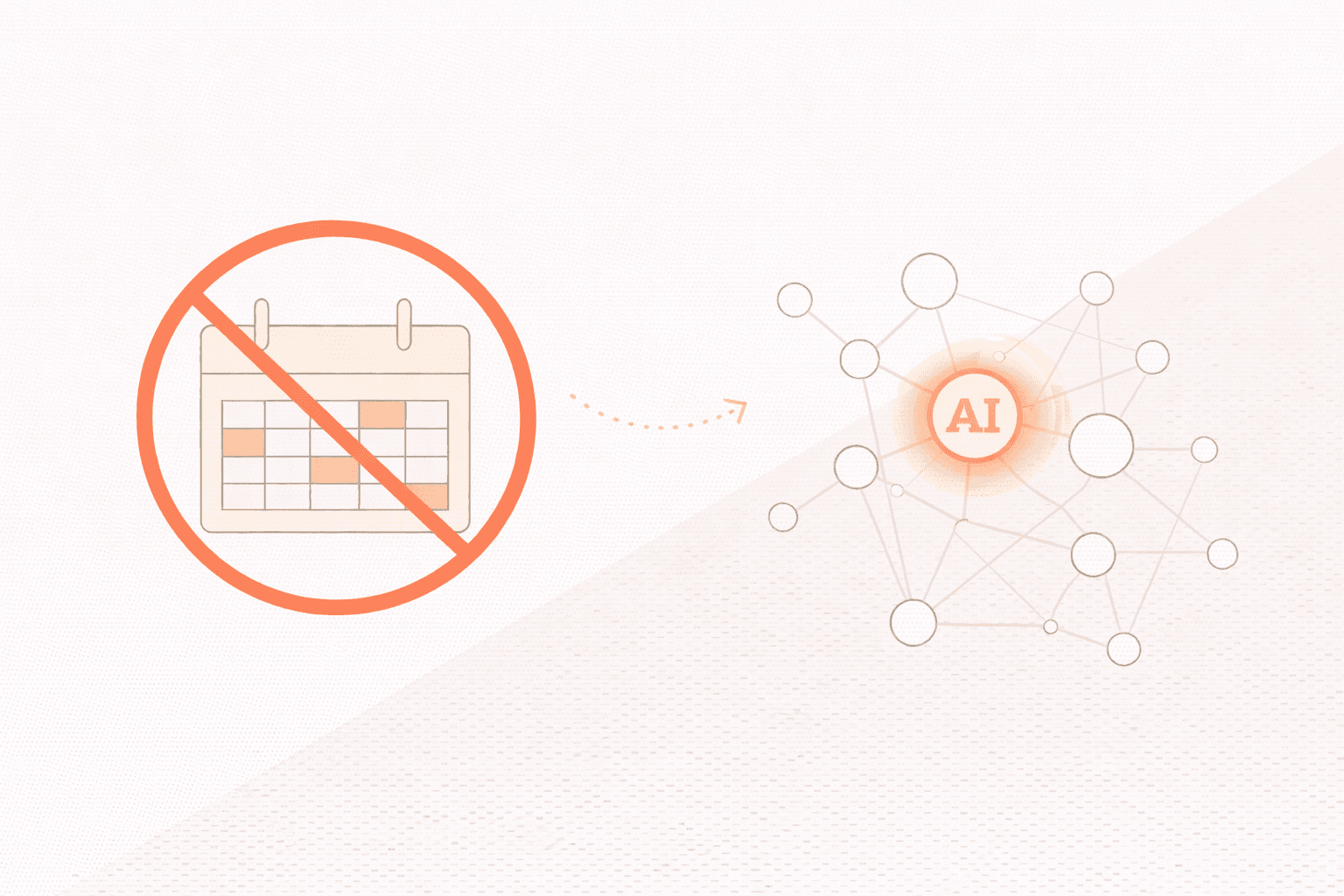
The result is familiar: more complexity, more interfaces, more automation layers — and only marginal gains. The presentation’s core argument was that if brands want truly adaptive customer engagement, they cannot keep layering AI onto rules-based systems. They need to rebuild the engagement model around continuous, individual-level learning instead.
The real problem is not a lack of AI
A lot of what the market now calls “AI decisioning” still rests on old foundations. Zach helped trace the evolution from rule-based systems to A/B testing, bandits, predictive ML, and automated decisioning, and argued that agentic systems represent something materially different: not just better optimization, but a continuous intelligence layer built around the individual. In that framing, the problem is not whether a team has adopted AI. It is whether the system can actually learn in a durable way about a person over time.
That distinction matters because most existing systems still optimize at the level of segments, workflows, or campaigns. They may look modern on the surface, but underneath they are still forcing marketers to manually define who should get what, when, and how. As Zach put it, you will never make enough rules to be truly 1:1.
Why averages miss the individual
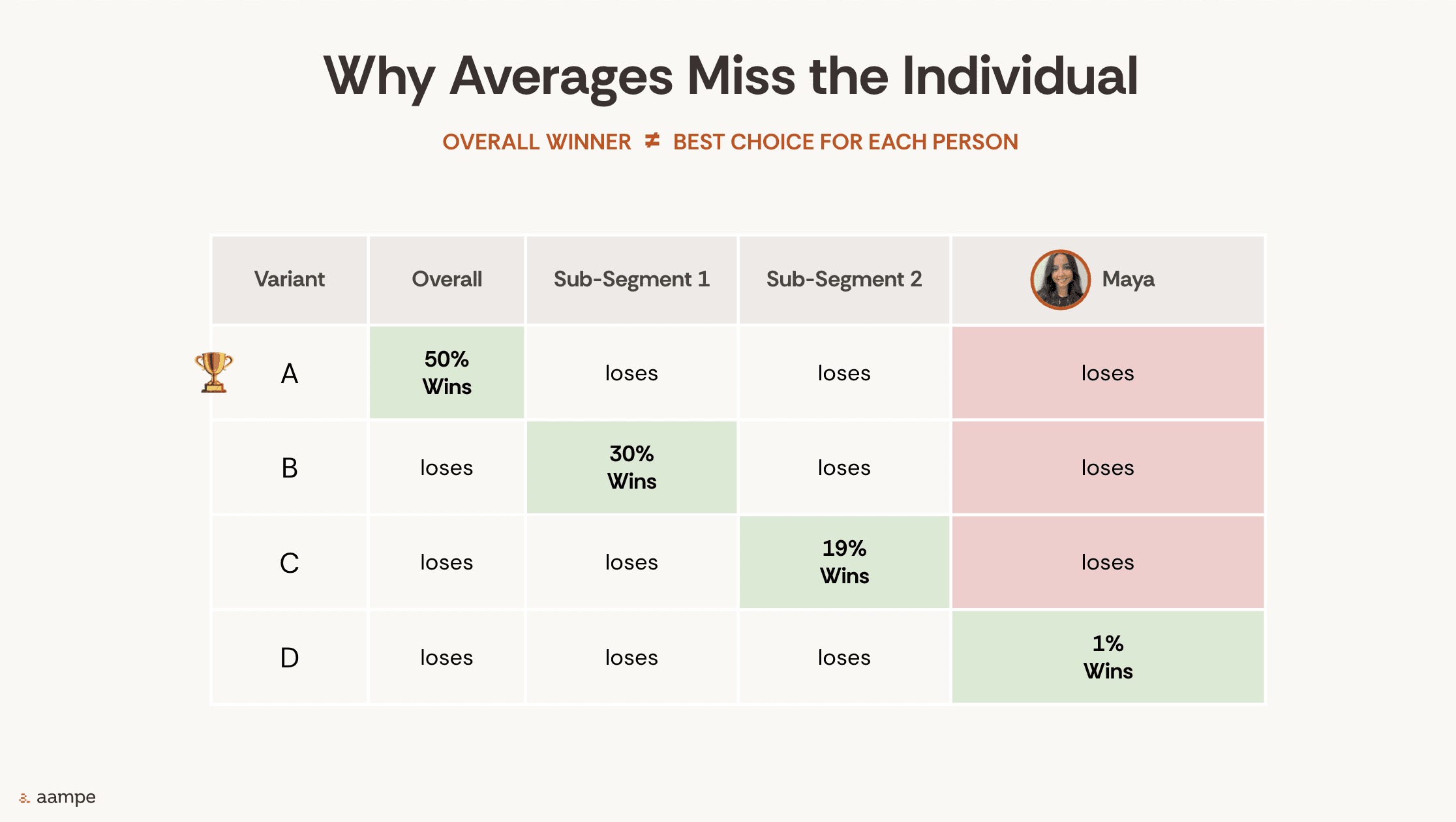
One of the clearest ideas in the session was that aggregate winners are often the wrong guide for individual decisions. Zach illustrated this with a simple example: one variant may win overall, while different variants outperform for different sub-groups or even a single person. In other words, the best message on average is not necessarily the best message for the customer in front of you.
That is the core weakness of campaign-era optimization. It is built to find what performs best in aggregate, then scale that answer. But customers do not behave like averages. They behave like individuals, with changing preferences, contexts, and intent signals. If the system cannot reason at that level, then “personalization” ends up being a thin layer on top of a fundamentally generic operating model.
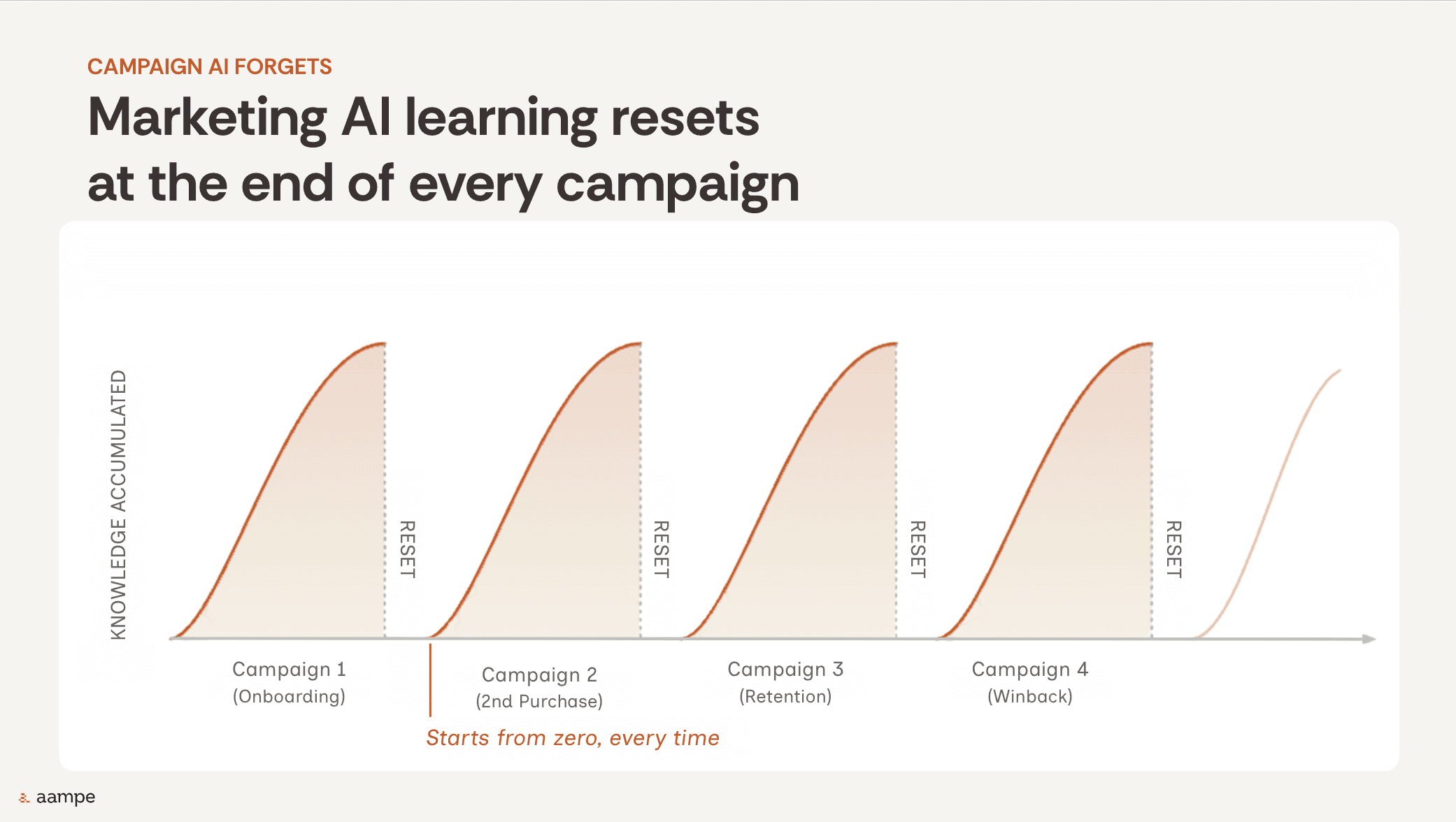
Campaign AI forgets
Another major theme from Zach’s talk was that most marketing AI still has amnesia. Campaigns may get smarter while they are running, but when the next campaign starts, the learning resets. Zach visualized this as repeated waves of knowledge accumulation followed by repeated drops back to zero. The business may feel like it is optimizing, but from the customer’s perspective the experience still feels fragmented.
The alternative is to organize learning around the individual instead of the campaign. In Aampe’s model, dedicated 1:1 agents compound knowledge over time, so each interaction helps improve future decisions across channels, moments, and objectives. That creates a fundamentally different system: not campaign intelligence, but continuous intelligence.
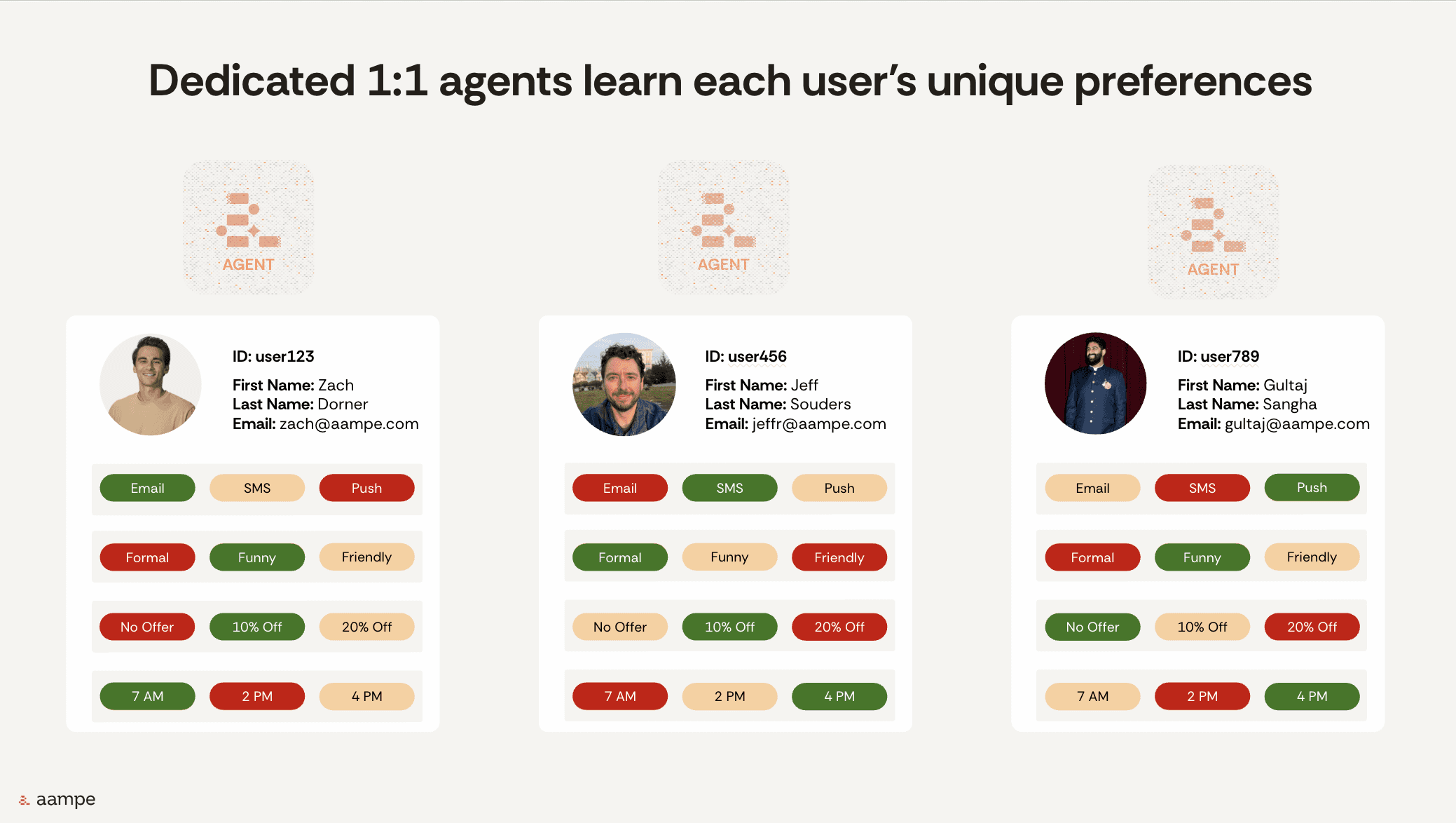
What changes when learning is built around the person
Once the unit of learning shifts from campaigns and segments to the individual, the job of the system changes too. It is no longer just trying to pick the best message inside a workflow. It is learning what resonates with a specific person: tone, timing, channel, offer type, value framing, and more. Zach showed this through examples of individual agents building confidence from interaction to interaction, gradually learning each user’s unique preferences.
This is what makes agentic engagement different from traditional decisioning. Instead of optimizing isolated moments, the system develops a persistent understanding of the customer and uses that understanding to make better next decisions. That memory becomes an advantage. The campaign resets; the individual model compounds.
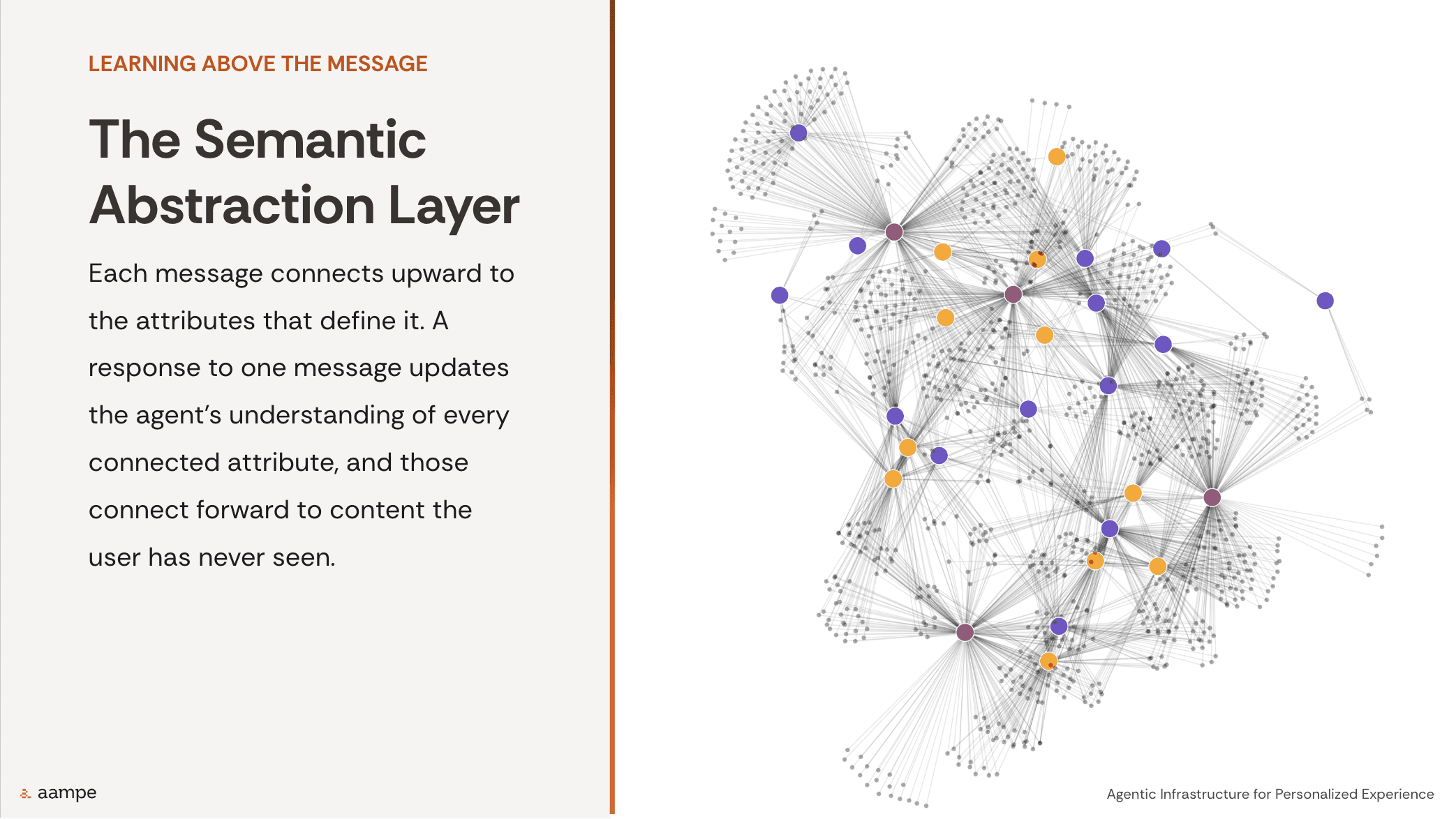
Learning above the message
One of the most important ideas in the deck is the semantic abstraction layer. Rather than treating a message as a single opaque unit, this model connects each piece of content to the attributes that define it: tone, timing, offer, value proposition, CTA, and other dimensions. A response to one message does not just teach the system whether that message worked. It updates the agent’s understanding of the connected attributes, which then helps it generalize to future content the user has never seen.
That is a meaningful shift. It allows learning to move above the campaign and above the asset itself. The goal is not just to remember which message got a click. It is to learn why something resonated, and to carry that understanding forward.
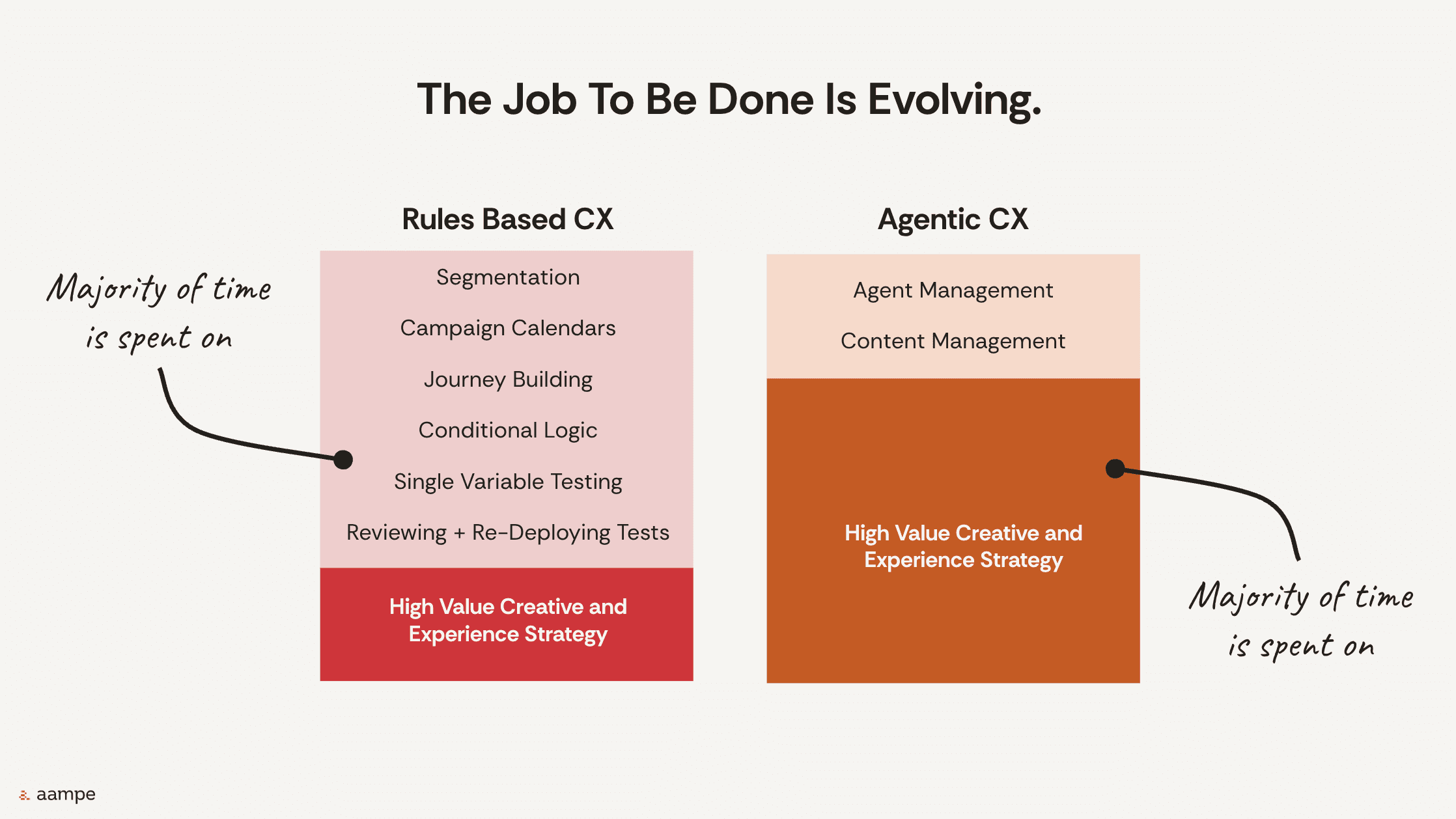
The marketer’s role evolves too
This shift does not remove marketers from the process. It changes where their time creates the most value. In the rules-based world, marketers spend the majority of their effort on segmentation, journey building, conditional logic, test review, and tactical tuning. In the agentic model, more time moves toward high-value creative and experience strategy, content management, and agent management.
That is an important reframing. The future of marketing is not less human. It is less manual. The machine gets better at handling dynamic decisioning. The marketer gets to focus more on strategy, guardrails, priorities, and the experiences worth creating. That same shift appears in other recent Aampe materials as well: less tactical tuning, more strategic oversight.
The takeaway
Zach's strongest line in the session may have been the simplest one: stop building campaigns. Start building relationships. Zach argued that customers want brands to adapt to them, not force them through campaign structures that reflect how the business is organized internally. That means moving away from systems built around rules, averages, and resets, and toward systems built around memory, reasoning, and continuous adaptation.
For teams still trying to squeeze more performance out of decade-old engagement infrastructure, that is the real message. The opportunity is not to add more AI features to the old stack. It is to replace campaign-scoped intelligence with a model that can learn continuously at the user level. That is the shift from rules to reasoning. And it is what makes truly adaptive engagement possible.
Ready to move beyond rules-based campaigns?
See how Aampe helps brands build AI-driven engagement systems that learn continuously at the individual level — not just within a single campaign. Book a demo to see how persistent 1:1 agents, semantic learning, and continuous intelligence can help your team create more adaptive customer relationships.