AI now handles more decision-making in customer engagement than ever before – determining what message to send, when to send it, and which users are most likely to respond.
But there is a limit to how effective any optimization system can be if success is defined too broadly.
For years, most engagement systems have relied on a generalized definition of success. Opens, clicks, app visits, purchases, referrals, and feature usage can all get folded into the same broad view of performance. That may be workable in simpler programs. It becomes a problem when different messages are meant to drive fundamentally different outcomes. A referral prompt should not be judged the same way as a purchase promotion. A feature announcement should not optimize toward the same outcome as a retention message.
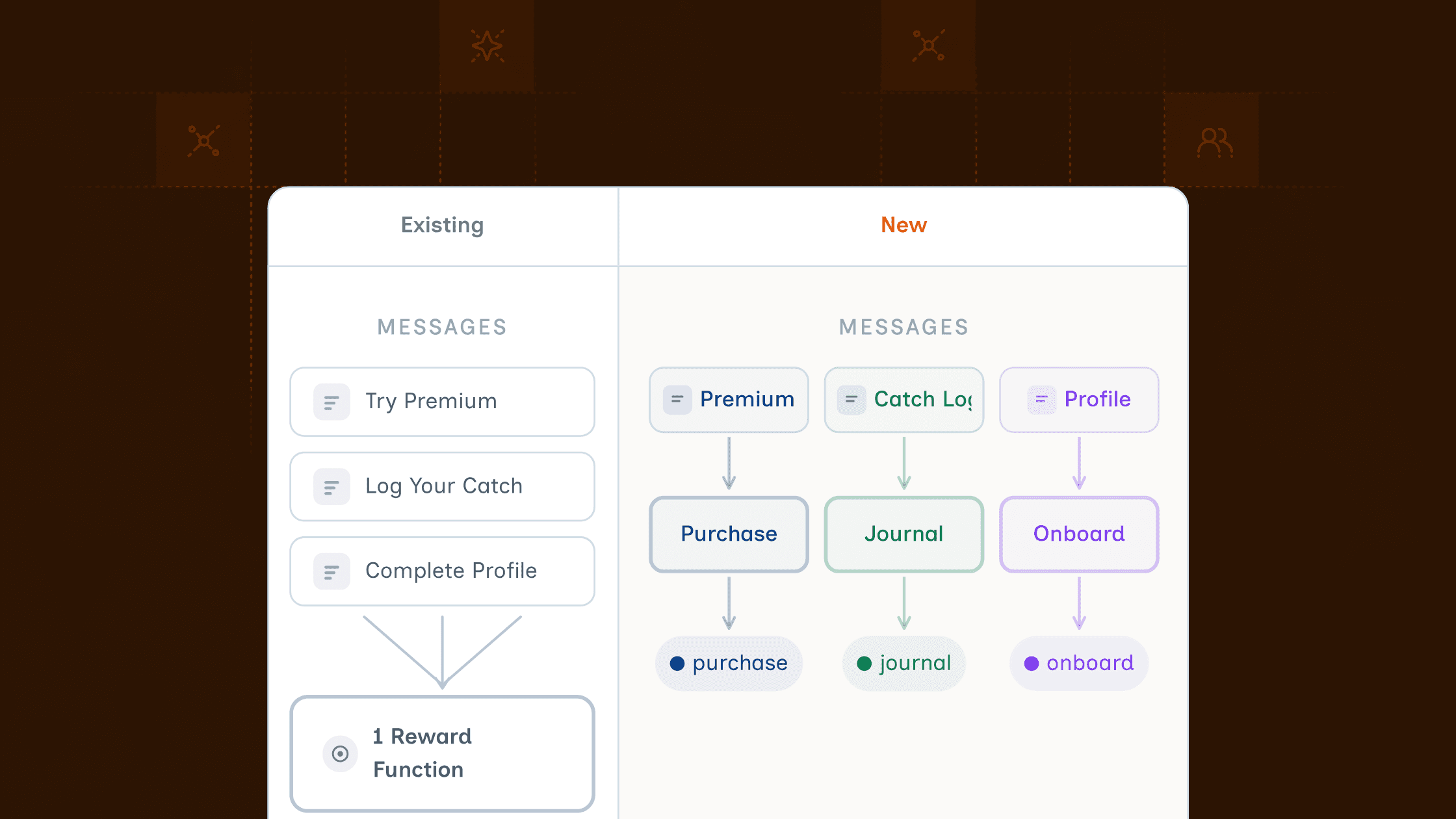
Today, we’re introducing Reward Functions: a new way for teams to define what success looks like for different messages and objectives in Aampe. Reward Functions let teams align optimization with the business outcomes each message is actually meant to influence, whether that is a purchase, a referral, product adoption, or long-term engagement.
Why this matters now
Customer engagement has become more complex.
Lifecycle and CRM teams are no longer optimizing toward a single goal. The same program may be trying to increase revenue, drive feature adoption, encourage referrals, and maintain long-term engagement all at once. As programs become more sophisticated, a single one-size-fits-all definition of success creates a gap between what teams want to achieve and what the system is actually learning from.
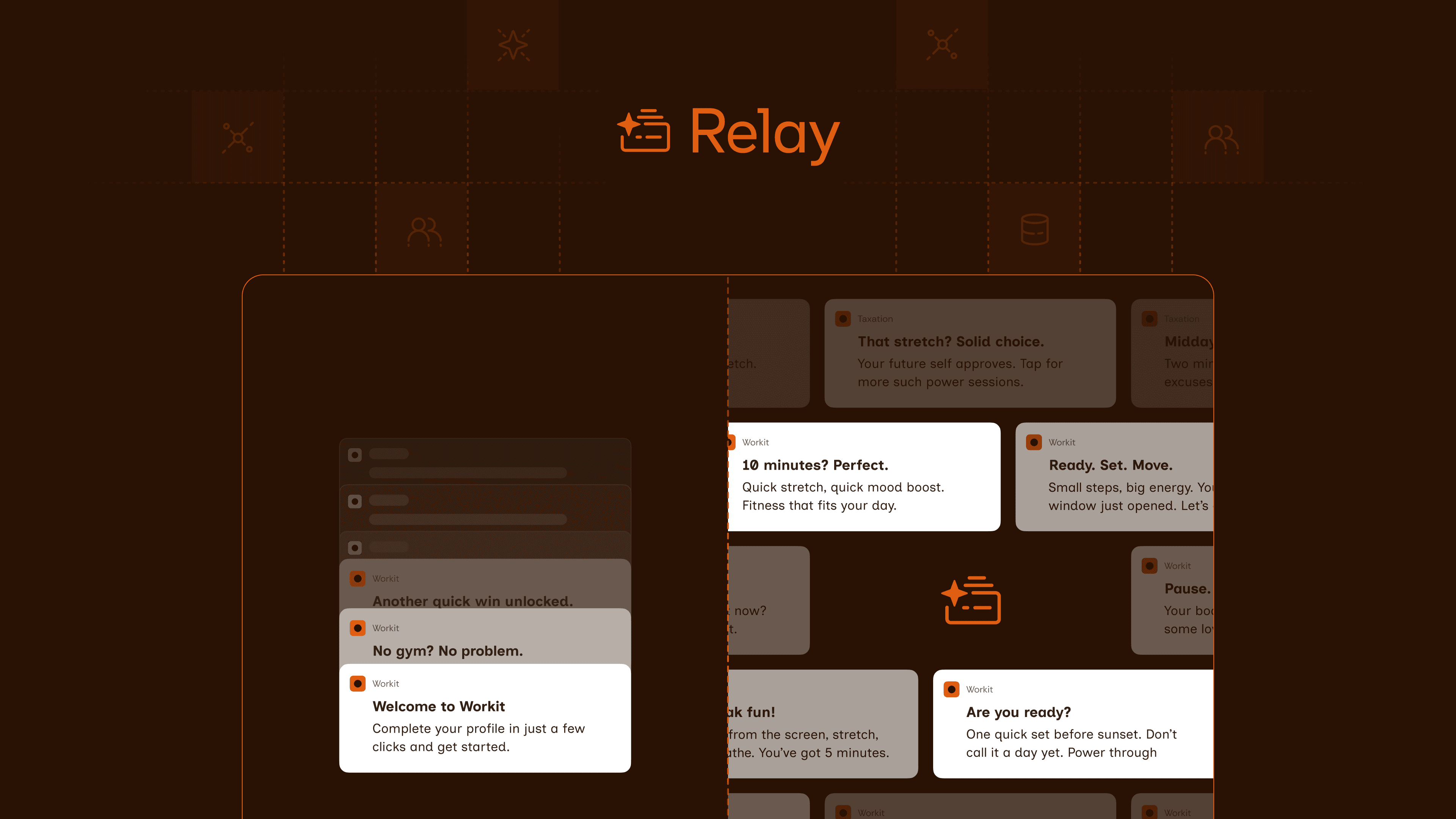
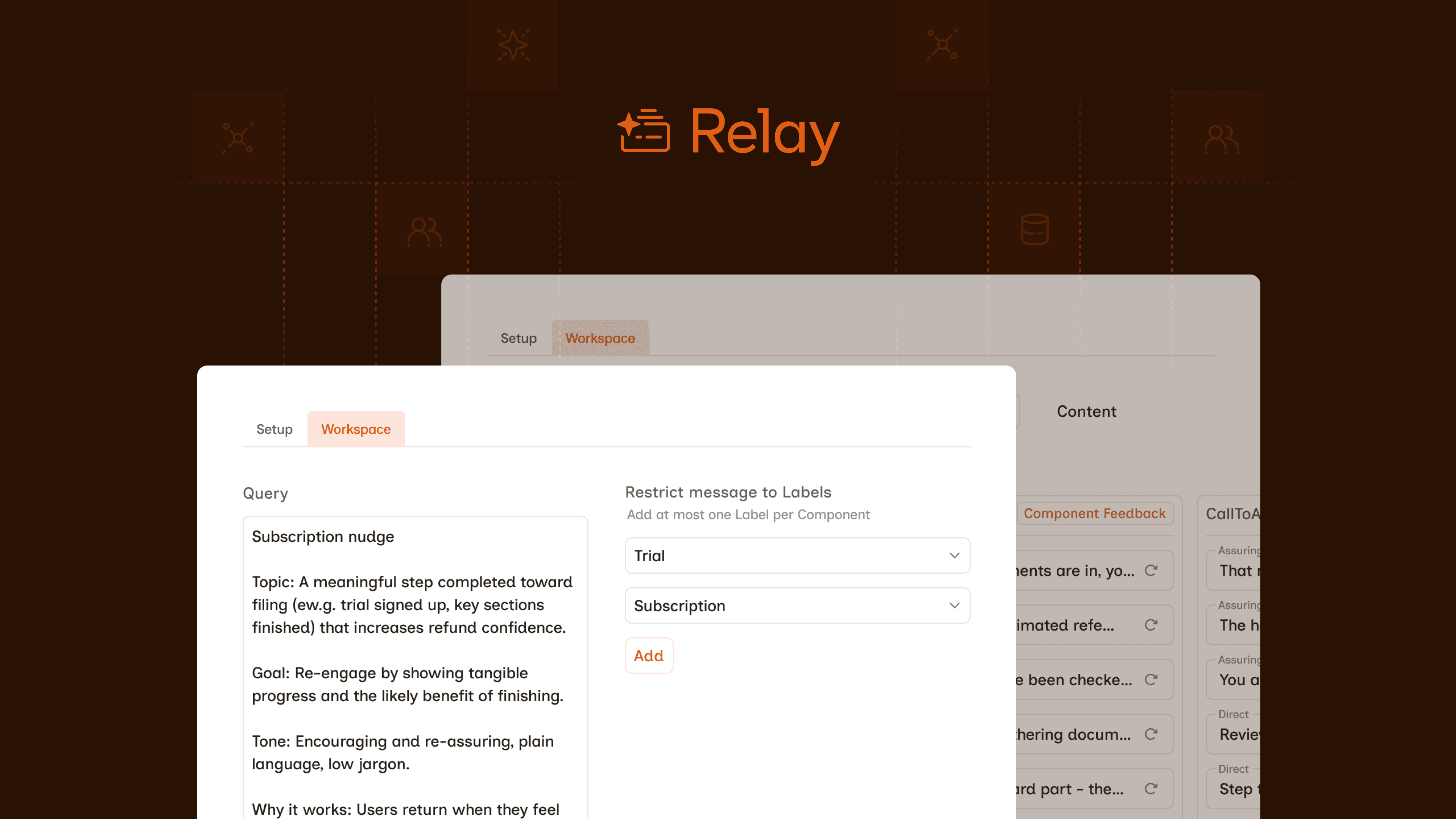
That broader shift mirrors what Aampe has been building towards for years: modern marketing systems that can become more adaptive, more structured, and better aligned to the real logic of decision-making at scale. Our recent Relay launch framed this as a move away from static assets and toward systems that can learn and improve over time. Reward Functions bring that same philosophy to optimization itself by making success signals more explicit and more intentional.
What Reward Functions are
Reward Functions are how you tell Aampe what success looks like for a given message.
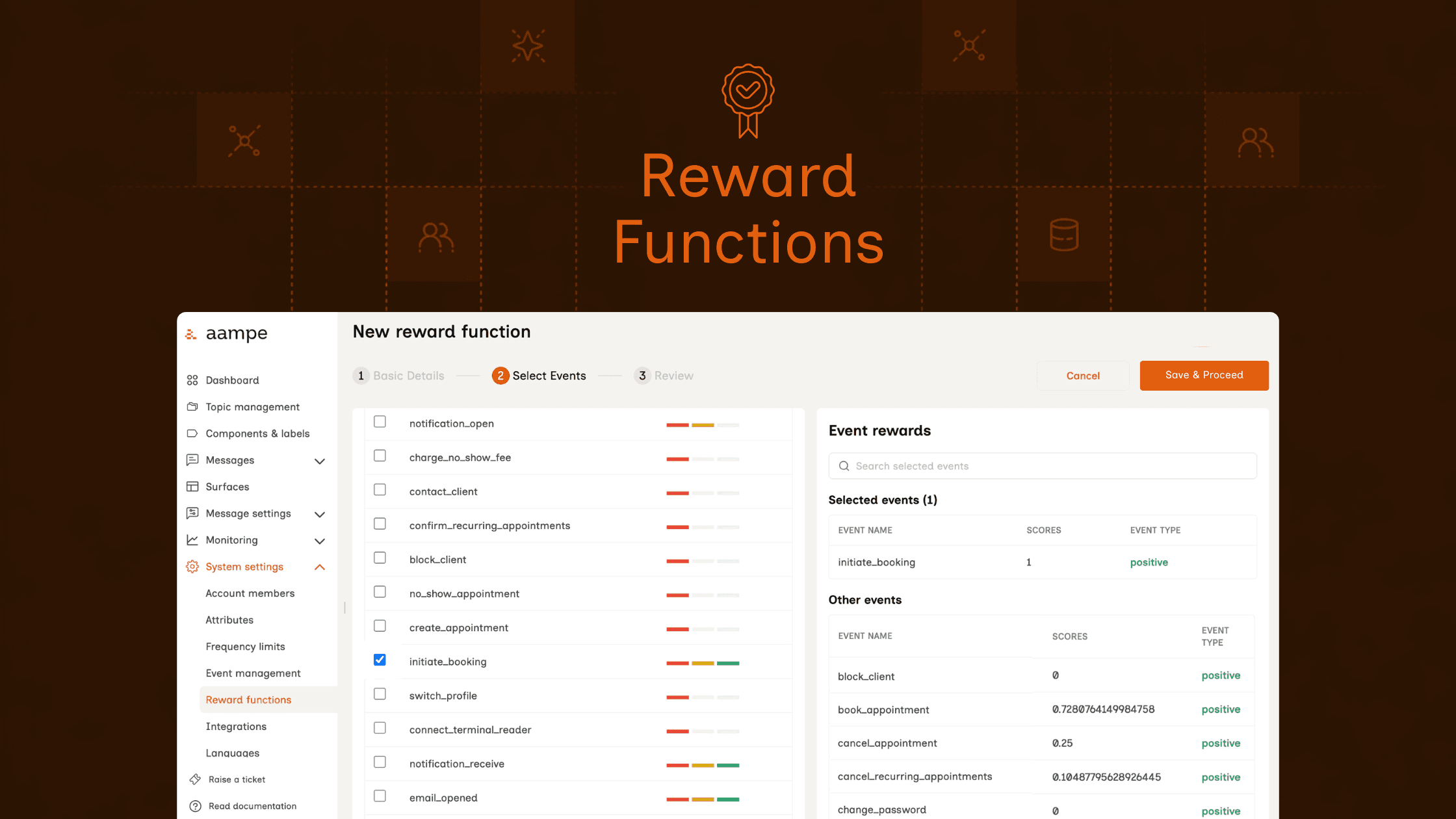
At a high level, Aampe evaluates message performance by looking at changes in a user’s event feed. Each event has a numeric reward. The agent compares the sum of those rewards in a period before and after the message is sent to understand whether the message increased the activity that matters. Target events receive full points within the attribution window. Other positive events can still contribute partial credit, and negative events reduce the reward total.
That means optimization is not limited to a vague notion of “engagement.” It can learn from the events that best reflect the actual purpose of the message.
A promotion can optimize toward purchases.
A referral prompt can optimize toward referral activity.
A product announcement can optimize toward feature usage.
A retention message can optimize toward renewed engagement.
How Reward Functions work
Reward Functions start with a simple question: what specific outcome should this message drive?
From there, teams identify the target events that best represent that outcome. Teams can name and describe the Reward Function, assign it to specific messages, and even designate it as the default for future messages.
Once target events are chosen, Aampe automatically scores other events based on how often they precede those target outcomes. This is what allows the system to learn from meaningful progress, not just final conversion moments. A user may not purchase immediately, but they may browse a product page, explore pricing, or take another step that signals movement toward the desired outcome. Those behaviors can still help the system learn.
Negative signals matter too. Unsubscribes, cancellations, or other undesirable events receive negative rewards, helping the system learn not just what to encourage, but what to avoid.
What this unlocks
Reward Functions make optimization more aligned, more transparent, and more useful.
First, they allow each message to be evaluated according to its intent rather than according to a single broad KPI. That creates better alignment between strategy and system behavior.
Second, they make the signals driving optimization easier to understand. Teams can see more clearly which behaviors matter, how those behaviors contribute to learning, and why the system is making the decisions it makes. That visibility is increasingly important as automation takes on a larger role in lifecycle marketing.
Third, they make it possible to pursue multiple objectives within the same optimization framework. Revenue growth, product adoption, referral programs, and retention efforts can all coexist without forcing every message to optimize toward the same definition of success.
A more intentional way to guide AI optimization
As customer engagement systems become more autonomous, one of the most important things teams can do is define the signals those systems learn from.
Reward Functions give teams a more structured way to do exactly that. They help translate business intent into measurable outcomes, so Aampe can improve message decisions over time based on the results that actually matter.
This is a meaningful shift: from optimizing toward generic activity to optimizing toward purpose.
And it gives teams a clearer way to shape how intelligent systems learn.
👉 Book a demo to see the new Rewards Functions in action