Beyond Guesswork, How Agentic AI Is Changing Marketing Decisioning
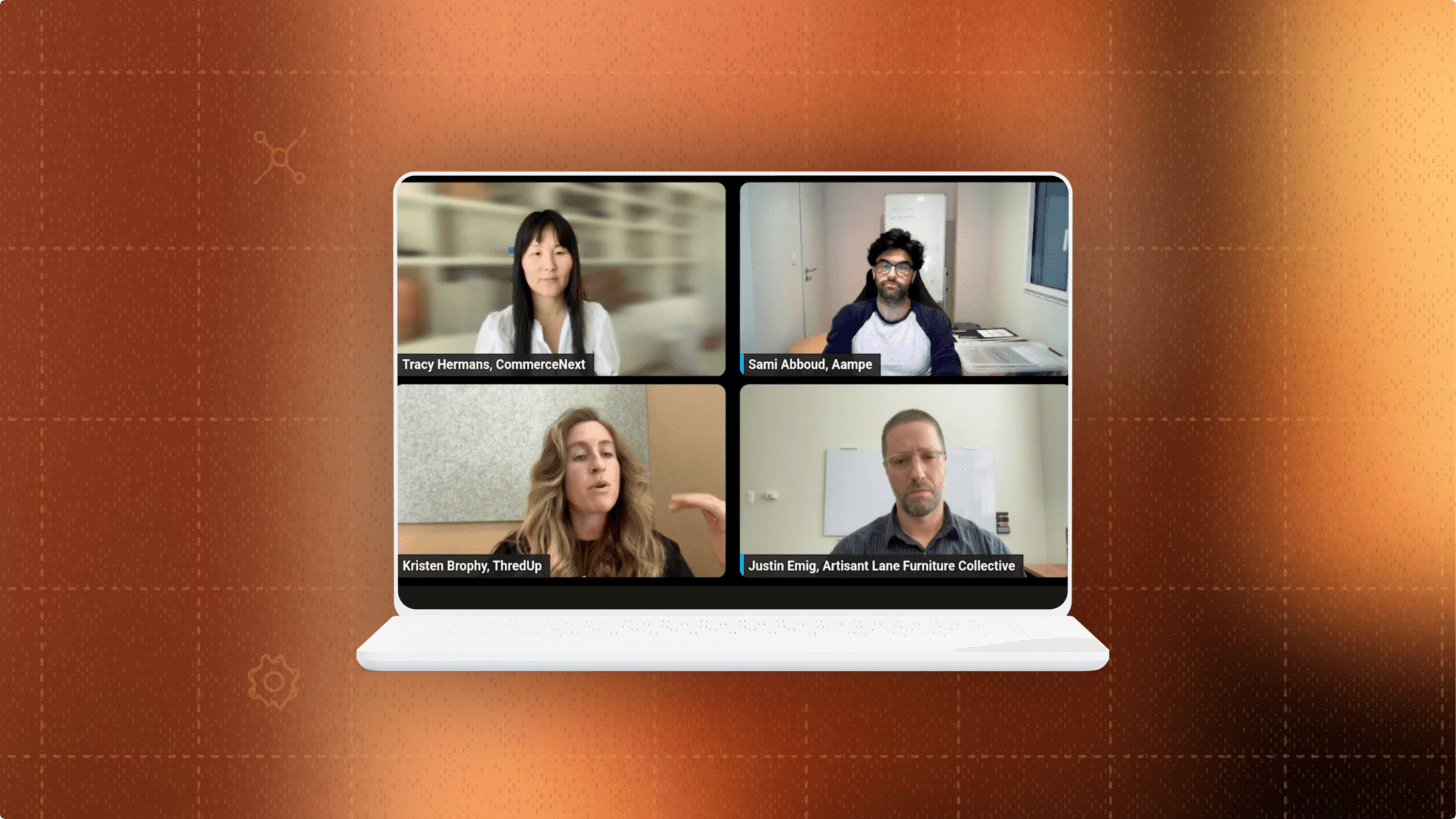
In Aampe's recently sponsored CommerceNext webinar, Aampe's CTO & Co-Founder, Sami Abboud, sat down with Kristen Brophy of ThredUP and Justin Emig of Artisant Lane Furniture to discuss a question many marketing teams are now facing: when does a system that seems to be working stop being enough?
The conversation centered on a shift already underway in marketing. For years, teams have relied on rules, segments, campaigns, and manual optimization to drive performance. Those methods still work in many cases, but they also carry a ceiling. As customer behavior becomes more dynamic and marketing complexity continues to grow, more brands are asking whether they need systems that can learn and adapt in real time.
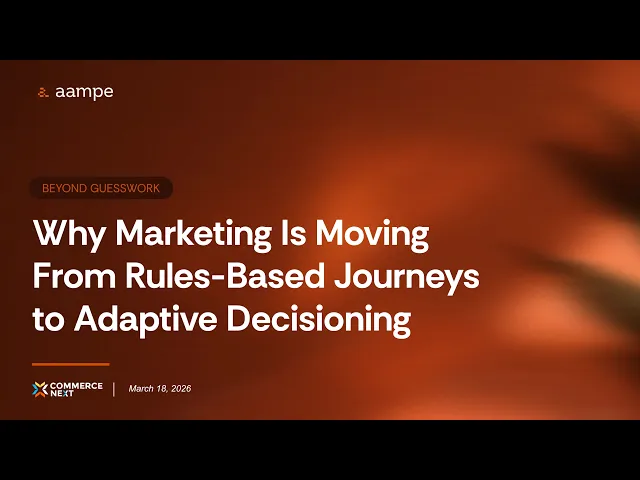
The webinar, Beyond Guesswork: How Agentic AI Unlocks Marketing Decisioning, explored that shift from several angles, from technical architecture to organizational readiness to the day-to-day realities marketers face inside large, fast-moving businesses.
The old model breaks when complexity outpaces manual control
Sami Abboud, CTO and Co-Founder at Aampe, opened the discussion by mapping the evolution of lifecycle marketing.
The progression is familiar. Marketing started with batch-and-broadcast. Then came testing, followed by optimization, predictive segmentation, and campaign AI. The next stage, he argued, is agentic decisioning, where systems continuously learn from user behavior and adapt interactions over time.
His core distinction was between campaign-level learning and individual-level learning.
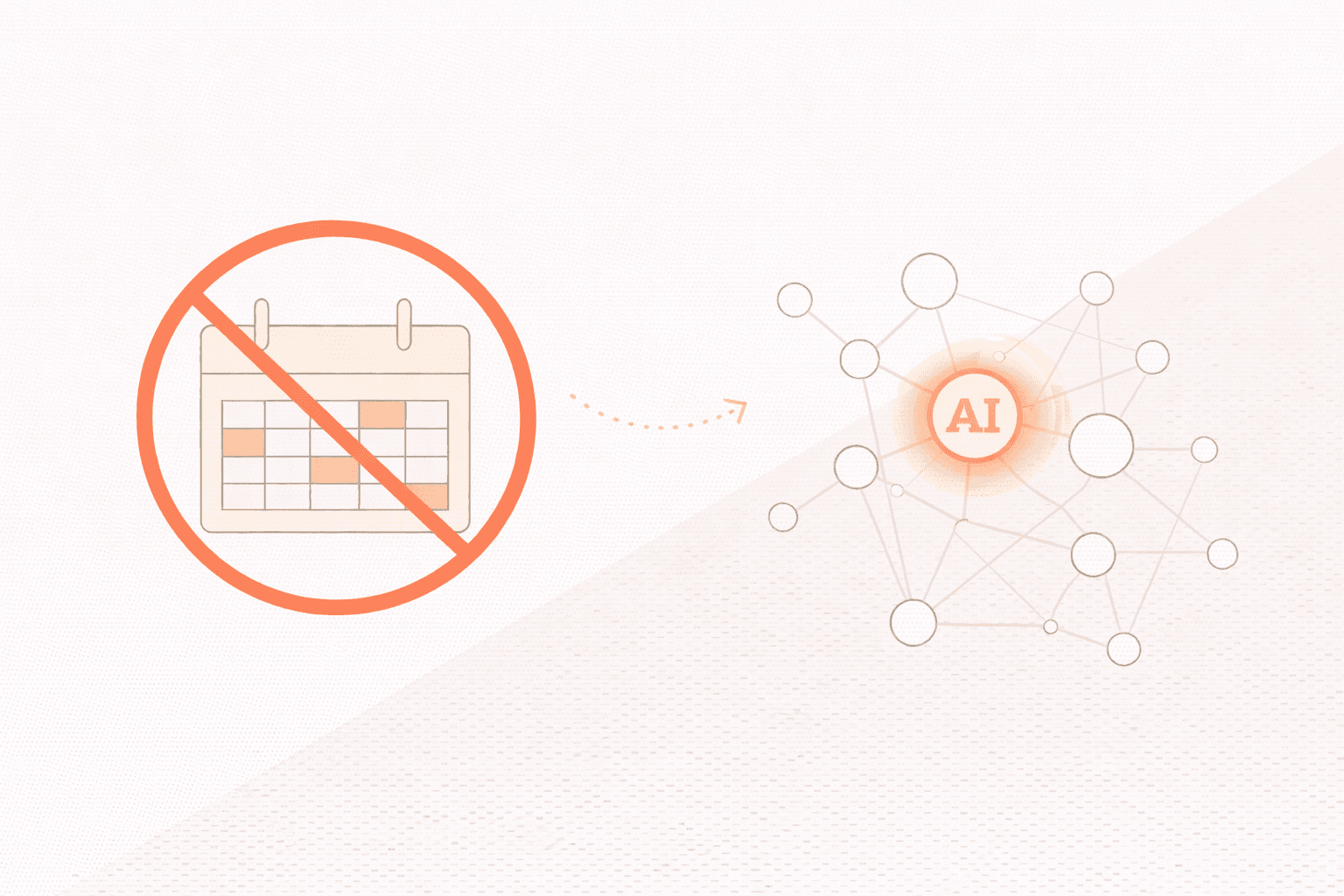
Traditional systems optimize around segments or workflows. Agentic systems optimize around the person. That changes the unit of learning, and it changes what personalization can mean in practice.
As Sami put it:
“The real shift is from campaign-level learning to persistent customer understanding.”
That point came up again and again throughout the conversation. If a brand is still optimizing for an average cohort, it may improve campaign performance while still missing what any given person actually wants. Agentic systems aim to close that gap by carrying memory across campaigns and learning from each user over time.
“Good enough” stops being enough before something breaks
One of the most useful parts of the webinar was the discussion around timing. When should a brand explore agentic tools?
Kristen Brophy, SVP Marketing at ThredUP, offered a clear answer. The signal is not always failure. Often it is scale.
At ThredUP, the challenge is extreme catalog complexity. The company has more than four million unique items live on site at a given time and adds roughly 65,000 new items every day. In that environment, static rules and traditional tests struggle to keep pace.
Her framing captured the decision point well:
“A signal that it’s time to evolve isn’t always when something is broken. It’s when things are going well and we ask, how could they go better, and how could we better serve our customer?”
That is a useful test for many brands. A team can have solid performance, disciplined processes, and a well-run lifecycle program, and still reach a point where manual personalization no longer scales.
The control marketers want is not always the control that matters
A recurring theme in the panel discussion was control.
Marketers are trained to care about details. Subject lines, images, button color, send timing, prioritization logic, all of it feels consequential. Kristen spoke directly to that instinct and to the tension that comes with asking an adaptive system to take over more tactical decisions.
Her answer was not that marketers should stop caring. It was that the role of control changes.
“We’re not giving up control, we’re moving it higher.”
That means marketers still define the brand, the guardrails, the priorities, and the success criteria. What they begin to let go of is the mechanical tuning of every tactical output.
Justin Emig, CTO/CDO at Artisant Lane Furniture, made a similar point through a comparison to autonomous driving. Handing over direct control can feel uncomfortable at first, but once that shift happens, the value becomes obvious.
“Once you relinquish that control, you realize how much else you can do with your life when you’re not sitting behind the wheel.”
In marketing, that tradeoff is not abstract. It is time, focus, and cognitive bandwidth. Time spent endlessly tweaking campaign logic is time not spent on broader customer experience strategy.
If you are asking how the campaign performed, you may already be too late
Justin also raised a point that lands hard for any team working on weekly optimization cycles.
“I always love the question, ‘How did the campaign perform?’ because it means we’re already thinking in the past.”
That observation gets at one of the clearest limitations of traditional marketing workflows. By the time teams gather results, interpret what happened, and adjust the next campaign, the moment they are trying to respond to has already passed.
Agentic systems promise a different model, one where decisions happen closer to the moment and adapt as inputs change. That matters in businesses where customer intent, product availability, and channel behavior move quickly.
It also matters because customers do not behave in neat channel silos. They move between email, site, push, SMS, paid media, and other touchpoints without caring much about how the brand organizes those functions internally.
That is one reason the panel pushed back on channel-first thinking. The question is less “which channel performs best?” and more “what is the best next interaction for this customer?”
The marketer’s job shifts upward
Another major theme was how agentic systems change the role of the marketing team.
Kristen described this as a refactoring of process and talent, not just a new layer of technology. If AI takes on more tactical decisioning, marketers can spend more time on the work that should remain human, defining brand expression, shaping the customer journey, setting priorities, and determining what success looks like.
Justin framed the shift in similar terms. For years, marketers have often operated as campaign builders and flow managers. The opportunity now is to spend less time building the mechanics and more time deciding what outcomes the system should pursue and what signals it should respond to.
That has organizational implications too. Kristen made a strong case that marketing cannot sit far away from data science and data engineering if it wants to operate this way. Teams need to understand how data is structured, how signals flow into decisioning systems, and how to build workflows that support adaptive learning.
Readiness is as much about trust as infrastructure
One of the strongest practical insights from the webinar was that readiness is not only a technical question.
Good data matters. Clean inputs matter. Legacy systems and fragmentation are real barriers. But Sami argued that the larger issue is often organizational maturity.
Teams need to know what decisions they are comfortable handing over. They need guardrails. They need clarity on governance, auditability, and what they do not want the system to do.
His framing was direct:
“Most people assume readiness is mostly about data maturity and infrastructure maturity. But in practice, organizational maturity matters most.”
That is a valuable correction. Many brands may be more ready than they think on the technical side, and less ready than they think on the operating-model side.
Governance and memory cannot be afterthoughts
The audience raised a key concern around consistency. If systems are making decisions dynamically, how do brands avoid conflicting messages, stale context, or decisions that are hard to explain later?
Sami’s answer focused on governed memory and auditability. Agentic systems need a shared memory layer, clear constraints, and a way to trace why decisions were made. If a system learns through labels and behavioral signals, those labels should also support debugging and accountability.
That matters for brand consistency, legal compliance, and trust inside the organization. Teams are more willing to let systems adapt when they know the logic is visible, bounded, and reviewable.
Early measurement should connect signals to long-term outcomes
The final section of the webinar focused on measurement.
Sami made the case that traditional marketing stacks often over-index on what is easiest to measure, clicks, immediate conversions, and short-term revenue. Agentic systems open the door to a longer time horizon because they stay with the customer across interactions and can make tradeoffs between short-term and longer-term outcomes.
Kristen added a useful distinction between a business success metric and an agentic success metric. A brand may ultimately care about retention, lifetime value, or some other downstream outcome, but the system may need to learn from earlier signals that indicate a customer is moving onto the right path.
That distinction is especially useful for pilot programs. Teams need to know what they are trying to teach the system, not just what headline number they hope to move.
The bigger takeaway
This webinar was not framed as a case for handing marketing over to machines. It was a case for changing what humans and systems each do best.
Rules, segments, and campaign logic still have a place. But for brands dealing with growing complexity, channel fragmentation, faster customer behavior, and the limits of average-based optimization, those tools are starting to show their age.
Agentic AI offers a different operating model, one based on persistent learning, adaptive decisioning, and memory at the individual level. The technology is still early. The path will not be linear. But the direction of travel was clear across this conversation.
The brands that benefit most will likely be the ones that do not treat this as a channel tactic or a one-off AI experiment. They will treat it as a change in how marketing decisions get made.
If your team is exploring what it takes to move from campaign optimization to customer-level decisioning, connect with Aampe. We’d be happy to walk through the shift, share what strong readiness looks like, and give you a demo of how it works in practice.